
100%
Hands-On Lab Participation
5E Inquiry
Engage, Explore, Explain Framework
Robotics & AI
Integrated Primary STEM Labs
~RM900
Starting Monthly Tuition
1. The Failure of Textbook-Only Science Education
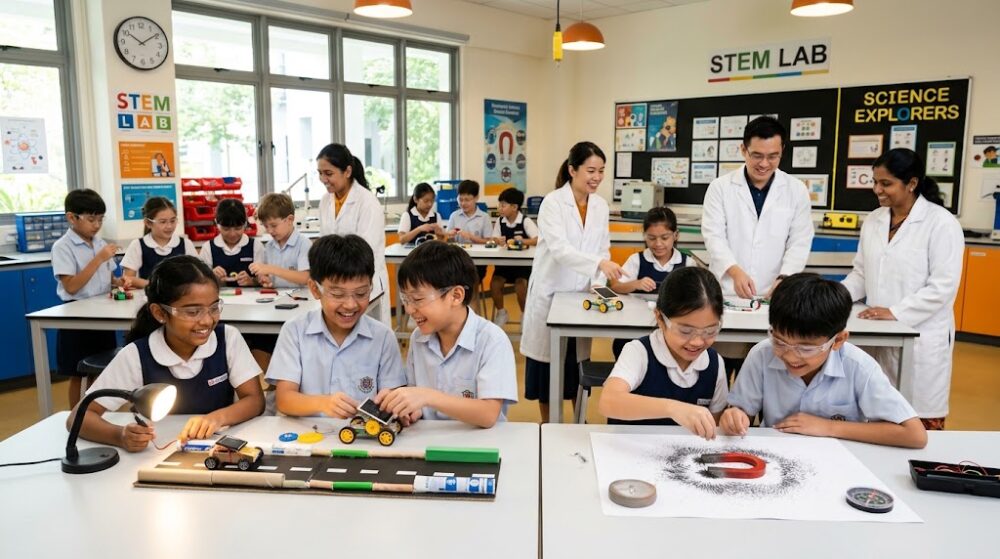
Hands-on science education at Axcel International School Puchong integrates structured laboratory experiments into the weekly Cambridge Science curriculum from primary level onwards. Students formulate hypotheses, conduct controlled experiments, record empirical observations, and draw evidence-based conclusions, developing scientific thinking skills that directly prepare them for Cambridge IGCSE practical papers.
Too many primary schools teach science as a passive reading subject: memorize definitions, label printed diagrams of plant cells, and regurgitate facts on multiple-choice quizzes. This approach extinguishes natural childhood wonder, reducing one of humanity’s most exciting endeavors—the empirical exploration of the universe—into dry rote memorization. For authoritative benchmarks, consult the official STEM Learning UK Primary Science Framework.
2. Experiential Learning: Why Hands-On Labs Build Neural Pathways
Cognitive neuroscience proves that children understand and retain scientific concepts vastly better when learning engages multiple senses. When a 9-year-old physically measures acid-base reactions with litmus indicators, builds circuit breadboards to power LEDs, or examines onion skin cells under a microscope, abstract theories transform into indelible empirical memories.
3. The ‘Little Scientist’ Program at Axcel Puchong
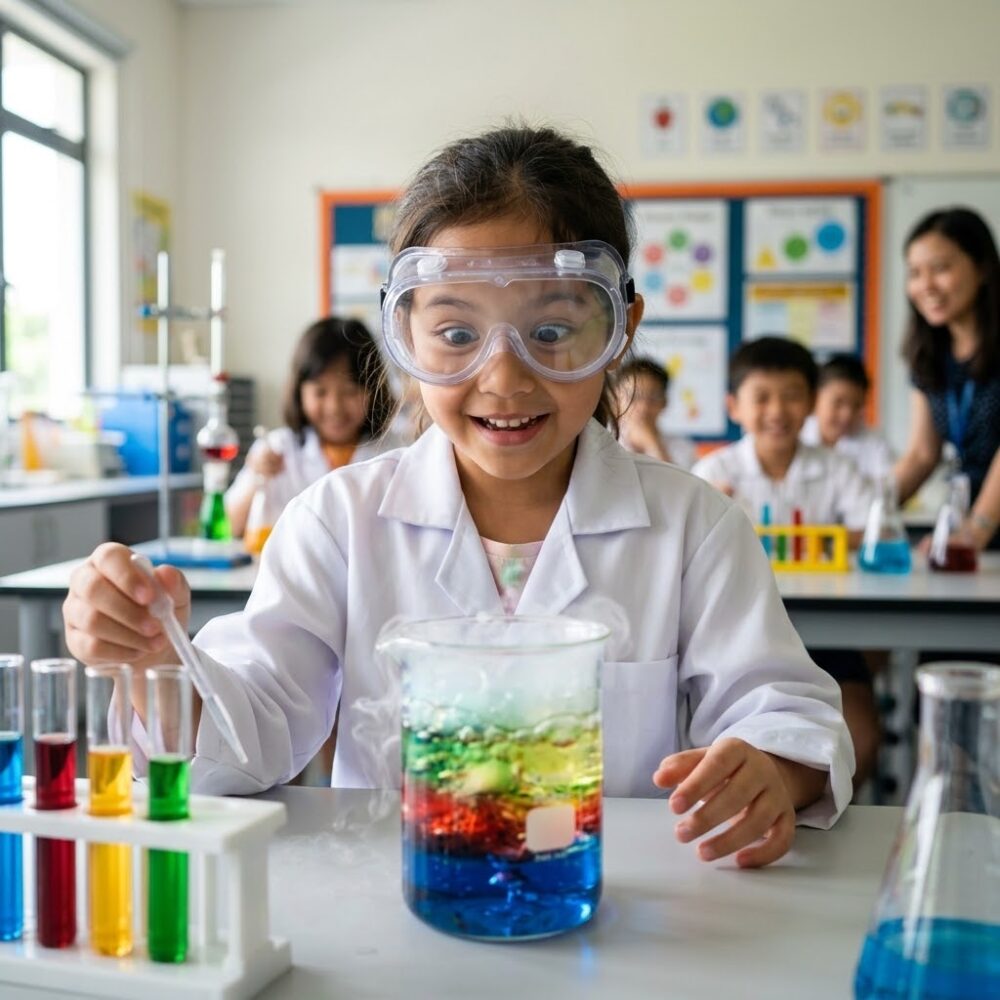
At Axcel International School Puchong, our signature ‘Little Scientist’ program brings primary students into fully equipped science laboratories every single week. Under expert teacher supervision, young learners don safety goggles and lab coats to execute real scientific experiments.
4. The 5E Scientific Inquiry Cycle: Thinking Like Real Researchers
Axcel lessons follow the 5E Instructional Model: (1) Engage curiosity with an intriguing physical phenomenon; (2) Explore through hands-on experimental trials; (3) Explain findings using accurate scientific terminology; (4) Elaborate by connecting discoveries to real-world technology; (5) Evaluate understanding through interactive lab logs.
5. Integrating Robotics, Coding, and Environmental Science
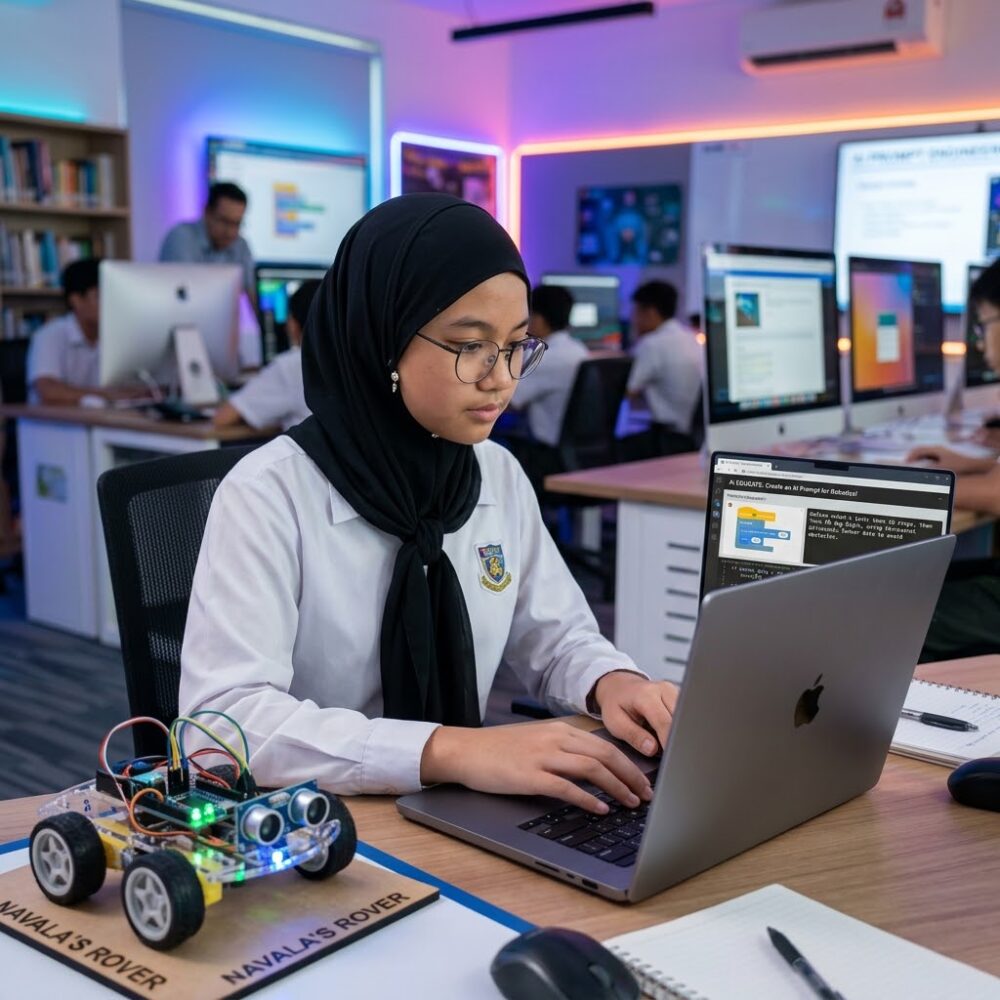
Modern STEM transcends traditional biology, chemistry, and physics. Axcel primary students build sensor-activated robotics, write automated code scripts to measure temperature changes, and participate in sustainability science projects like hydroponic farming and renewable energy modeling.
6. Gamified Concept Reinforcement with Aura Tycoon
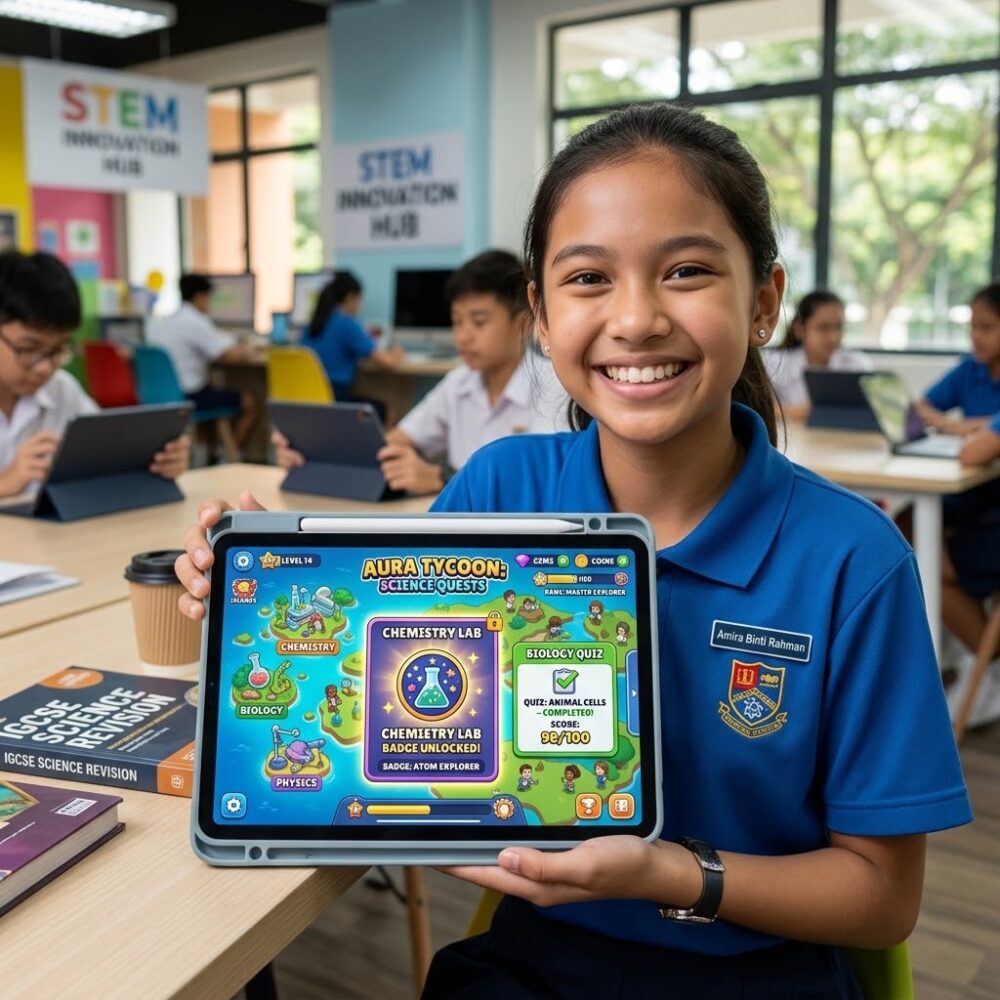
To reinforce classroom laboratory discoveries, students use Aura Tycoon (auratycoon.com) for interactive home science revision. The platform’s gamified quizzes and automated Weakness Log turn concept review into an engaging quest that solidifies foundational mastery.
7. Fun Kitchen STEM Experiments Parents Can Do at Home
Parents can nurture scientific inquiry at home with simple, safe kitchen experiments: (1) Density towers using honey, oil, and water; (2) Red cabbage pH indicator testing of household liquids; (3) DIY baking soda vinegar volcano rockets; (4) Seed germination observation in glass jars.
Frequently Asked Questions
Clear answers to common questions asked by Malaysian parents.
Students begin hands-on laboratory experiments from Primary Year 1 and Year 2 (ages 6–7) under close teacher supervision.
All students wear mandatory safety goggles and lab coats, work with age-appropriate non-hazardous materials, and operate under strict teacher-to-student safety ratios.
Early laboratory exposure eliminates science anxiety and builds experimental design skills required for Cambridge IGCSE Paper 5 and Paper 6 practical examinations.
Topics include basic chemistry reactions, light and optics, forces and friction, plant biology, human organ systems, electricity circuits, and simple robotics.
Yes. Axcel students present research projects at annual school science fairs and participate in national youth STEM invention challenges.
Aura Tycoon provides gamified revision modules mapped directly to Cambridge science topics, allowing teachers to track student concept mastery in real time.
Tuition starts from ~RM900/month for Primary and RM1,500 to RM1,700/month for Secondary at our Casa Tropika campus.
Message admissions on WhatsApp at +6011-51207390 to schedule a private campus walkthrough and lab demonstration.
Related Education & Curriculum Guides
Explore more research articles to help you make informed schooling decisions.
Looking for Educational Excellence in Puchong?
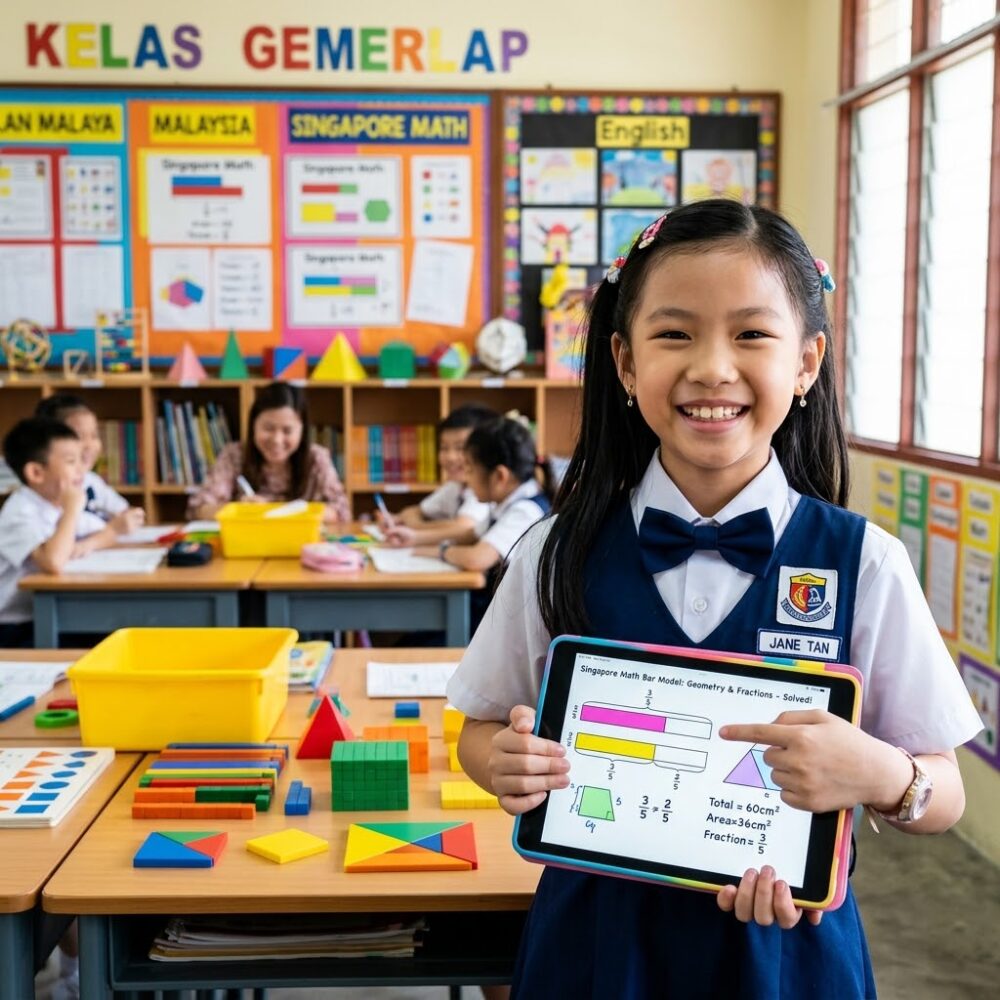
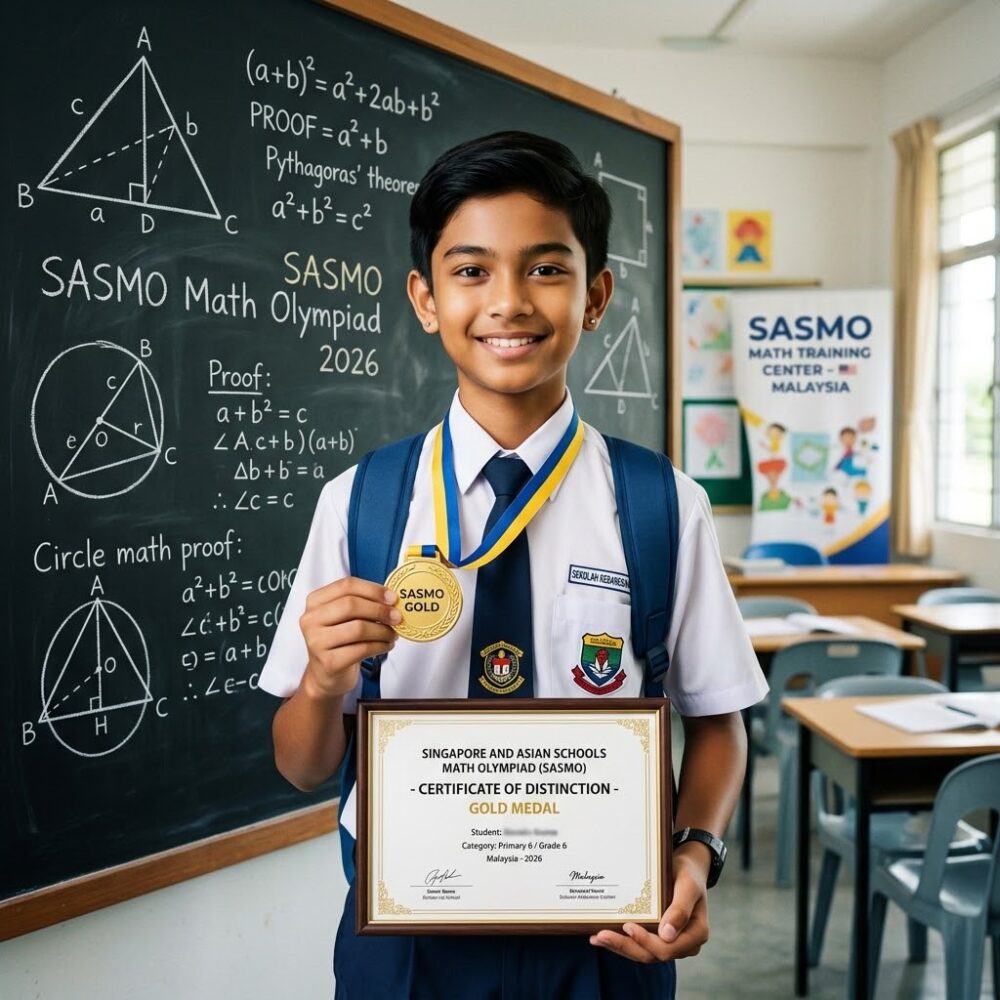
Explore Axcel International School‘s accredited Cambridge curriculum, featuring Singapore Math heuristics, life-skills leadership, and starting tuition of ~RM900/month.
© 2026 Service Pro Education Insights Malaysia.
Disclaimer: Fees and curriculum details reflect 2026/2027 school schedules and may change. Images are representational; actual facilities may differ and no identifiable students are shown. Contact Axcel International School Puchong to verify current details.