
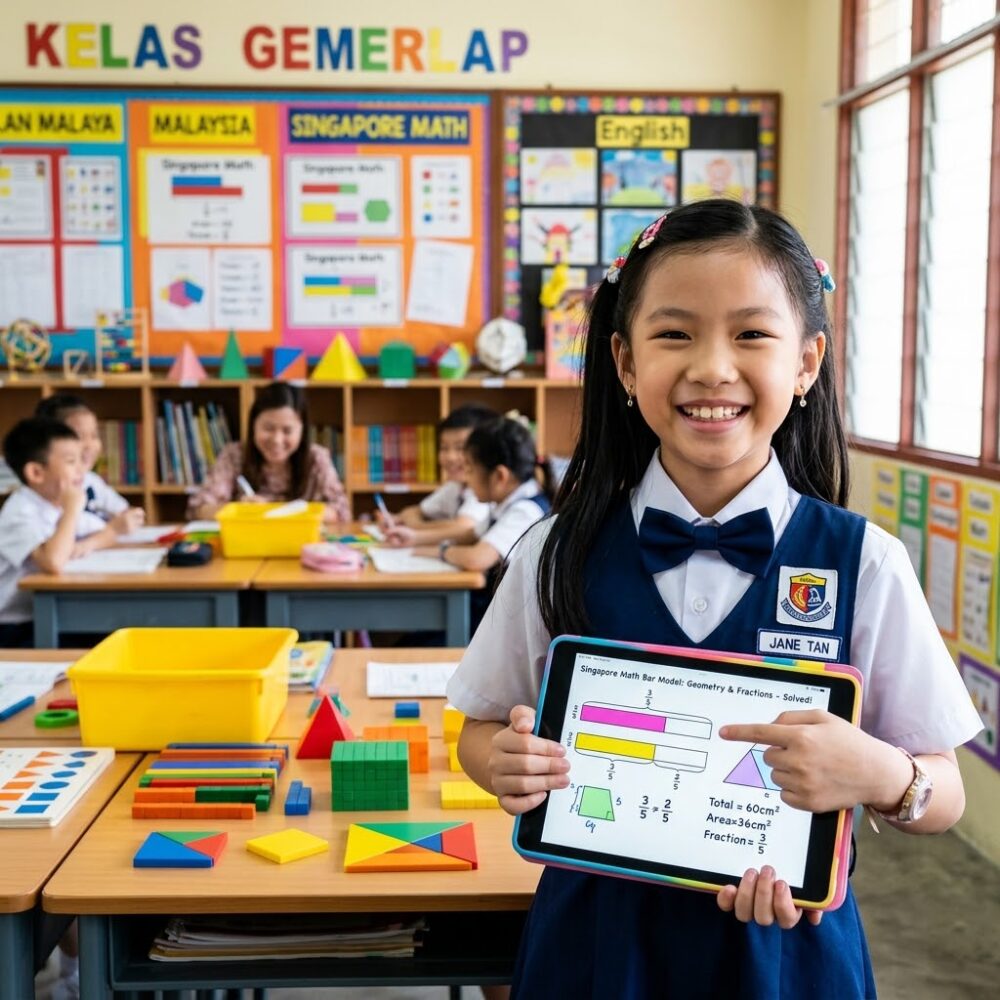
CPA Model
Concrete-Pictorial-Abstract Framework
Top 1%
International TIMSS/PISA Ranking
SASMO/AMO
Competition Distinction Track
~RM900
Starting Monthly Tuition
1. The Global Benchmark: Why Singapore Leads in STEM
Singapore Mathematics uses the Concrete-Pictorial-Abstract (CPA) framework to build deep mathematical intuition, consistently ranking Singapore #1 globally in TIMSS and PISA benchmarks. At Axcel International School Puchong, Singapore Math heuristics are integrated into the Cambridge Primary curriculum from Year 1, combining model drawing and problem-solving strategies with Cambridge assessment rigor.
For over two decades, Singaporean students have consistently topped international academic benchmarks such as TIMSS and OECD’s PISA examinations. Unlike traditional rote-memorization regimes prevalent across many Southeast Asian curricula, the Singapore methodology prioritizes conceptual intuition, visual modelling, and deep problem-solving frameworks that prepare children for complex, unfamiliar mathematical challenges. For authoritative benchmarks, consult the official Singapore Ministry of Education Mathematics Syllabus.
2. The CPA Framework: Concrete, Pictorial, Abstract Progression
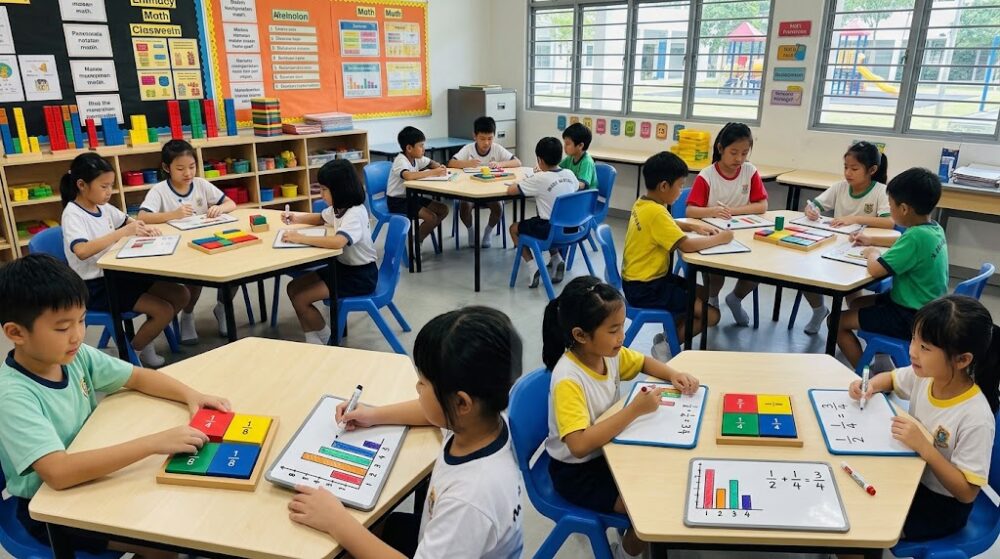
At the heart of the Singapore approach is Jerome Bruner’s Concrete-Pictorial-Abstract (CPA) framework. Young learners begin with physical manipulatives (blocks, fraction discs, geometry models), transition into visual bar models and diagrams, and finally formulate symbolic algebraic equations. This three-stage ladder ensures students never memorize formulas blindly; they visually understand mathematical relationships before abstract calculation.
3. Model Drawing & Heuristics vs Standard Algebra
Traditional mathematics often rushes primary students into abstract algebraic variables (x and y) before they have developed spatial reasoning. Singapore Math introduces visual bar modelling—representing unknowns as proportional bars. This heuristic empowers 8-to-11-year-olds to easily decompose intricate multi-step word problems involving fractions, ratios, and percentages that would otherwise stump older secondary students.
4. Integrating Singapore Inquiry with Cambridge Science
In science education, the Singapore framework mirrors the scientific method through 5E inquiry: Engage, Explore, Explain, Elaborate, and Evaluate. Rather than memorizing definitions of photosynthesis or electrical conductivity, students conduct hands-on laboratory investigations, collect empirical data, and formulate scientific explanations based on observable evidence.
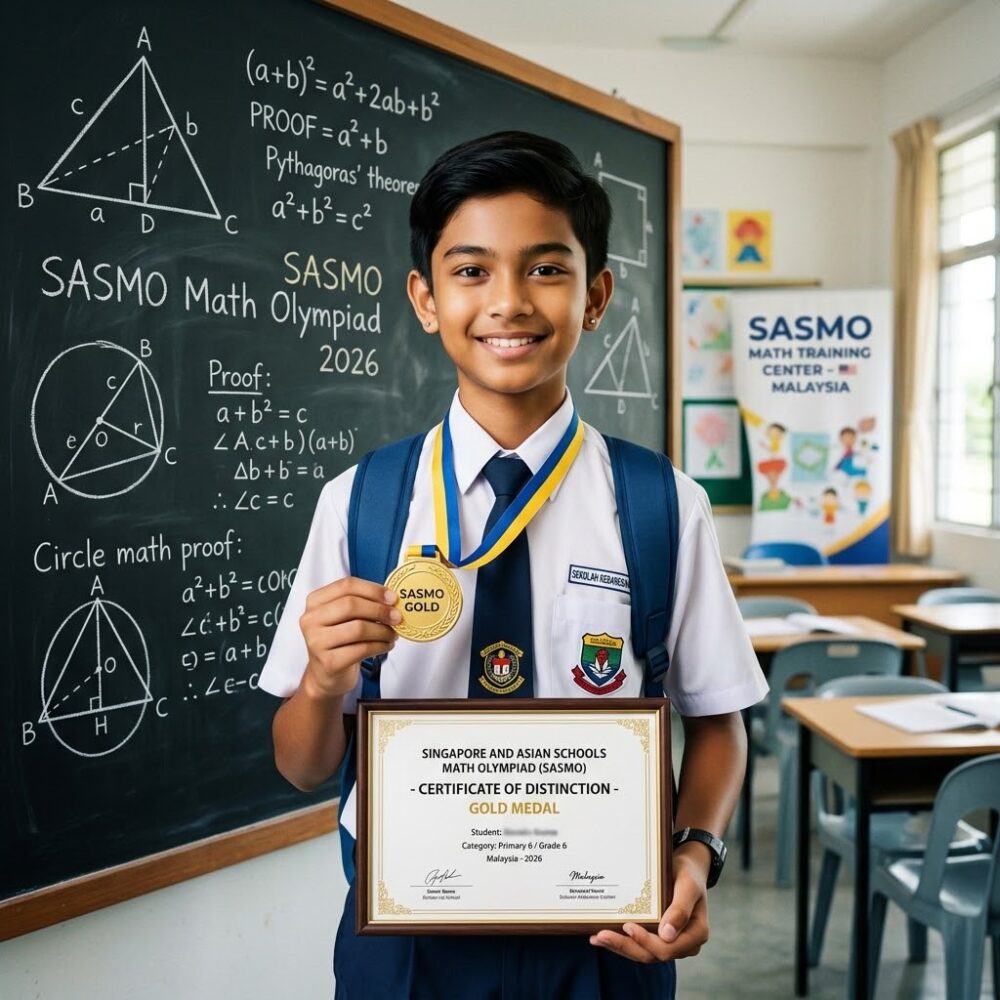
5. Preparing for Global Math Olympiads: SASMO, Kangaroo & AMO
Students grounded in Singapore heuristics naturally excel in international competitive mathematics. Competitions like the Singapore and Asian Schools Math Olympiad (SASMO), American Mathematics Olympiad (AMO), and Kangaroo Math require novel problem-solving strategies, pattern recognition, and logical deduction. At Axcel Puchong, specialized Olympiad coaching channels this foundation into consistent annual national distinctions.
6. How Axcel International School Puchong Implements the Hybrid Model
Axcel International School bridges the globally recognized Cambridge International Curriculum with the analytical power of Singapore Mathematics. In small classrooms of 15 to 25 students, specialist mathematics teachers ensure every child receives personalized scaffolding, ensuring no student is left behind in foundational arithmetic while stretching gifted thinkers with Olympiad challenges.
7. Practical Tips for Parents to Support Math Confidence at Home
Parents can reinforce mathematical intuition without drill-and-kill worksheets by: (1) Playing logic board games and chess; (2) Involving children in real-world supermarket budgeting and discount calculations; (3) Encouraging visual drawings and diagrams when solving word problems rather than demanding immediate numerical answers.
Frequently Asked Questions
Clear answers to common questions asked by Malaysian parents.
The CPA approach is a 3-step learning progression where children first manipulate physical objects (Concrete), then draw visual representations like bar models (Pictorial), before finally writing abstract mathematical symbols and equations (Abstract).
While standard curricula often rely heavily on mechanical calculation drills and formula memorization, Singapore Math emphasizes visual bar modelling, conceptual problem-solving, and verbal explanation of mathematical reasoning.
Children can begin basic CPA manipulatives in kindergarten (ages 4–6) and progress to structured bar model drawing from Primary Year 2 and Year 3 (ages 7–9).
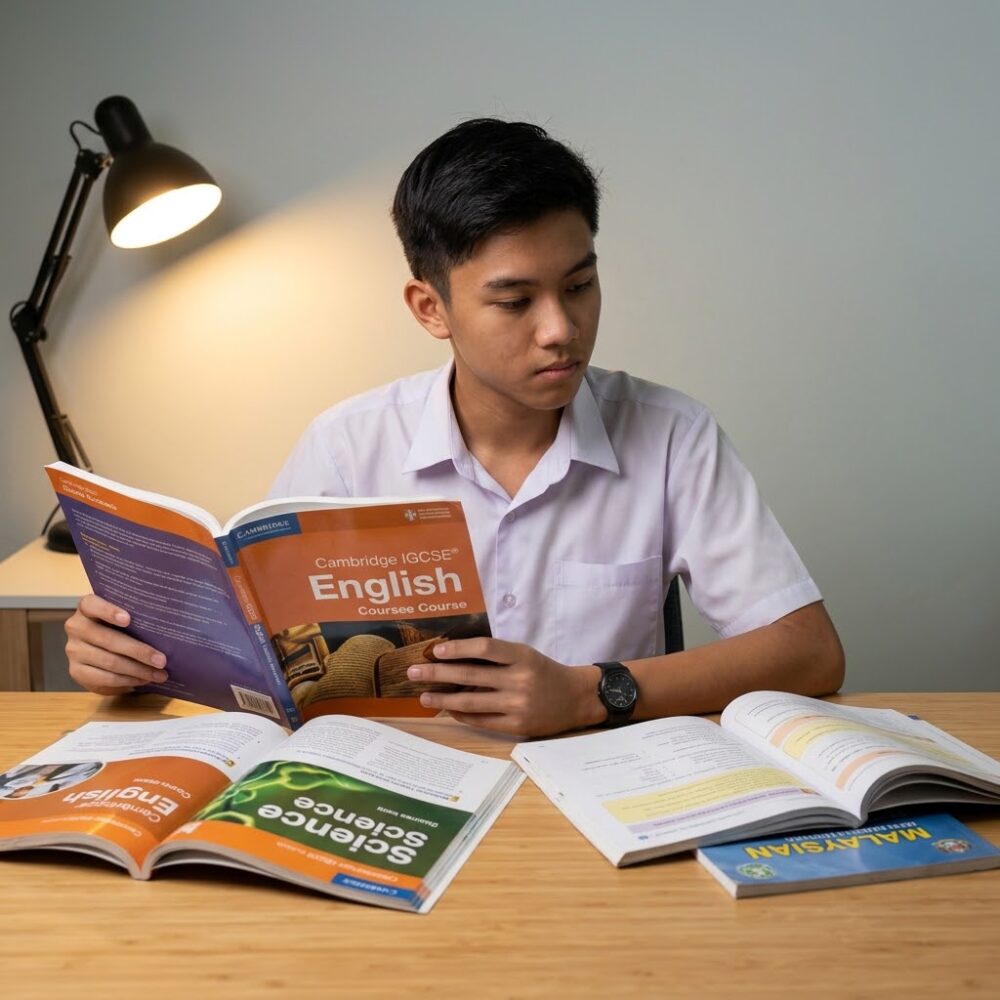
Yes. Cambridge IGCSE mathematics heavily features application word problems and multi-step reasoning. Students trained in Singapore heuristics adapt faster and score higher in Extended Mathematics and Additional Mathematics.
Axcel provides structured training for SASMO (Singapore & Asian Schools Math Olympiad), Kangaroo Math Malaysia, AMO (American Mathematics Olympiad), and HKIMO (Hong Kong International Math Olympiad).
Small class sizes of 15–25 students allow teachers to diagnose individual conceptual stumbling blocks, using physical manipulatives and guided visual models to rebuild fundamental confidence in a zero-shame environment.
Science lessons combine Cambridge curriculum standards with hands-on laboratory experiments, hypothesis formulation, and interactive gamified revision tools like Aura Tycoon for Years 7–9.
Yes. Parents can schedule a private campus tour and Student Shadowing Day to observe our interactive math classrooms and meet specialist academic coaches.
Related Education & Curriculum Guides
Explore more research articles to help you make informed schooling decisions.

Looking for Educational Excellence in Puchong?
Explore Axcel International School‘s accredited Cambridge curriculum, featuring Singapore Math heuristics, life-skills leadership, and starting tuition of ~RM900/month.
© 2026 Service Pro Education Insights Malaysia.
Disclaimer: Fees and curriculum details reflect 2026/2027 school schedules and may change. Images are representational; actual facilities may differ and no identifiable students are shown. Contact Axcel International School Puchong to verify current details.