
100%
Examiner Mark Scheme Alignment
5 Years
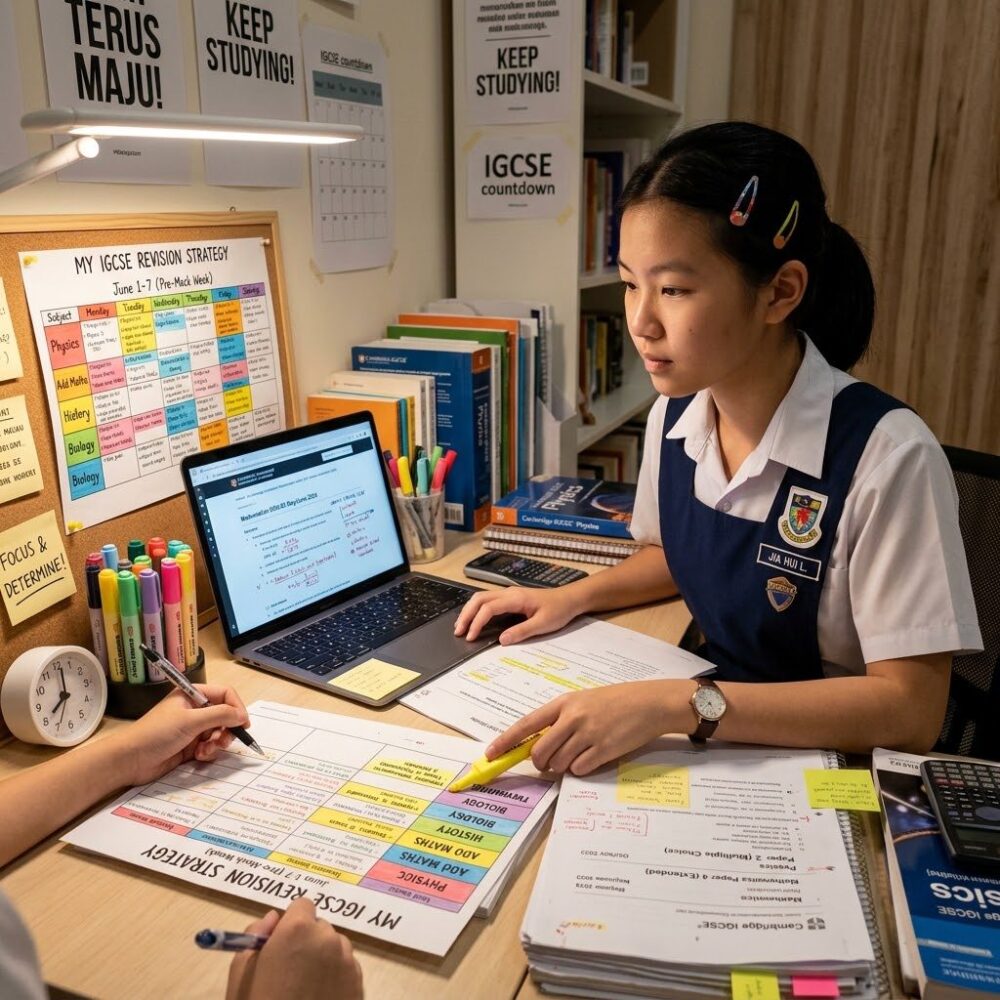
Past Paper Diagnostic Marathons
A* & A
Target Grade Distinction Track
~RM900
Starting Monthly Tuition
1. The High-Stakes Milestone: Deconstructing Cambridge IGCSE
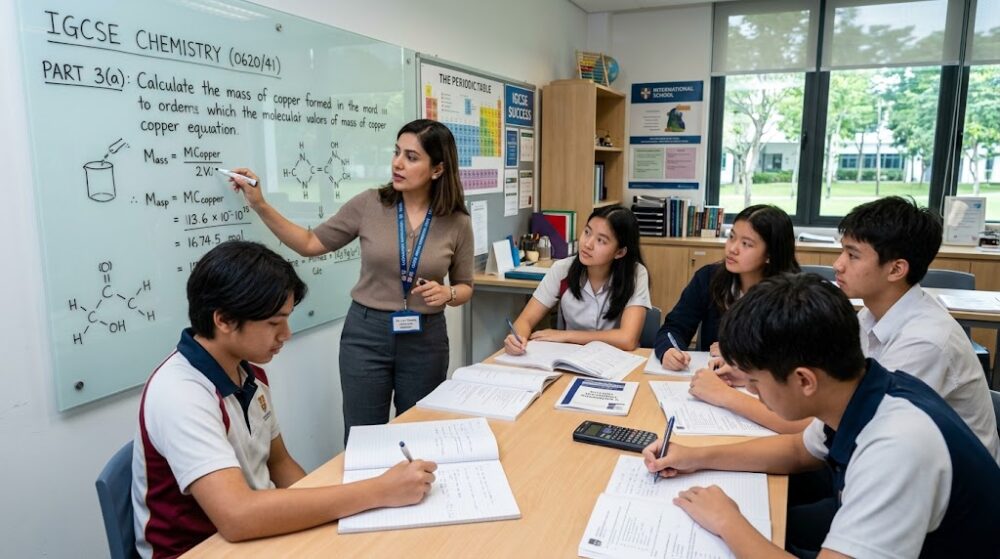
Effective Cambridge IGCSE examination preparation combines three evidence-based strategies: active recall through past-paper practice, examiner mark-scheme analysis to understand grading criteria, and timed mock examinations under hall conditions. At Axcel International School Puchong, structured revision begins in Year 11 with class sizes of approximately 25 students enabling personalised, subject-by-subject guidance.
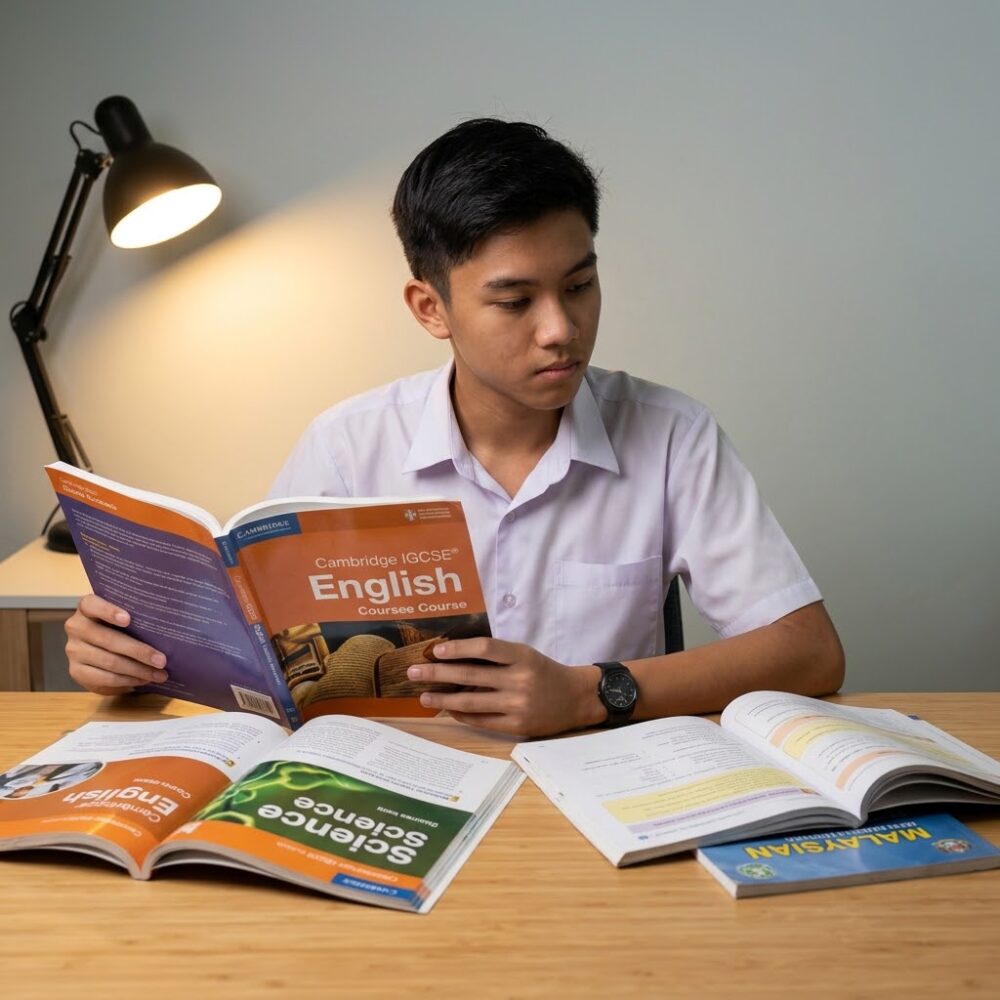
Cambridge IGCSE represents the golden standard for secondary academic evaluation worldwide. Taken at the end of Year 11, these examinations benchmark a student’s conceptual mastery across sciences, mathematics, humanities, and languages. Achieving straight A* and A grades requires far more than passive re-reading of textbooks; it demands systematic exam strategy, precise command-word interpretation, and evidence-based revision protocols. For authoritative benchmarks, consult the official Cambridge Assessment International Education IGCSE Overview.
2. The Power of Spaced Retrieval & Active Recall
Cognitive science proves that cramming before exams creates the illusion of competence while leading to rapid memory decay. Top-scoring Cambridge candidates utilize Spaced Repetition and Active Recall—testing themselves at expanding intervals (Day 1, Day 3, Day 7, Day 21). Flashcards, blurting techniques, and concept mapping force the brain to retrieve knowledge, cementing long-term neural pathways.
3. Mastering Cambridge Examiner Mark Schemes & Command Words
Cambridge examiners grade according to exact mark schemes. A student may possess complete conceptual knowledge but lose vital marks by failing to recognize command words: ‘State’ requires a concise fact; ‘Explain’ demands a cause-and-effect relationship; ‘Evaluate’ requires weighing opposing viewpoints before concluding. Deconstructing past examiner reports is the fastest way to stop losing avoidable method marks.
4. The 3-Phase 12-Week Revision Timetable
A structured 12-week runway before exam series is divided into 3 distinct phases: (Phase 1: Weeks 1–4) Comprehensive Content Audit & Weakness Diagnostics; (Phase 2: Weeks 5–8) Topical Past Paper Drilling & Error Log Rectification; (Phase 3: Weeks 9–12) Full Timed Mock Exam Simulations under strict exam conditions.
5. Science & Mathematics Specific Tactics: Paper 2, 4 & 6
In Cambridge Sciences, multiple-choice Paper 2 tests conceptual precision and distractors; structured Paper 4 tests calculation working and data synthesis; Paper 6 (Alternative to Practical) tests experimental error analysis and graph plotting. Practicing timed papers under actual examination constraints eliminates time-pressure anxiety on exam day.
6. Gamified Science Revision: How Aura Tycoon Enhances Prep
At Axcel Puchong, Lower Secondary students utilize Aura Tycoon (auratycoon.com) to reinforce Cambridge science fundamentals. The platform’s automated Weakness Log isolates recurring misconceptions in biology, chemistry, and physics, ensuring students enter Year 10 with rock-solid conceptual foundations before beginning formal IGCSE coursework.
7. Managing Mental Stamina, Sleep, and Exam Anxiety
Academic preparation is futile if a student burns out before exam week. High-achieving candidates maintain strict 8-hour sleep schedules to facilitate memory consolidation during REM sleep, engage in daily cardiovascular exercise, and practice cognitive reframing to transform exam nervousness into focused performance arousal.
Frequently Asked Questions
Clear answers to common questions asked by Malaysian parents.
Formal revision should begin at least 5 to 6 months prior to the exam series, with intensive past-year paper drilling starting 12 weeks before the first paper.
Core curriculum covers basic syllabus content offering grades C to G, while Extended curriculum includes advanced topics allowing students to achieve top grades of A*, A, and B.
Past papers are the single most effective revision tool. Solving 5 to 7 years of past papers familiarizes students with question patterns, command words, and time allocation.
Axcel conducts past-paper diagnostic clinics, one-on-one subject coaching, weekly mock examinations, and examiner mark scheme deconstructions in small classes of 15–25 students.
Practice with a stopwatch allocating 1 mark per minute (e.g., spending exactly 6 minutes on a 6-mark question), leaving 10 minutes at the end for systematic answer checking.
Checkpoints identify specific topic weaknesses early in Year 7–9, allowing teachers to deliver targeted bridging support before formal IGCSE syllabus begins.
Yes. Cambridge offers two major examination series annually (May/June and October/November), allowing students to retake specific subjects if needed.
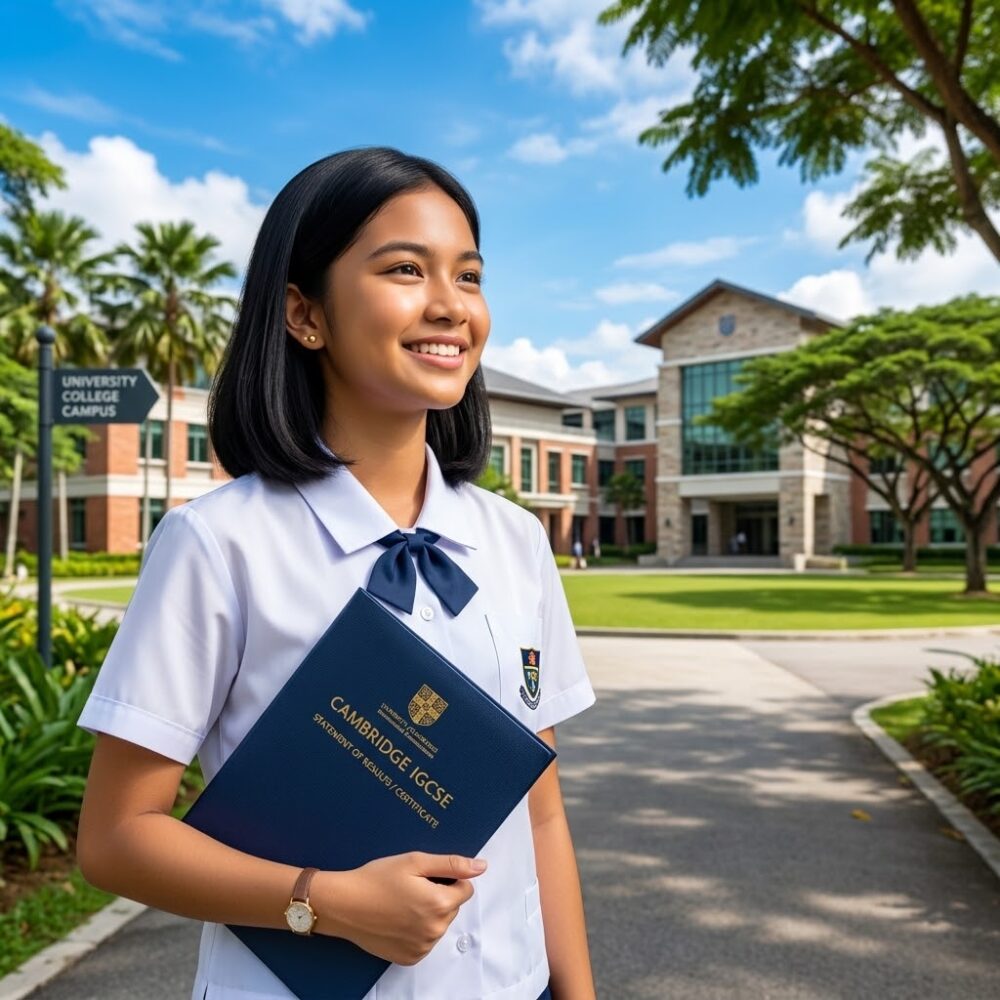
Most premier colleges and universities offer 50% to 100% merit scholarships for students achieving 6 to 9 A*/A grades in Cambridge IGCSE.
Related Education & Curriculum Guides
Explore more research articles to help you make informed schooling decisions.


Looking for Educational Excellence in Puchong?
Explore Axcel International School‘s accredited Cambridge curriculum, featuring Singapore Math heuristics, life-skills leadership, and starting tuition of ~RM900/month.
© 2026 Service Pro Education Insights Malaysia.
Disclaimer: Fees and curriculum details reflect 2026/2027 school schedules and may change. Images are representational; actual facilities may differ and no identifiable students are shown. Contact Axcel International School Puchong to verify current details.