What the Dirty Water Tells You: Inside a Professional Sofa Deep Clean in Malaysia
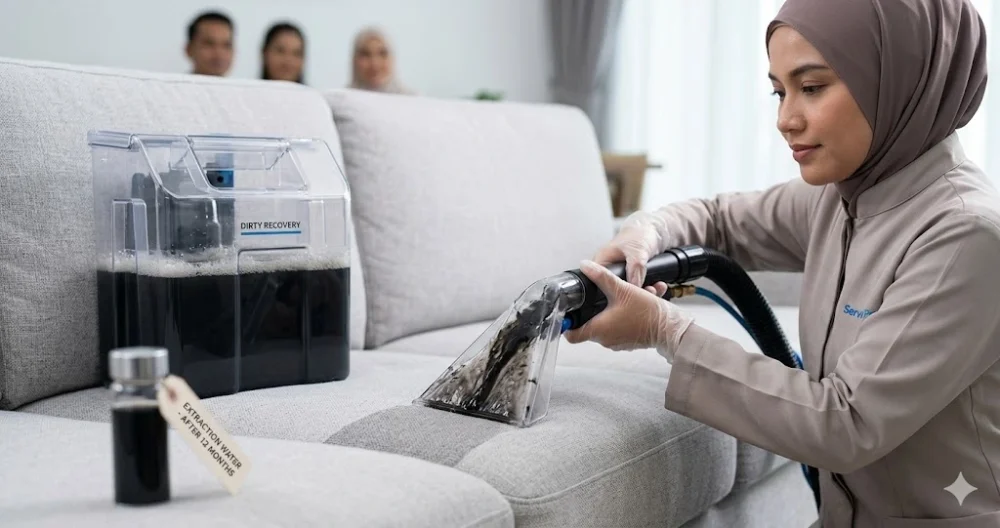
When a technician empties the extraction tank after cleaning a seemingly spotless sofa, the water is almost always an opaque, murky black. That wastewater is a biological biopsy of your living environment — and what it contains has direct implications for your family’s health.
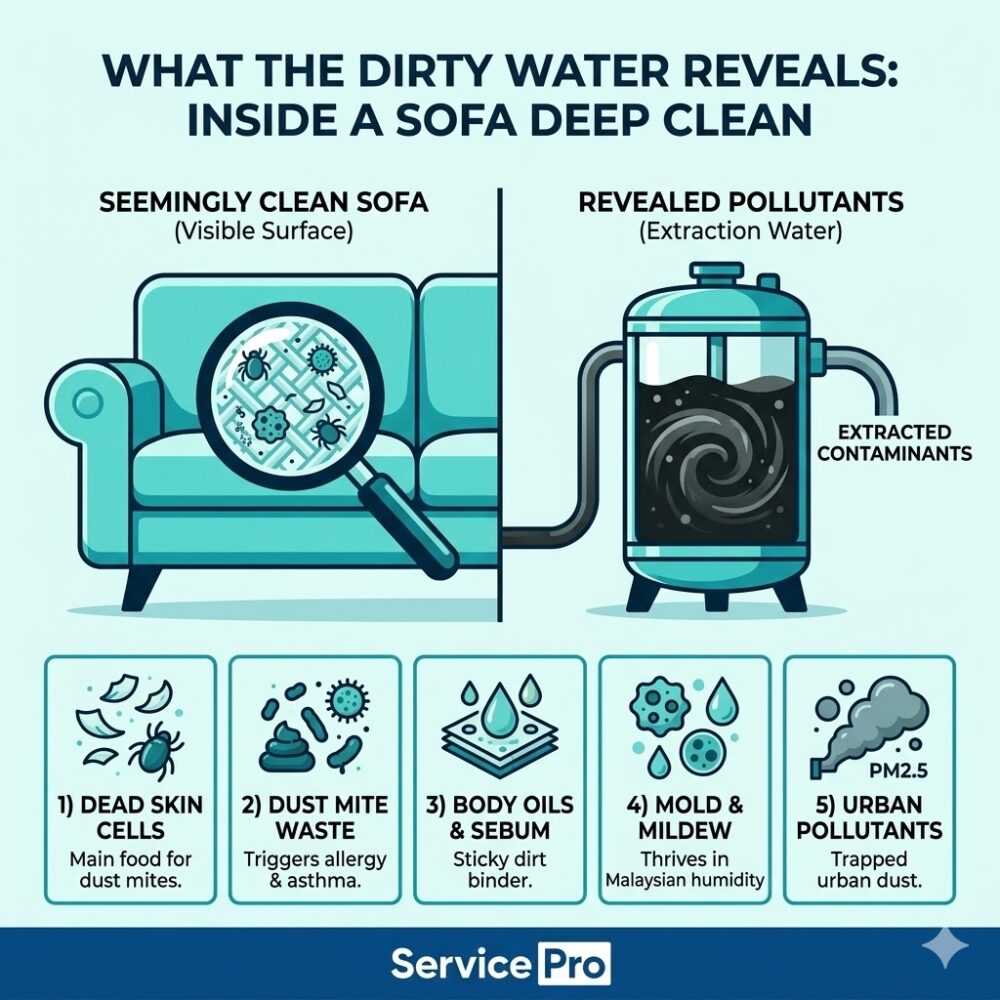
The extraction water is dark because it contains a concentrated, liquefied mixture of dissolved dead skin cells, oxidised human sweat, dust mite fecal matter, sebum, mould spores, and embedded atmospheric particulates. The fabric weave functions as a mechanical filter — every time you sit on the sofa, you press microscopic debris deeper into the foam substrate. A professional hot water extraction dissolves and vacuums this hardened biological matrix back out as a dark, murky slurry.
Why Is the Extraction Water So Dark After a Sofa Deep Clean?
While a sofa may look perfectly presentable to the naked eye, when a technician injects pressurised hot water and enzymatic cleaning solution into the upholstery, this hardened biological and environmental matrix dissolves and is vacuumed back out. The darker the water, the longer the sofa has gone without a professional deep clean.
A useful benchmark: If your sofa has not been professionally cleaned in over 12 months, the extraction water will almost certainly be dark grey to black regardless of how clean it looks on the surface.
Biological Micro-Ecosystem
What Exactly Is Hidden Inside Your Fabric Sofa?
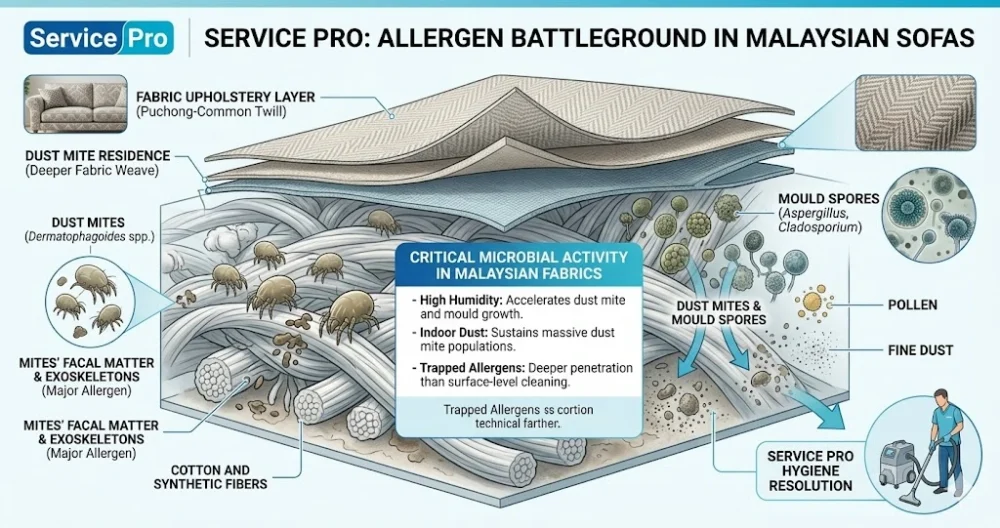
A standard fabric sofa in a Malaysian home harbours a layered micro-ecosystem of biological waste, lipid residues, and environmental pollutants. Here are the primary components found in extraction wastewater.
Dead Skin Cells
The average adult sheds 30,000 to 40,000 skin cells per hour. Over months of use, these particles accumulate in the foam, forming the primary food source for dust mites.
Dust Mites & Fecal Pellets
Each mite produces approximately 20 fecal pellets per day. These pellets contain the protein allergen Der p 1 — the leading non-pollen trigger of allergic rhinitis and asthma in Malaysia.
Sebum & Body Oils
Human skin continuously secretes sebum. This heavy oil transfers to fabric, oxidises over time, and creates a sticky layer that actively binds dust, fungi, and atmospheric soil.
Mould & Fungal Colonisation
In Malaysia’s tropical climate, any moisture event can initiate fungal colonisation within the foam base within 24 to 48 hours.
Atmospheric & Urban Pollutants
Homes in the Klang Valley, Johor Bahru, and Penang regularly accumulate PM2.5 particulates from road traffic, construction dust, and cross-border haze (jerebu) from Sumatra.
Pet Dander & Hair
Cat and dog dander contains the allergens Fel d 1 and Can f 1 respectively — nearly impossible to remove with conventional vacuuming alone.
Why Malaysia Is Different
How Malaysia’s Climate Specifically Worsens Sofa Contamination
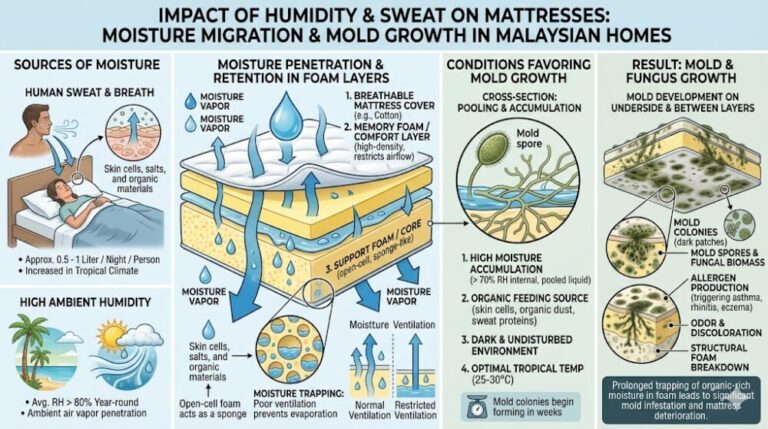
Malaysia’s average relative humidity of 70% to 90% creates conditions that dramatically accelerate biological contamination inside upholstered furniture — far more so than in temperate climates where most sofa cleaning research is conducted.
Haze Season (Jerebu)
During Southwest Monsoon haze events, households in KL and Selangor keep windows firmly shut. This traps recirculated indoor air and concentrates PM2.5 particles on all soft furnishings.
Air Conditioner Usage Patterns
Running A/C at 16°C to 20°C for extended periods creates a temperature differential between the cold fabric surface and the warm, humid foam interior — the exact condition that promotes condensation and mould genesis.
High-Density Condo Living
Smaller floor plans in Mont Kiara, Cheras, Puchong, and Subang Jaya mean sofas are used more intensively per square metre, accelerating the pace of biological contamination.
Cooking Aerosols
Malaysian households that regularly cook with heavy oil aerosols — nasi goreng, char kuey teow, rendang — generate airborne grease particles that coat every surface, including sofas in open-plan condominiums.
Key clinical note: Malaysia Ministry of Health (MOH) clinical guidelines identify house dust mites as the primary indoor aeroallergen and a major trigger of the country’s high asthma prevalence. Malaysia has among the highest rates of dust mite sensitisation in Southeast Asia.
The Science of the Clean
What Does a Professional Hot Water Extraction Process Actually Do?
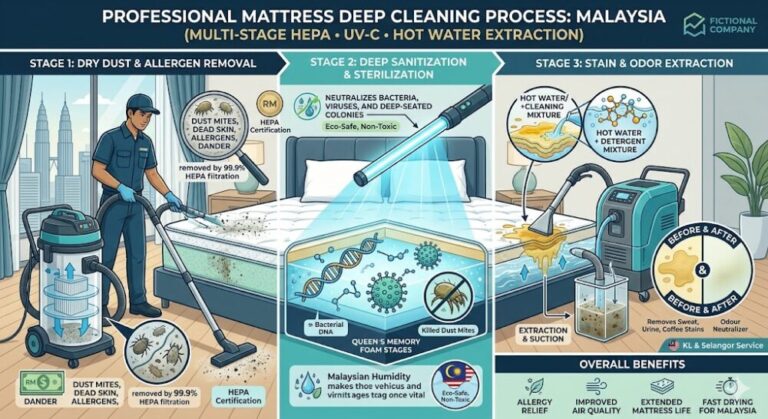
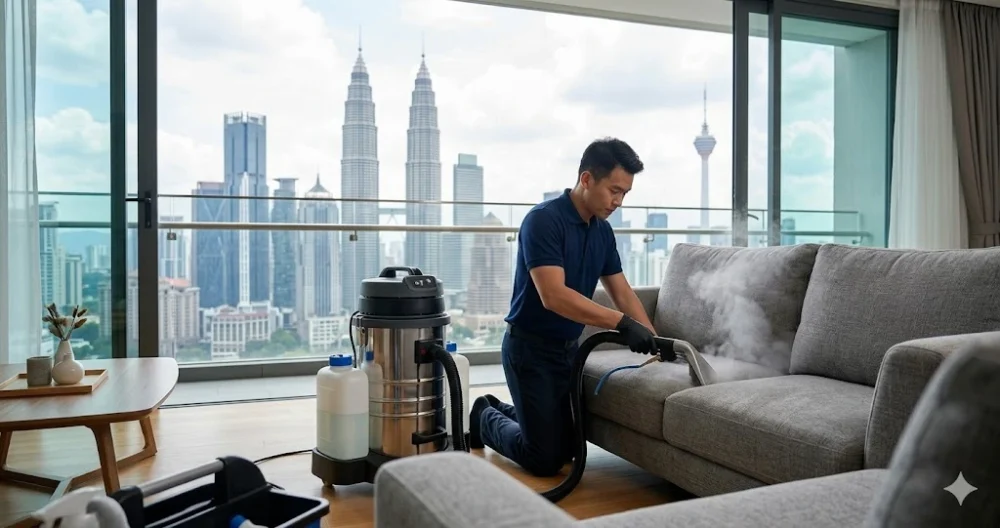
Professional hot water extraction works through a four-stage mechanical and chemical process that operates far below the fabric surface — which is why it produces results a vacuum cleaner structurally cannot replicate.
Fabric Inspection and Pre-Treatment
A qualified technician identifies the fabric type and assesses soiling levels. A pre-treatment enzyme spray is applied and allowed to dwell for 5 to 10 minutes. This enzymatic solution begins breaking down protein-based allergens (dust mite waste, pet dander) and lipid barriers (sebum, cooking oils) before any water is introduced.
Hot Water Injection
Pressurised hot water at 80°C to 120°C is injected deep into the upholstery fibres via a specialist wand fitted with a stainless steel nozzle. The heat physically loosens hardened biological deposits, and the elevated temperature denatures protein allergens, rendering them biologically inert.
High-Pressure Extraction
Simultaneously, an industrial-grade vacuum motor (typically 2,000 to 3,000 watts) vacuums the dissolved contaminant slurry back out of the foam. This is the step that produces the dark wastewater, and why professional extraction is irreplaceable: no surface cleaning method generates the differential pressure required to pull material from the foam substrate.
Post-Treatment and Drying
A fabric-safe deodorising agent is applied. The technician then uses either a high-velocity air blower or directs the homeowner to run air conditioning on “Dry” (dehumidifier) mode to accelerate moisture removal and prevent the brief post-cleaning moisture window from enabling mould re-colonisation.
Cleaning Schedule
How Often Should You Deep Clean Your Sofa in Malaysia?
You should professionally deep clean your sofa every 6 to 12 months in Malaysia’s climate. Understanding how often you should clean your sofa in Malaysia is critical because this interval is shorter than recommendations in temperate countries due to year-round biological activity within upholstery driven by humidity.
| Household Profile | Recommended Frequency |
|---|---|
| Single occupant, no pets, no respiratory conditions | Every 12 months |
| Couple or small family, no pets | Every 9 to 12 months |
| Household with indoor pets (cats/dogs) | Every 4 to 6 months |
| Household with young children or babies | Every 4 to 6 months |
| Member with asthma, eczema, or allergic rhinitis | Every 3 to 6 months |
| Home with visible mould history or flood damage | Immediately, then every 6 months |
Between Professional Cleans
Maintenance Tips for Between Deep Cleans
Vacuum the sofa surface with a HEPA-filtered vacuum weekly to remove loose surface debris
Use a fabric-safe antibacterial spray monthly on high-contact areas — armrests and seat cushions
Ensure the living area is well-ventilated, particularly after cooking
Address any liquid spills within 30 minutes to prevent foam saturation and mould initiation
Material Comparison
Leather Sofa vs. Fabric Sofa: Which Requires More Hygiene Attention?
Fabric sofas accumulate deeper biological contamination, but leather sofas present their own hygiene challenges that are frequently underestimated by Malaysian homeowners.
Fabric Sofas (kain)
Biological Hygiene Concern
- The woven structure creates thousands of microscopic pockets that trap biological and environmental particulates
- Hot water extraction is the gold standard — the only method capable of reaching embedded allergens
- Fabric sofas require professional cleaning more frequently in humid Malaysian conditions
- Covers polyester, cotton, linen, velvet, and microfiber — all require fabric-specific pre-treatment chemistry
Leather & PU Leather (kulit)
Material Preservation Concern
- Genuine leather and PU leather surfaces do not trap allergens as deeply as fabric
- Highly susceptible to sebum oxidation and sweat salt crystallisation — causes cracking, peeling, and rancid odour if untreated
- Professional leather cleaning involves pH-balanced alkaline cleaners, deep conditioning, and protective wax — a distinct process from fabric extraction
- In Malaysia’s heat, unprotected leather absorbs ambient UV through windows, accelerating degradation
Frequently Asked Questions
Frequently Asked Questions About Professional Sofa Cleaning in Malaysia
Your Sofa. Clinically Clean. Guaranteed.
The ServicePro.my Klang Valley Hygiene Ecosystem connects you with technically certified extraction specialists across the Klang Valley and beyond — vetted partners who meet our minimum technical and operational standards.
Hygiene Questions. 0
Questions from homeowners within and beyond Klang Valley, answered by our hygiene specialists.
─── MORE HYGIENE INSIGHTS
Keep Reading
Continue building your knowledge on maintaining a hygienically clean home in Malaysia’s tropical climate.