
Year 3
Early Financial Education Start
100%
Practical Budgeting Projects
Compound IQ
Interest & Investment Logic
~RM900
Starting Monthly Tuition
1. The Great Blindspot in Modern Education: Money Management
Financial literacy is taught as a formal timetabled subject at Axcel International School Puchong through the proprietary Axcel Programme, covering saving, investing, hire-purchase mathematics, and entrepreneurial thinking from primary through secondary levels. Unlike enrichment add-ons, this Financial Intelligence curriculum runs weekly alongside Cambridge core subjects.
Traditional schooling teaches advanced calculus, chemical equations, and medieval history, yet rarely equips young adults with fundamental financial survival skills: how compound interest works, how credit card debt accumulates, how inflation erodes savings, and how to create a profitable business budget. As cashless transactions and e-wallets make spending invisible, teaching financial literacy from primary school has become essential. For authoritative benchmarks, consult the official OECD Financial Education in Schools Guidelines.
2. The Psychology of Money: Habits Form Before Age 7
Cambridge University research shows that money habits—delayed gratification, value perception, and saving routines—are formed by age 7. Children who learn the difference between ‘needs’ and ‘wants’ early grow into financially prudent adults who avoid impulse consumption and lifestyle inflation.
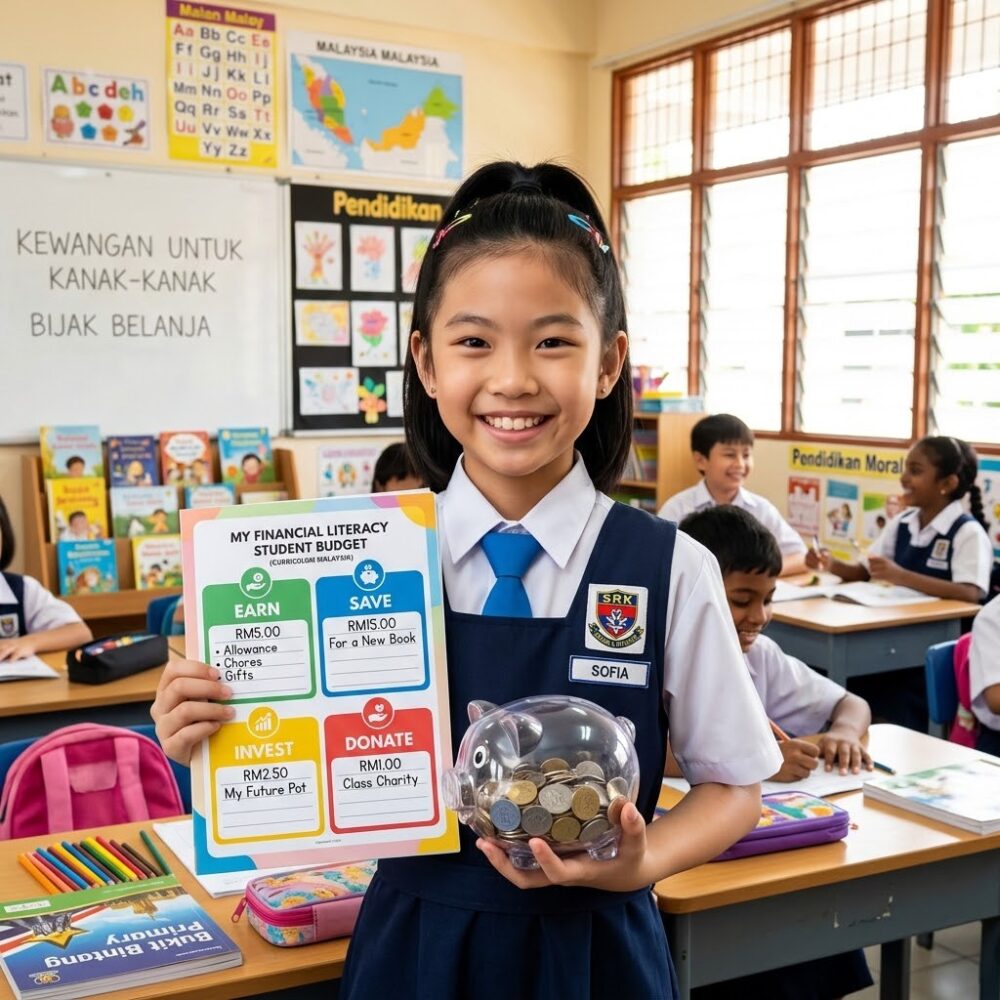
3. Primary Level Financial IQ: Earn, Save, Spend, Donate
At Axcel International School Puchong, Financial IQ is integrated directly into the weekly timetable starting in primary years. Students participate in classroom token economies, earning credits through effort, budgeting for school privileges, and managing simulated savings accounts with interest incentives.
4. Secondary Level Mastery: Investing, Compound Interest & Entrepreneurship
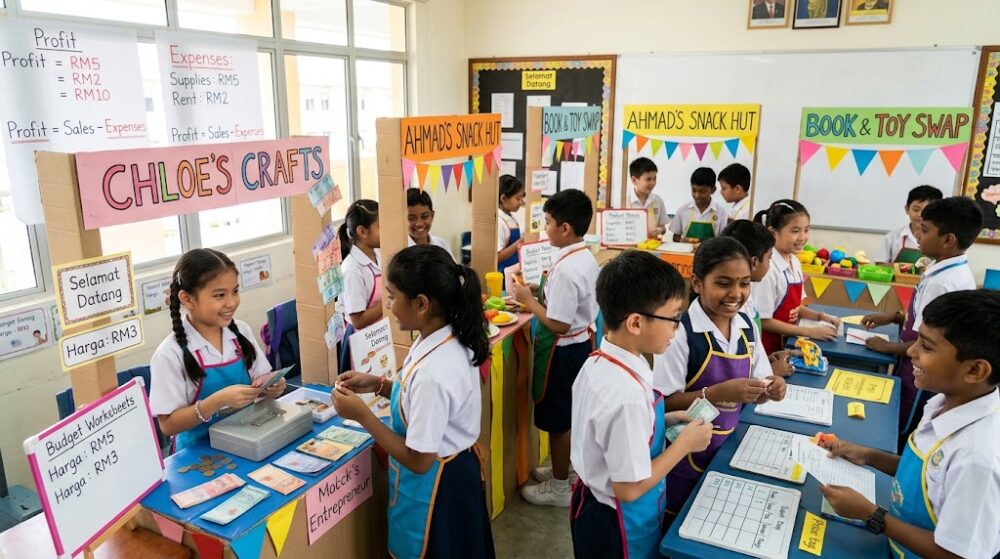
Secondary students advance into real-world commercial simulations: calculating annual percentage yields (APY), analyzing business cash flow statements, understanding stock market diversification, and evaluating startup unit economics. Students pitch viable micro-business ideas in annual entrepreneurship showcases.
5. Avoiding the Debt Trap: Credit Literacy in a Digital World
With the rise of Buy-Now-Pay-Later (BNPL) schemes and aggressive digital marketing, teenagers face unprecedented financial temptations. Our curriculum deconstructs the mechanics of consumer credit, teaching students how interest compounding can work for them through investing or against them through revolving debt.
6. How The Axcel Programme Pioneers Practical Life Skills
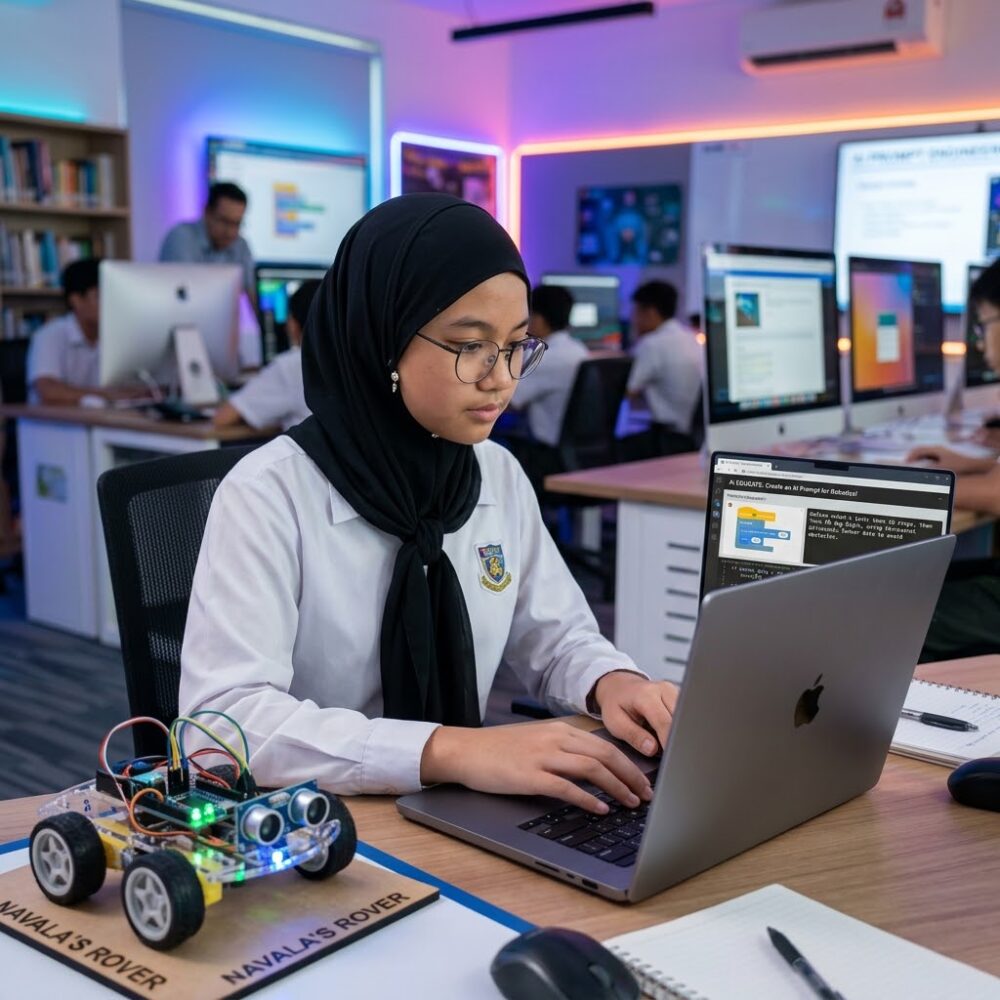
Financial IQ is one of four core pillars in The Axcel Programme (alongside Pitching, AI Prompting, and TRIZ Innovation). By combining academic excellence with street-smart financial acumen, Axcel graduates possess the practical judgment needed to build, preserve, and grow wealth in their adult careers.
7. Actionable Ways Parents Can Reinforce Financial IQ at Home
Parents can build healthy financial habits at home by: (1) Giving an allowance tied to budgeting responsibilities rather than chore-bribery; (2) Involving children in utility bill and grocery planning; (3) Opening a custodial investment account to demonstrate compound dividend growth.
Frequently Asked Questions
Clear answers to common questions asked by Malaysian parents.
Habits of delayed gratification and value perception are established before age 7. Early education prevents reckless consumer spending and debt traps in adulthood.
We use interactive gamified commerce simulations, classroom token economies, mock stock portfolios, and real student entrepreneurship markets.
Yes. Financial IQ is a timetable-integrated pillar of The Axcel Programme taken by all primary and secondary students.
Yes. Secondary students study the mechanics of digital payment systems, cybersecurity in banking, inflation, and the economics of global currencies.
Financial IQ provides real-world context that accelerates understanding in Cambridge IGCSE Economics, Business Studies, and Accounting.
Students earn school credits for punctuality, teamwork, and innovation, which they budget for rewards, invest in class ventures, or save for term dividends.
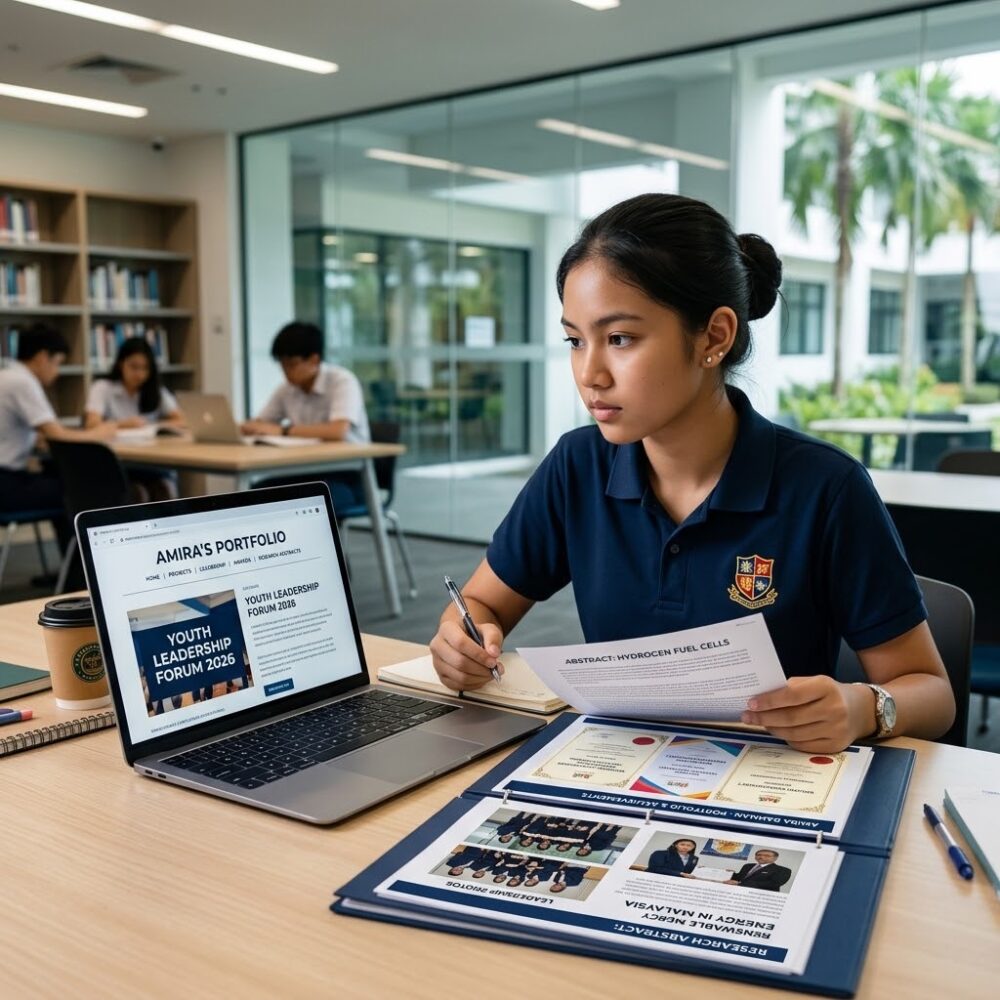
Yes. Students earn verified Axcel Financial IQ milestone certificates that enhance their extracurricular portfolios for university applications.
Tuition starts from ~RM900/month for Primary and RM1,500 to RM1,700/month for Secondary at our Puchong campus.
Related Education & Curriculum Guides
Explore more research articles to help you make informed schooling decisions.


Looking for Educational Excellence in Puchong?
Explore Axcel International School‘s accredited Cambridge curriculum, featuring Singapore Math heuristics, life-skills leadership, and starting tuition of ~RM900/month.
© 2026 Service Pro Education Insights Malaysia.
Disclaimer: Fees and curriculum details reflect 2026/2027 school schedules and may change. Images are representational; actual facilities may differ and no identifiable students are shown. Contact Axcel International School Puchong to verify current details.