
How to Pass PUSPAKOM Inspection for Commercial Lorries
A failed PUSPAKOM inspection means your commercial lorry is legally grounded. Discover the most common reasons heavy-duty vehicles fail their mandatory checks and how to guarantee a first-time pass.
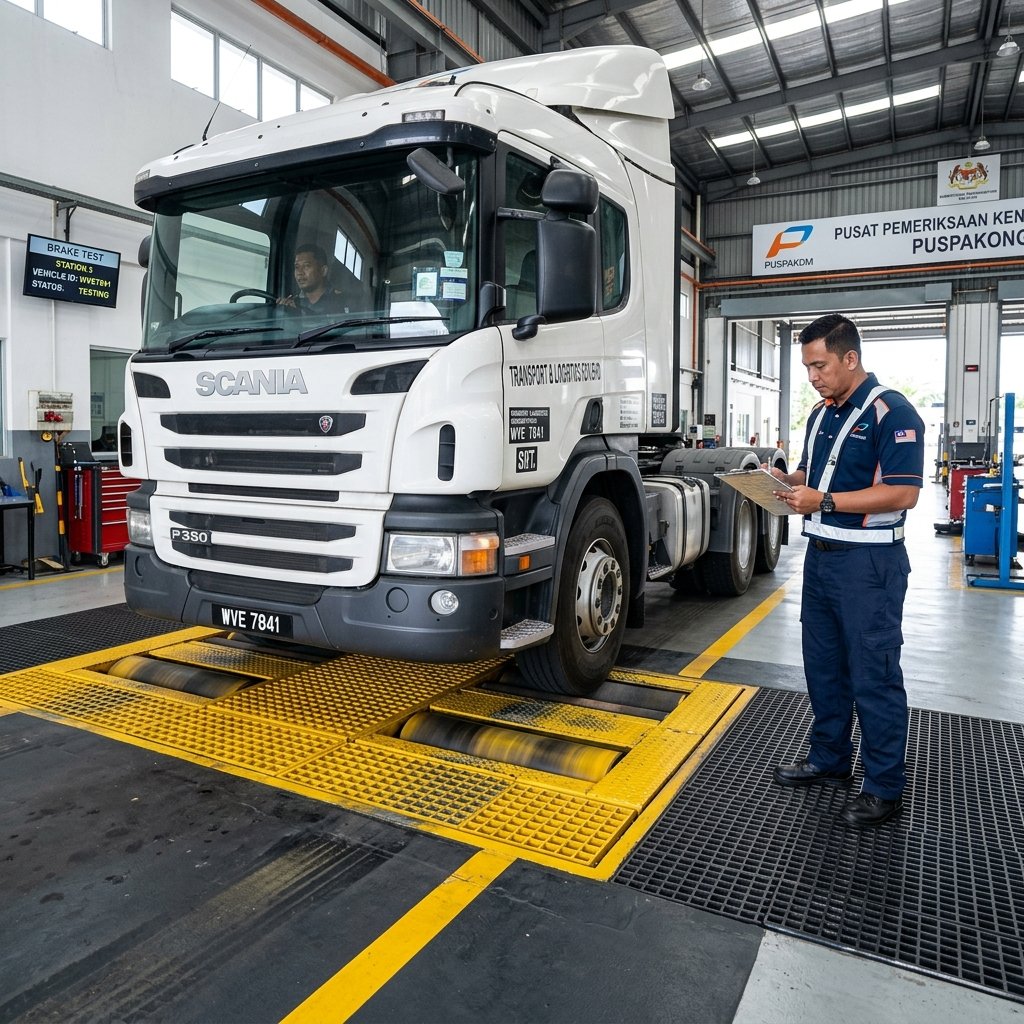
Failing a PUSPAKOM test costs you double. You lose revenue while the vehicle sits idle waiting for repairs, and you must pay re-inspection fees. Most failures are caused by easily detectable issues like brake imbalance or excessive exhaust smoke.
Authority Reference: Verified against Official PUSPAKOM Commercial Vehicle Guidelines
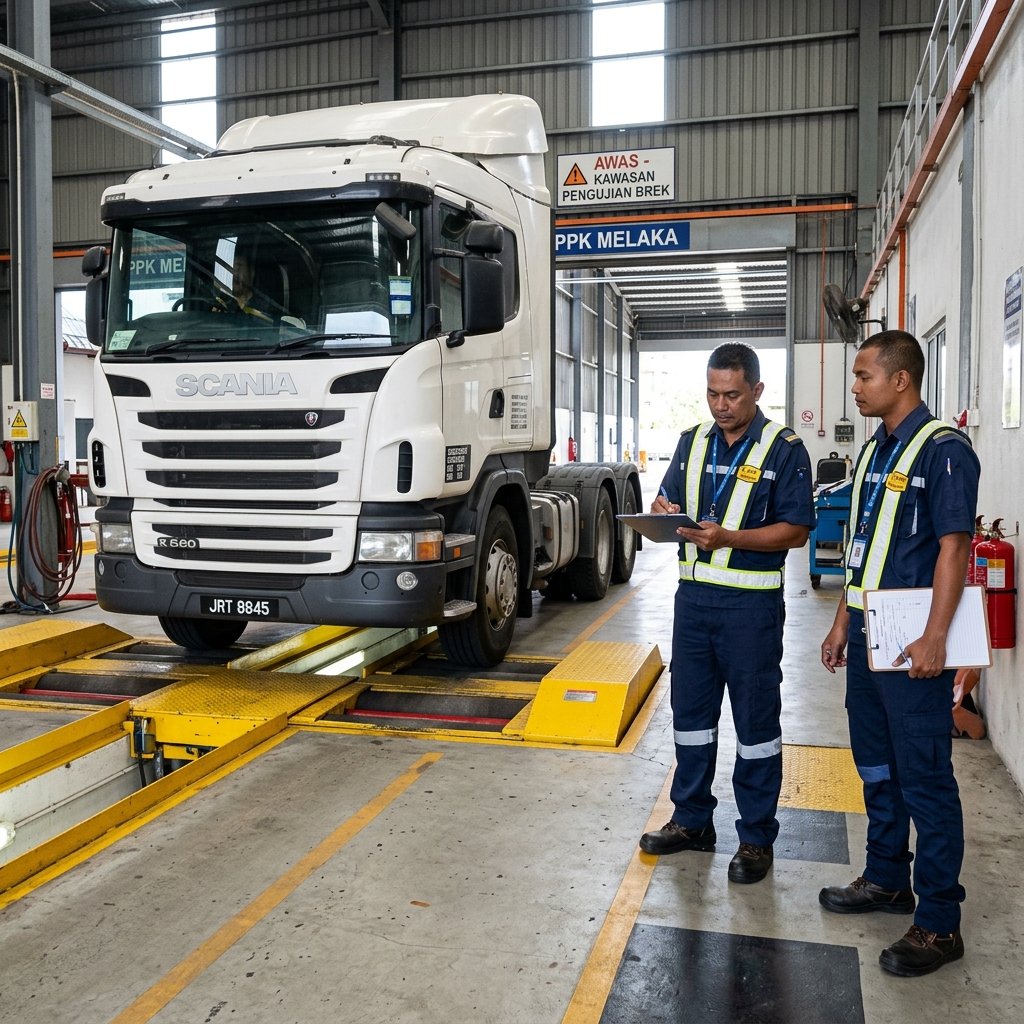 Commercial vehicles face strict scrutiny during mandatory periodic inspections in Malaysia.
The Top 3 Reasons Lorries Fail PUSPAKOM
During the Routine Inspection (Pemeriksaan Berkala), inspectors utilize computerized equipment to test the roadworthiness of 1 to 10-ton lorries. Here is where most fleets fail:
Brake Test Failure
The roller brake tester checks for braking efficiency and imbalance. Worn brake shoes or leaking air pressure lines will cause an immediate failure.
Diesel Smoke Emission
If your exhaust emits thick black smoke exceeding the legal opacity limits, your engine is burning poorly. This usually requires injector cleaning.
Under-Carriage Defects
Inspectors check the chassis and suspension. Cracked leaf springs, leaking power steering fluid, or a loose drive shaft will trigger a defect notice.
Don’t risk failing your upcoming inspection.
Schedule a Pre-Inspection Check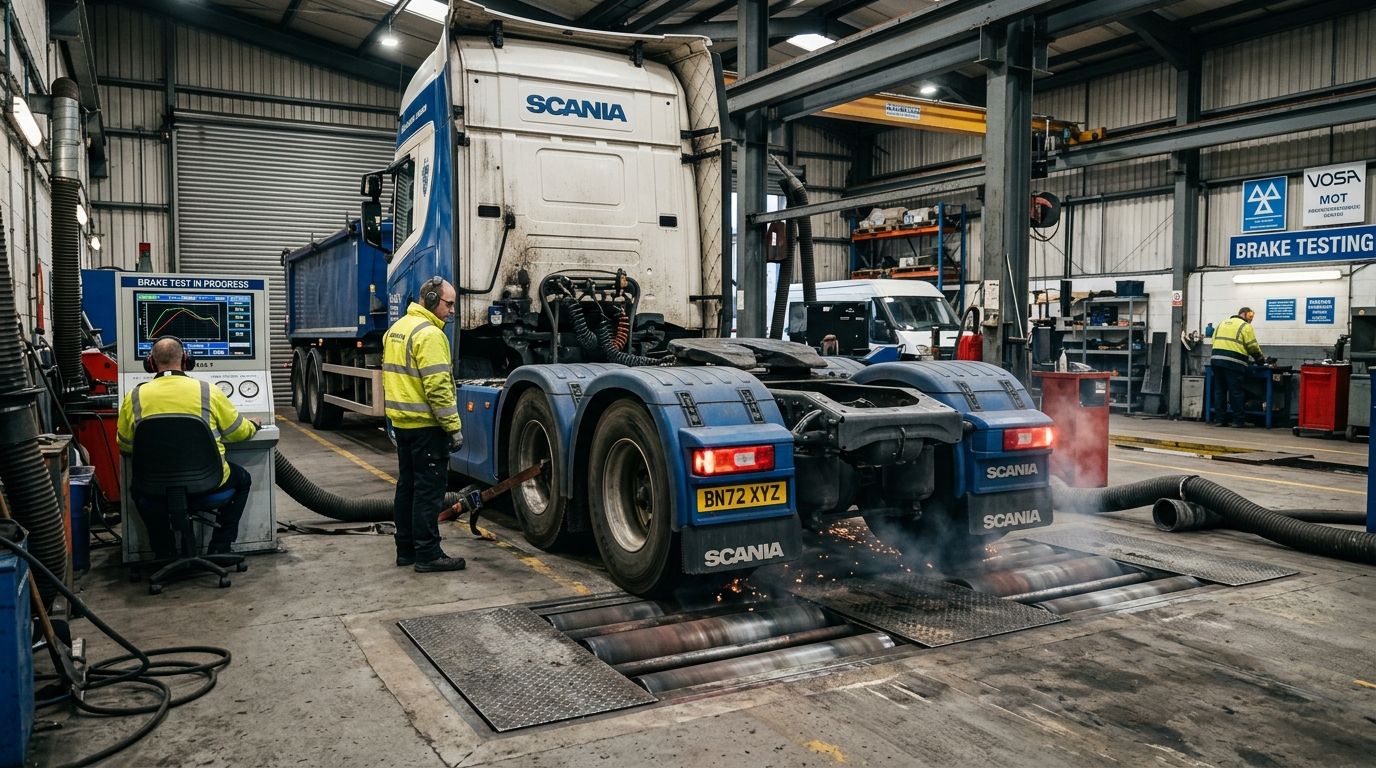 The computerized roller brake tester is notoriously strict; both axles must demonstrate balanced stopping power.
Your Pre-PUSPAKOM Checklist
Before driving your lorry to the inspection center, run through this basic checklist. While a professional mechanic should handle the mechanical checks, drivers can verify these visual elements:
- All Lights Functioning: Check headlights, brake lights, signal indicators, and reverse lights.
- Tyre Condition: Ensure all tyres (including spares) have sufficient tread depth and no visible sidewall cracks.
- Reflectors & Stickers: Verify that the mandatory MS828 rear reflectors and speed limit stickers are intact and clearly visible.
- Windscreen: Check for cracks or chips in the driver’s line of sight, and ensure wiper blades are clearing water effectively.
Frequently Asked Questions
You will be issued a failure report detailing the defects. You must repair the specified issues at a commercial workshop and return for a re-inspection within a designated timeframe (usually 30 days).
Yes. Commercial diesel specialists offer “Pre-PUSPAKOM” packages where they check emissions, brake balance, and suspension to guarantee the vehicle will pass.
In Malaysia, commercial goods vehicles are required to undergo a routine PUSPAKOM inspection every 6 months to ensure roadworthiness and safety compliance.
The top reasons for failure include poor brake efficiency on the computerized roller tester, excessive black smoke emissions, and worn-out tires with insufficient tread depth.
If your lorry fails, you cannot appeal the result. You must repair the specific failed components at a certified workshop and return for a re-inspection within a specified timeframe.
The fee varies by vehicle weight class, but routine inspections for commercial goods vehicles generally range from RM50 to RM90, excluding any runner or agency fees.
Yes, the undercarriage and engine bay must be thoroughly washed. Inspectors will refuse to inspect vehicles with heavy mud or grease covering critical chassis numbers and suspension parts.
Ensure a First-Time Pass
Have our certified mechanics perform a thorough pre-inspection check on your lorry’s brakes, emissions, and chassis before you visit PUSPAKOM.
Book a Pre-Inspection ServiceLooking for complete commercial fleet maintenance? Visit our main Lorry Repair Kepong service hub.
Part of the ServicePro.my Automotive Hub Network. All rights reserved.