
Black Smoke from Lorry Exhaust: What It Means & Repair Costs
Is your commercial lorry leaving a trail of thick black smoke across the highway? This isn’t just an environmental hazard—it’s a massive red flag that your diesel engine is burning expensive fuel incorrectly and risking catastrophic turbo failure.
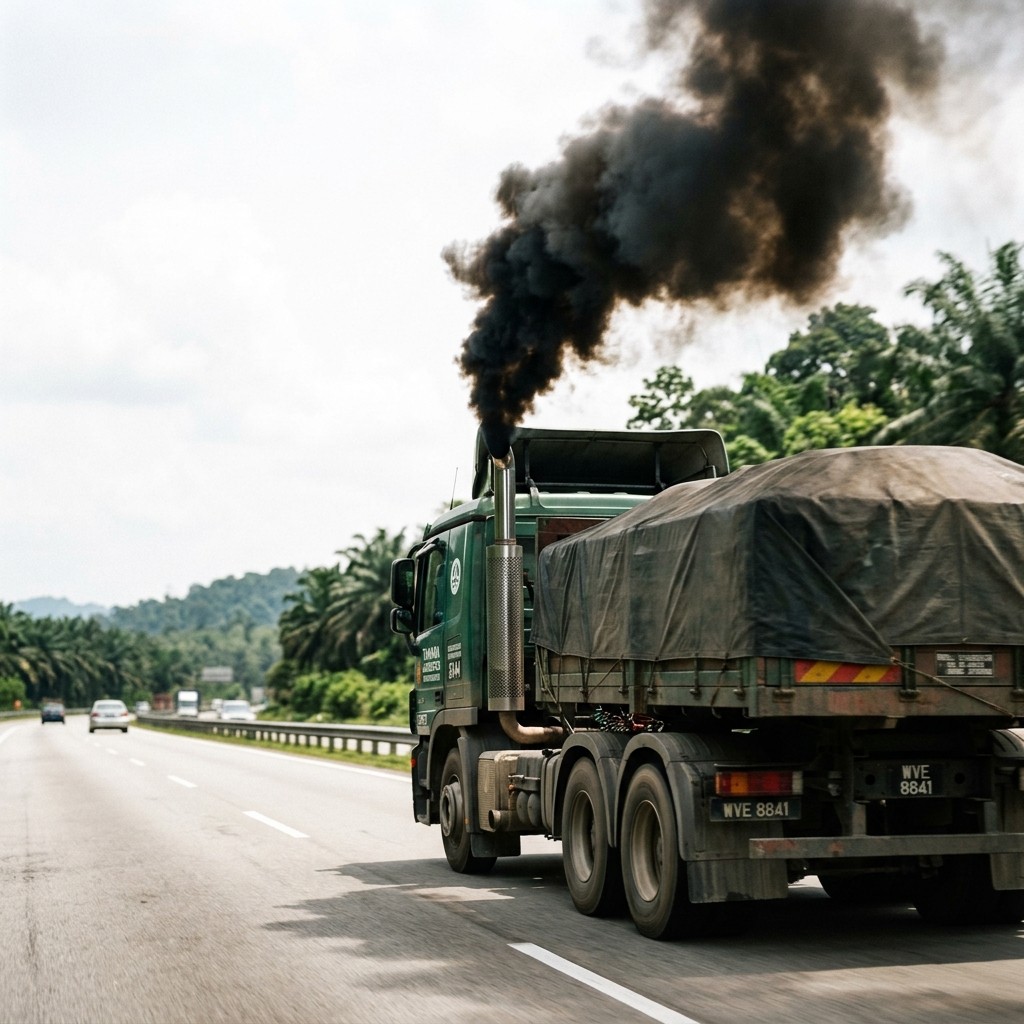
Black smoke equals wasted money. It is the physical manifestation of unburnt diesel fuel passing straight through your engine and out the exhaust pipe. Not only are your fuel costs skyrocketing, but you are also at high risk of failing PUSPAKOM emission tests.
Authority Reference: Verified against Department of Environment (DOE) Diesel Emission Standards
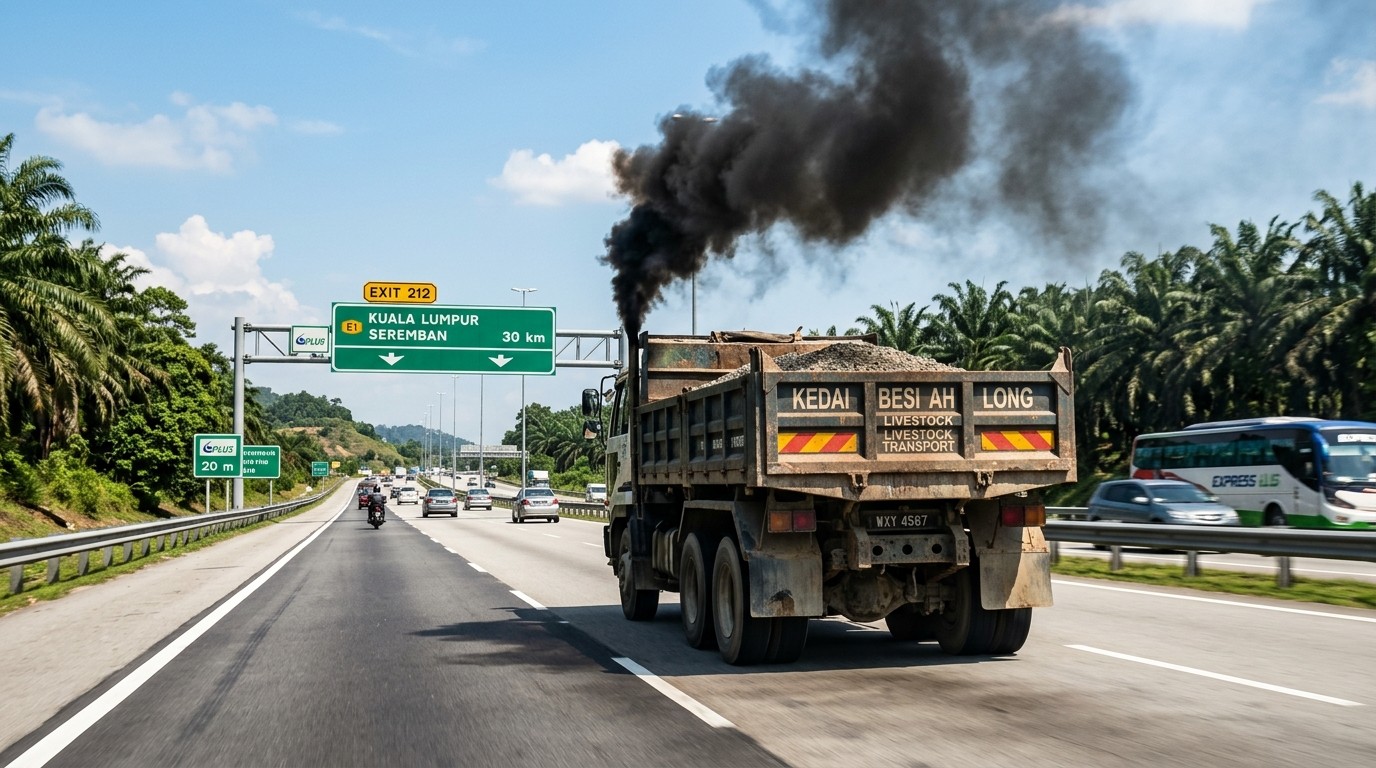 Prolonged emission of black smoke will quickly clog the Diesel Particulate Filter (DPF), leading to a severely restricted exhaust system.
The 3 Main Causes of Diesel Black Smoke
Diesel engines require a perfectly balanced ratio of air to fuel to run cleanly. When black smoke appears, the engine is receiving too much fuel, not enough air, or the injection timing is severely off.
Faulty Fuel Injectors
Worn or clogged common rail injectors will “dribble” fuel into the cylinder rather than spraying a fine mist. This excess liquid fuel cannot burn completely during the combustion stroke.
Restricted Air Flow
A severely clogged air filter or a cracked turbocharger intercooler hose restricts the amount of oxygen reaching the engine, making the fuel mixture too “rich”.
Clogged EGR Valve
The Exhaust Gas Recirculation (EGR) valve redirects a portion of exhaust back into the engine. If it gets stuck open due to carbon soot, the engine chokes on its own exhaust.
Don’t risk a PUSPAKOM emissions failure.
Book an Emissions Test Today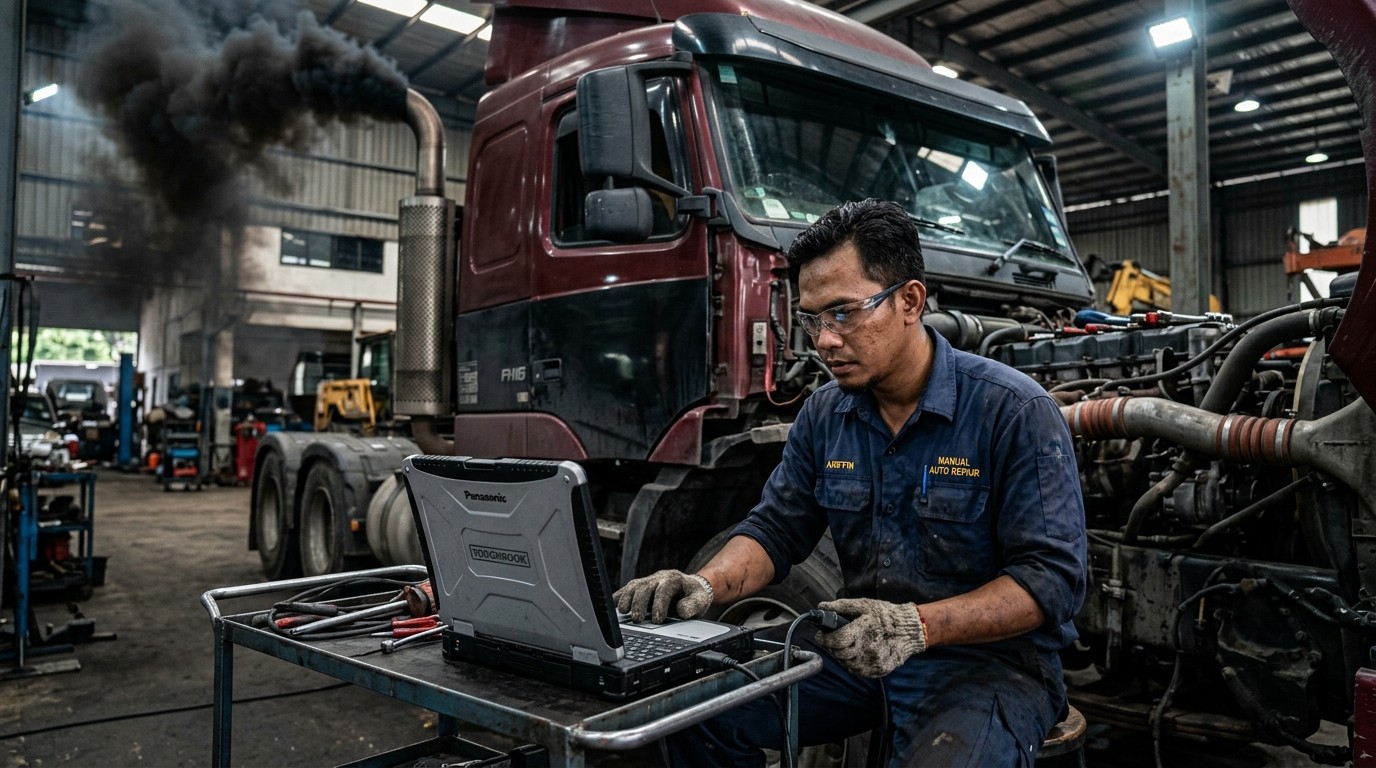 Modern diesel engines require computerized ECU scanning to pinpoint exactly which cylinder is misfiring or over-fueling.
How Much Does It Cost to Fix?
The repair cost for black smoke heavily depends on which component has failed. Here are standard diagnostic estimates for 1 to 10-ton lorries:
- Air Filter Replacement: RM 150 – RM 300 (The cheapest and easiest fix for restricted airflow).
- EGR Valve Cleaning: RM 400 – RM 800 (Removing carbon buildup using ultrasonic cleaning baths).
- Fuel Injector Rebuild (per unit): RM 600 – RM 1,200 (Requires removing the injector, cleaning the nozzle, and calibrating it on a flow bench).
- Turbocharger Rebuild: RM 1,500 – RM 4,500 (Required if the turbo bearings have failed and cannot force air into the engine).
Frequently Asked Questions
Black smoke is unburnt fuel (air/fuel imbalance). Blue smoke means the engine is burning oil (worn piston rings). White smoke usually indicates coolant is entering the combustion chamber (blown head gasket).
Yes. PUSPAKOM uses an opacity meter during the routine inspection. If your lorry’s exhaust smoke is too dense, you will immediately fail the test and be banned from the road until repaired.
Older mechanical diesel engines may puff a little black smoke under heavy acceleration. However, continuous, thick black smoke indicates a serious mechanical fault and will fail PUSPAKOM.
Yes. A severely clogged air filter restricts oxygen flow to the engine, causing a ‘rich’ fuel mixture where diesel is only partially burned, turning into black soot in the exhaust.
Start with the basics: replace the air filter and fuel filter. If the issue persists, you will need a mechanic to check for turbocharger boost leaks and test the fuel injectors on a calibration bench.
Yes, the unburned fuel creates excessive carbon soot that will rapidly clog the Diesel Particulate Filter (DPF), contaminate the engine oil, and cause premature wear on piston rings.
While black smoke is unburnt fuel, blue smoke indicates that the engine is burning engine oil. This is usually caused by worn piston rings, bad valve seals, or a failing turbocharger seal.
Stop Burning Profits Through Your Exhaust
Black smoke destroys fuel economy and risks expensive engine damage. Our diesel specialists use advanced diagnostic scanners to pinpoint the exact cause.
Chat with an Engine Diagnostic SpecialistLooking for complete commercial fleet maintenance? Visit our main Lorry Repair Kepong service hub.
Part of the ServicePro.my Automotive Hub Network. All rights reserved.