
APAD
The Agency That Licenses School Vans
6-Monthly
PUSPAKOM Inspection Requirement
1 Belt
Per Child, Non-Negotiable
~RM900
Starting Monthly Tuition
1. Why This Check Is Yours to Make
Axcel International School does not operate school transport. It maintains a list of independent neighbourhood transporters as a courtesy to parents — people who already drive Axcel students and know the routes — but the school does not employ, license, insure or supervise them. That makes the safety assessment yours rather than the school’s, and it is worth doing properly. The good news is that it takes one phone call and one look at the vehicle.
Handing a child to a daily transport arrangement asks for real confidence in the vehicle, the driver and the paperwork behind both. Malaysia’s neighbourhood transporter system is built on reputation and works remarkably well, but it is informal by nature, and the same informality is what lets unlicensed vans, missing seatbelts and quietly overloaded vehicles slip through. Knowing what to look at is the whole difference. For the governing rules, consult the official APAD Commercial School Bus Licensing Regulations.
2. Understanding APAD Commercial Transport Licensing in Malaysia
In Malaysia, vehicles carrying passengers commercially must be licensed under the Land Public Transport Agency (APAD). A valid permit implies three things behind it: semi-annual PUSPAKOM roadworthiness inspections, commercial passenger insurance cover, and a driver whose licence and record have been checked.
In practice, what parents are offered sits on a spectrum. At one end is a fully permitted school van run as a business; at the other is a neighbour with a seven-seater doing the run for a handful of families. Both exist on any school’s transporter list in this country, and both can be perfectly good arrangements — but they are not the same thing legally or where insurance is concerned. Ask which one you are looking at, and in particular ask what the position would be if there were an accident. Deciding knowingly is the point; there is no need to be awkward about the question.
3. Seatbelts and the Difference Between Stated and Actual Capacity
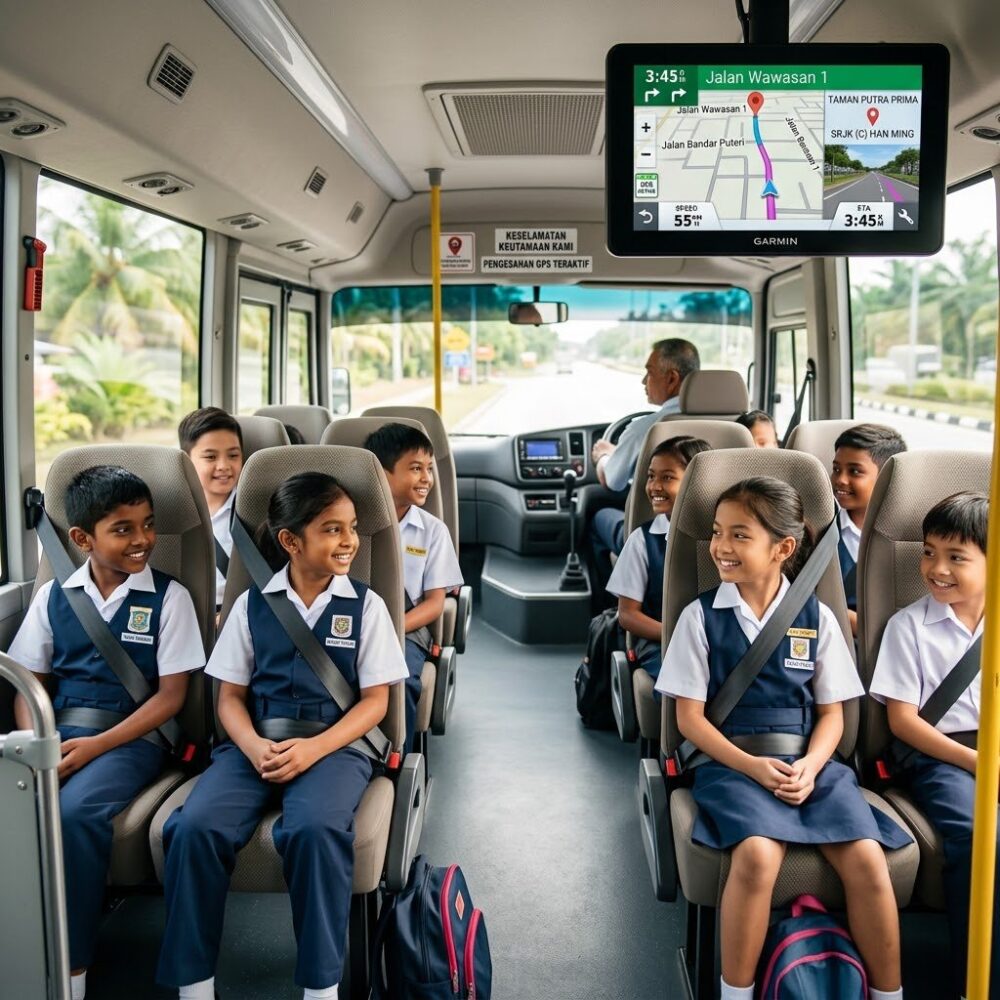
Every child needs their own seat with a working belt. No laps, no aisle standing, no makeshift stools — a rule easy to state and easy to quietly break on a full morning. The transporter list states each vehicle’s capacity excluding the driver, ranging from four seats in a small car to seventeen in the largest van, so you have a published number to hold the answer against. Ask how many children actually travel on the run your child would join, and if the reply is vague, ask to see the vehicle at pickup time rather than parked and empty.
4. GPS Tracking: Useful, But Not the Norm Here
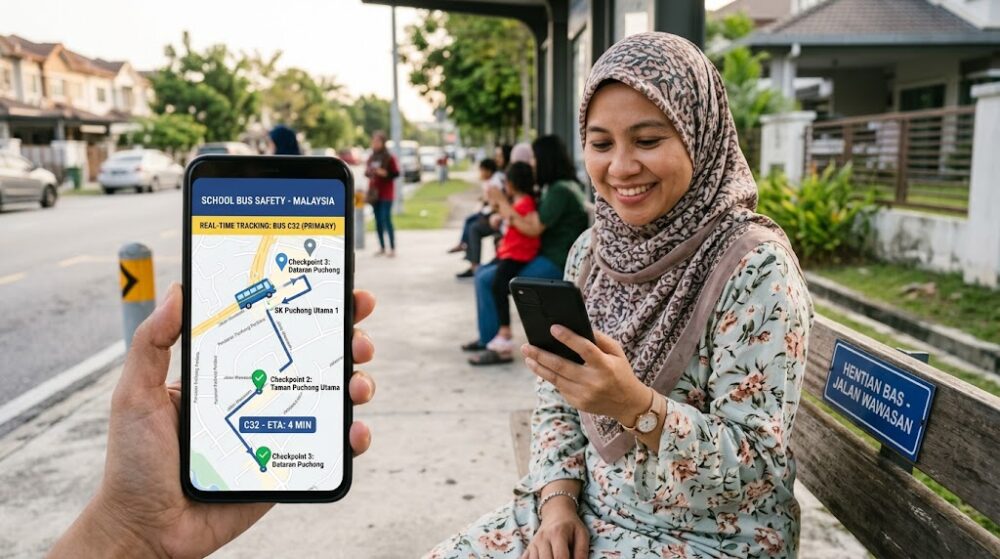
This is where expectations imported from other countries tend to break. Independent neighbourhood operators are not fleets and generally do not run telematics, parent apps or live dashboards. What you get instead is a WhatsApp group for the route and a message when the vehicle sets off — low-tech, but in practice fast, personal and used constantly. Some of the larger van operators will share a live location link on request. Treat GPS as a bonus to ask about, not a standard to assume.
5. Emergency Preparedness & On-Board Safety Equipment
A permitted commercial vehicle is required to carry a certified ABC dry powder fire extinguisher, a window-breaking safety hammer, a stocked first-aid kit and unobstructed emergency exits, all checked at its PUSPAKOM inspection. A private car doing a neighbourhood run is under no such obligation, so look for yourself rather than assuming. The more useful question is what happens when something goes wrong on the day: whether there is a backup vehicle or a stand-in driver, how quickly the route group is told, and who collects your child if the run cannot happen at all.
6. Arrival and Dismissal at Casa Tropika
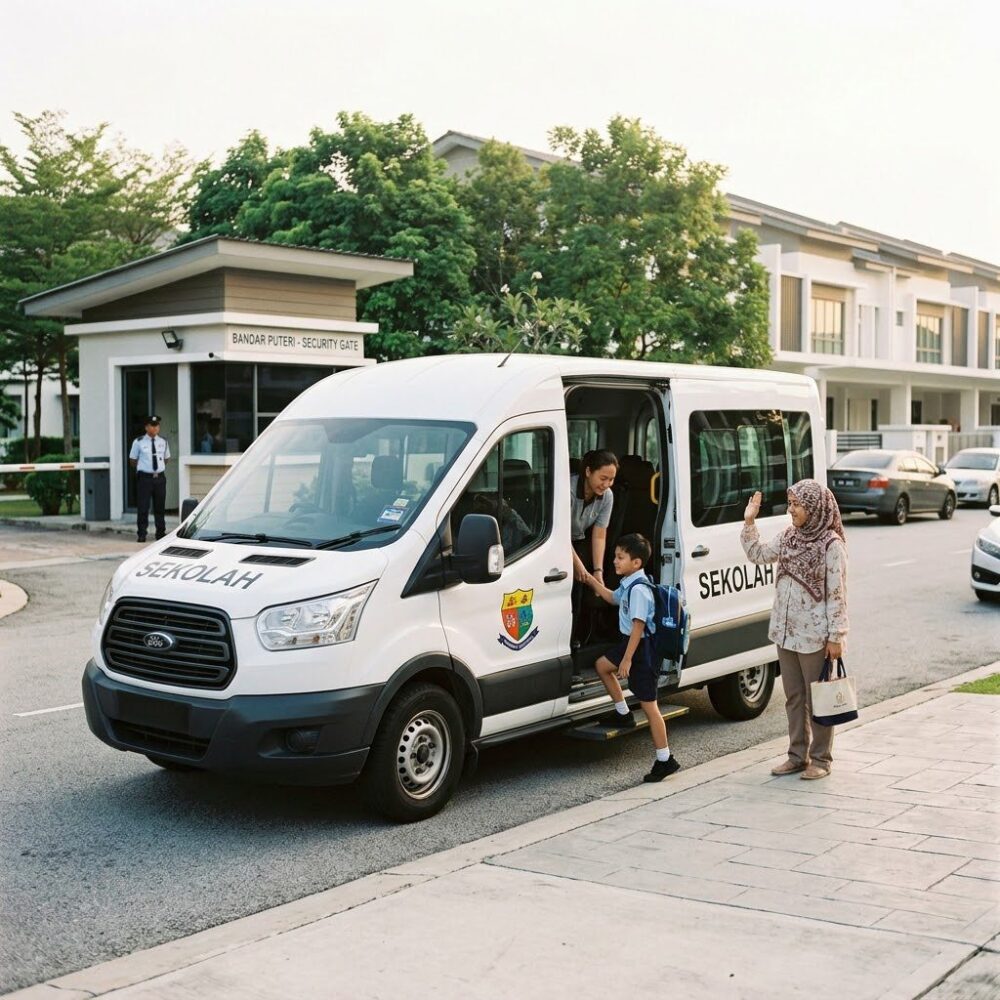
Vehicles drop off and collect at the sheltered frontage of Komersial Casa Tropika. Agree the specifics with your operator rather than assuming them: exactly where the child is set down, where they wait at dismissal, and what happens on a half day or when a CCA session runs late. For younger children, agree who the driver may hand them over to, and make sure that person is in the route WhatsApp group.
7. The Pre-Booking Checklist
Before you confirm anything, run through eight items: (1) the vehicle’s permit and the driver’s licence, seen rather than described; (2) the insurance position if there is an accident; (3) one working seatbelt per child; (4) actual children per trip against the stated capacity; (5) a face-to-face meeting with the driver, with your child present; (6) your child’s place in the pickup order; (7) membership of the route WhatsApp group; and (8) the awkward days — late CCA, half days, illness, and whether the monthly fare is prorated. Then run a trial week before committing to a term. Every experienced parent here does some version of this, and no reasonable operator is offended by it.
Frequently Asked Questions
Clear answers to common questions asked by Malaysian parents.
No. The list is a courtesy shortcut to operators who already serve Axcel families. The school does not employ, license, insure or supervise them, and does not take a commission. The safety checks are the parent’s to make — which is exactly what this guide is for.
Commercial school transport is licensed by APAD, the Agensi Pengangkutan Awam Darat or Land Public Transport Agency. A vehicle carrying children commercially is required to hold a valid permit.
Commercial passenger vehicles must pass a PUSPAKOM roadworthiness inspection every six months to keep their operating permit valid. It is reasonable to ask an operator when their last inspection was.
Four things: the vehicle’s permit, the driver’s licence, confirmation that every child gets an individual seatbelt, and a straight answer on how many children actually travel per trip versus the stated capacity. Ask about insurance too — specifically what the position is if there is an accident.
Usually not, and you should not assume it. Independent neighbourhood operators rarely run fleet telematics. What you normally get instead is a route WhatsApp group and a message when the vehicle sets off — which most parents find works fine. Some larger van operators will share a live location on request. Ask rather than assume.
Settle this before you commit. Established operators keep a backup vehicle or a stand-in driver and notify the route WhatsApp group immediately. A smaller one-car operator may not have either, which is worth knowing in advance rather than at 7am on an exam morning.
Tuition starts from ~RM900/month for Primary and RM1,500 to RM1,700/month for Secondary at our Casa Tropika campus.
WhatsApp +6011-51207390 with your residential area and we will send a download link to the current list, last updated 16 July 2026.
Related Education & Curriculum Guides
Explore more research articles to help you make informed schooling decisions.



Looking for Educational Excellence in Puchong?
Explore Axcel International School‘s accredited Cambridge curriculum, featuring Singapore Math heuristics, life-skills leadership, and starting tuition of ~RM900/month.
© 2026 Service Pro Education Insights Malaysia.
Disclaimer: Fees and curriculum details reflect 2026/2027 school schedules and may change. Images are representational; actual facilities may differ and no identifiable students are shown. Contact Axcel International School Puchong to verify current details.