
Inter Floor Leakage in Malaysia: Who Pays and What to Do
A leak through your ceiling from the unit above is one of the most common strata disputes in Malaysia. The law already sets out who inspects, how fast, and who pays. Most owners only find that out after months of arguing with a neighbour.
What Counts as Inter Floor Leakage
The Strata Management Regulations treat it as a defined problem with a defined process — not a private quarrel between two neighbours.
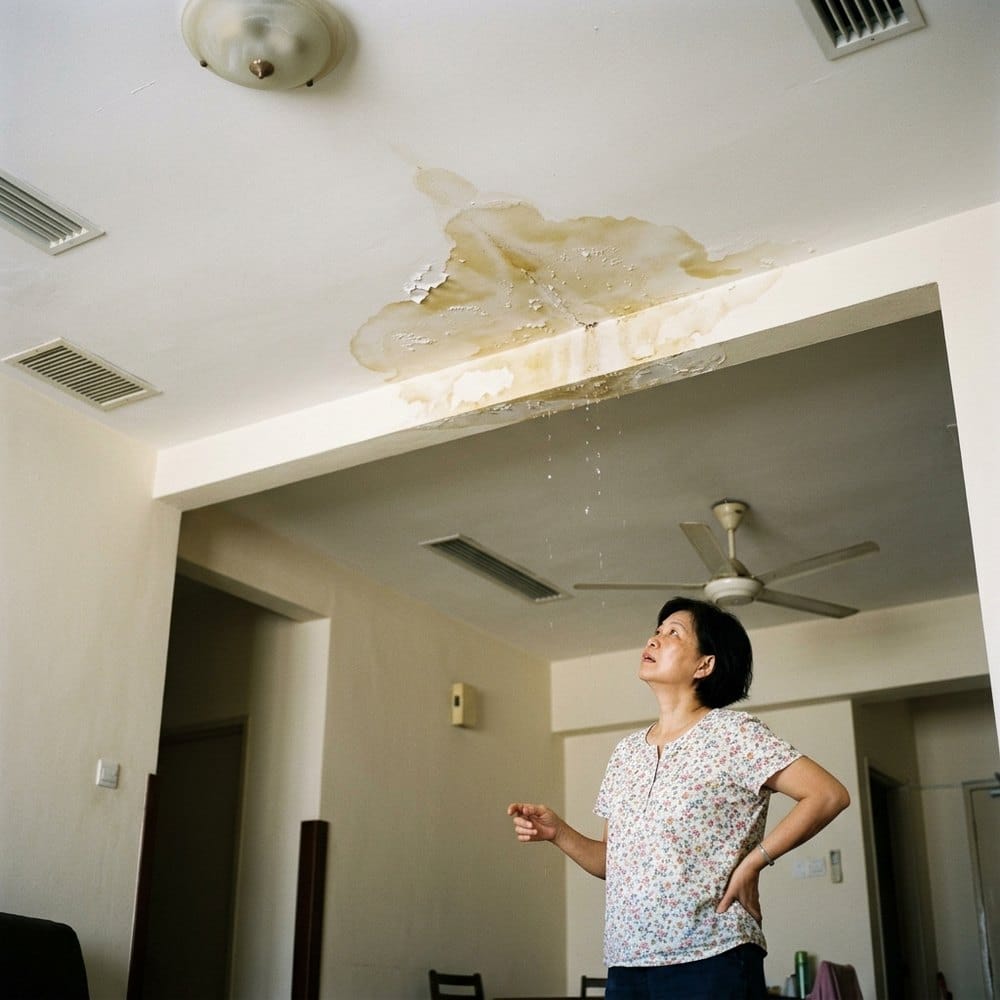
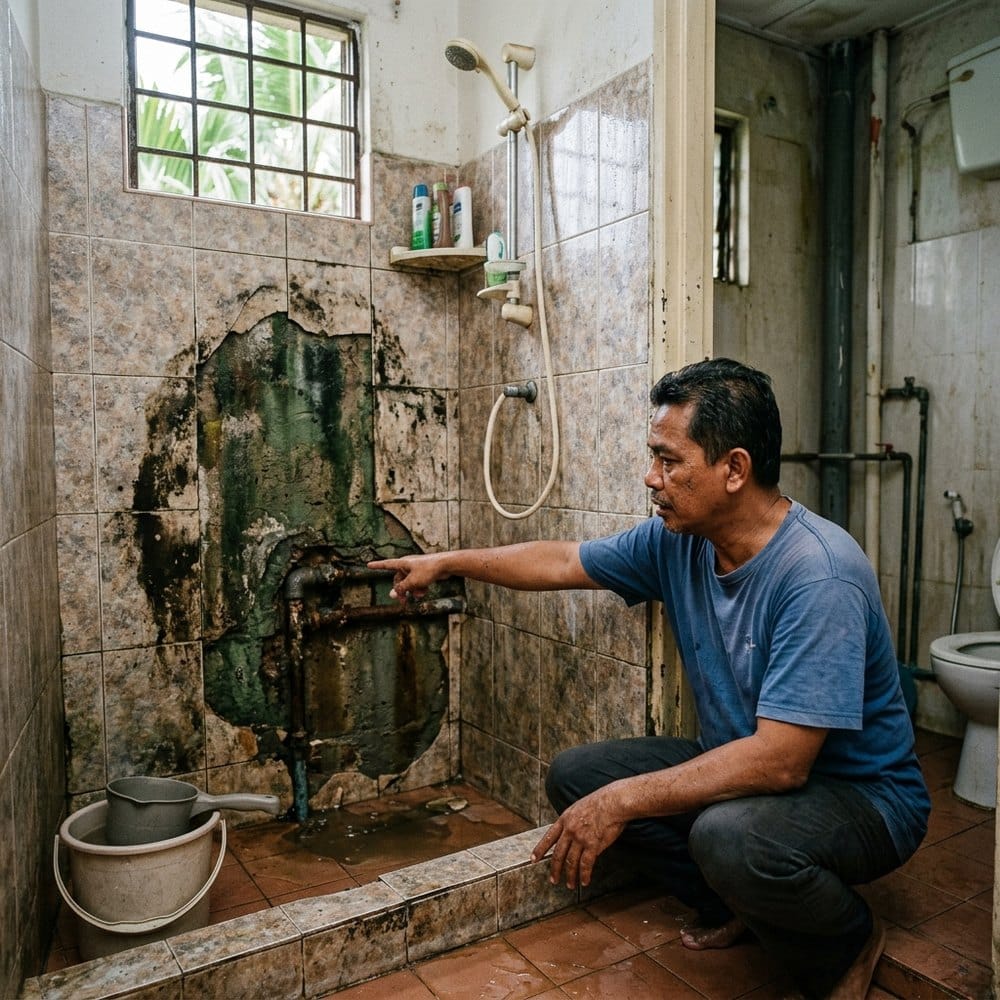
Inter floor leakage is dampness, moisture or water penetration on a ceiling — or on anything fixed to the ceiling, such as plaster, panels or gypsum board — that forms part of a parcel, an accessory parcel or common property. In practice it is almost always one of three things: the waterproofing under an upstairs bathroom has failed, a pipe in the slab or wall has cracked, or a floor trap or toilet connection has come loose.
Because the three look identical from below — a yellow ring on the ceiling that spreads — the cause matters more than the symptom. It decides who pays, and it decides what the repair is.
The Starting Point: It Is Presumed to Be the Unit Above
Section 142 of the Strata Management Act 2013 creates a presumption: where the leak is in your ceiling, it is presumed to come from the parcel above unless it is proven otherwise. The owner upstairs does not have to be proven at fault; the burden sits with them to show it is something else.
“Something else” is usually common property. The Regulations make the deciding question not where the defective pipe or slab is, but which parcels it serves. A pipe that serves only the upstairs unit is the upstairs owner’s problem even though it runs through the slab; a stack pipe serving several floors is common property, and repairing it falls to the management body.
What forum owners get wrong most often. “I thought just report to management and they will settle everything?” asked one owner on Lowyat. Management inspects and certifies the cause; it does not pay for a repair inside a parcel unless the cause is common property. The 50-50 cost split people often mention is an informal compromise between neighbours, not a rule.
The Process, Step by Step
The timelines below come from the Strata Management (Maintenance and Management) Regulations 2015.
| Step | Who acts | Deadline |
|---|---|---|
| Notify the management body in writing | Affected owner | As soon as the leak appears |
| Inspect the parcels to find the cause | JMB or MC | Within 7 days of the notice |
| Issue the Certificate of Inspection, Form 28, naming the cause and who must repair | JMB or MC | Within 5 days of the inspection |
| Take the steps needed to rectify | The party named in Form 28 | Within 7 days of receiving it |
The Ministry of Housing and Local Government sets the same sequence out in plain Malay in its Strata Management Handbook 2.0: the management body inspects within seven days, determines the cause and the responsible party, issues Form 28, and a party that fails to repair after receiving it can be taken to the Strata Management Tribunal.
If an owner disagrees with the inspection result, the matter can be referred to the Commissioner of Buildings, who can appoint a registered professional to determine the cause.
Where a Waterproofing Contractor Fits In
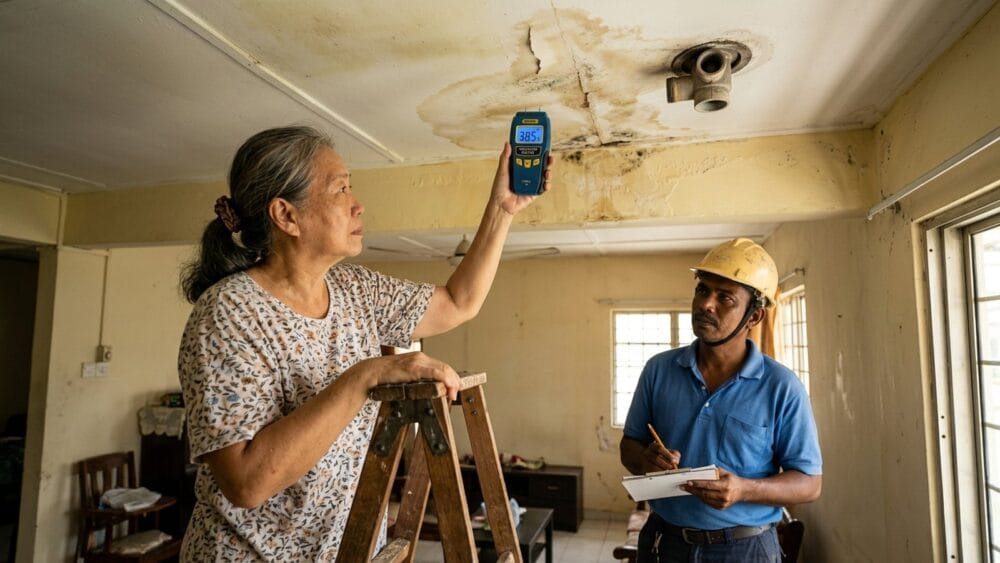
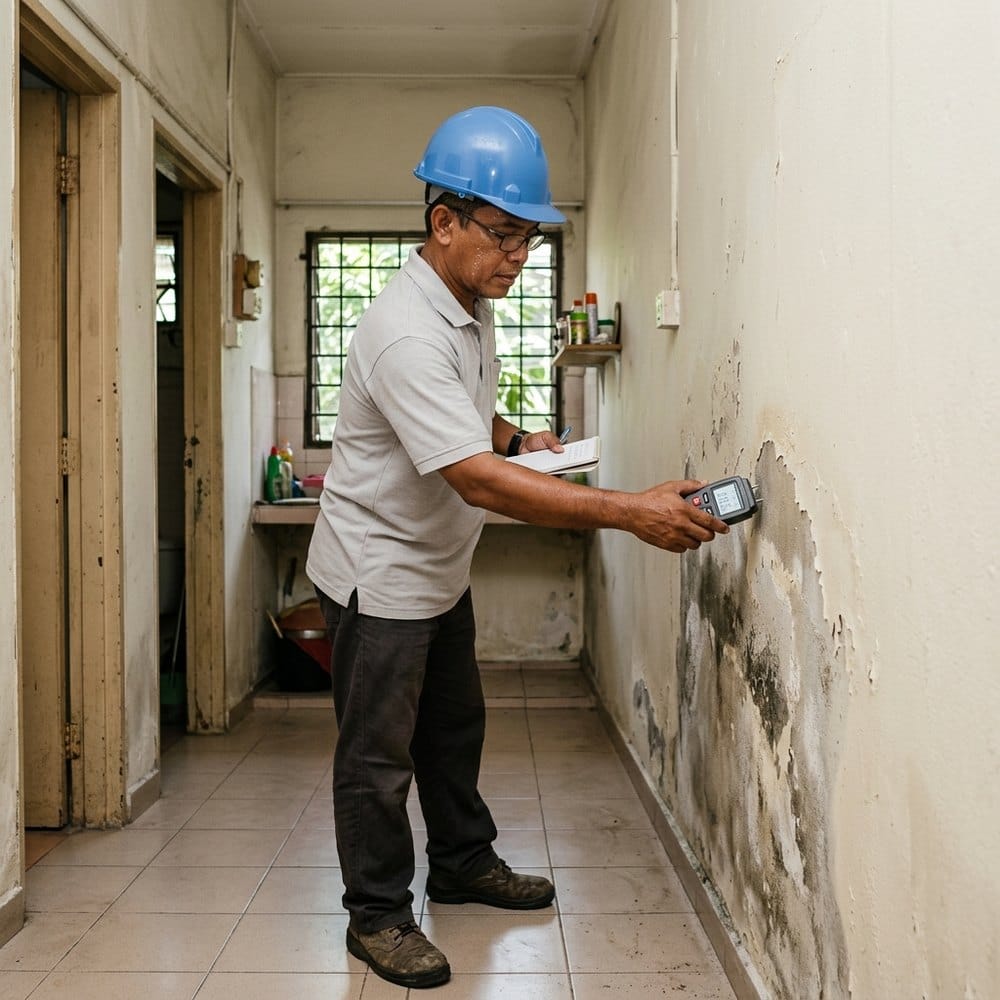
A contractor does not issue Form 28. That certificate belongs to the management body. What a contractor can do is two things the process depends on. First, diagnosis: moisture readings above and below the stain, a look at the floor trap and grout, and where the leak is hard to pin down, thermal imaging. That evidence is what a management inspection, a neighbour, or a Tribunal needs in order to agree on the cause.
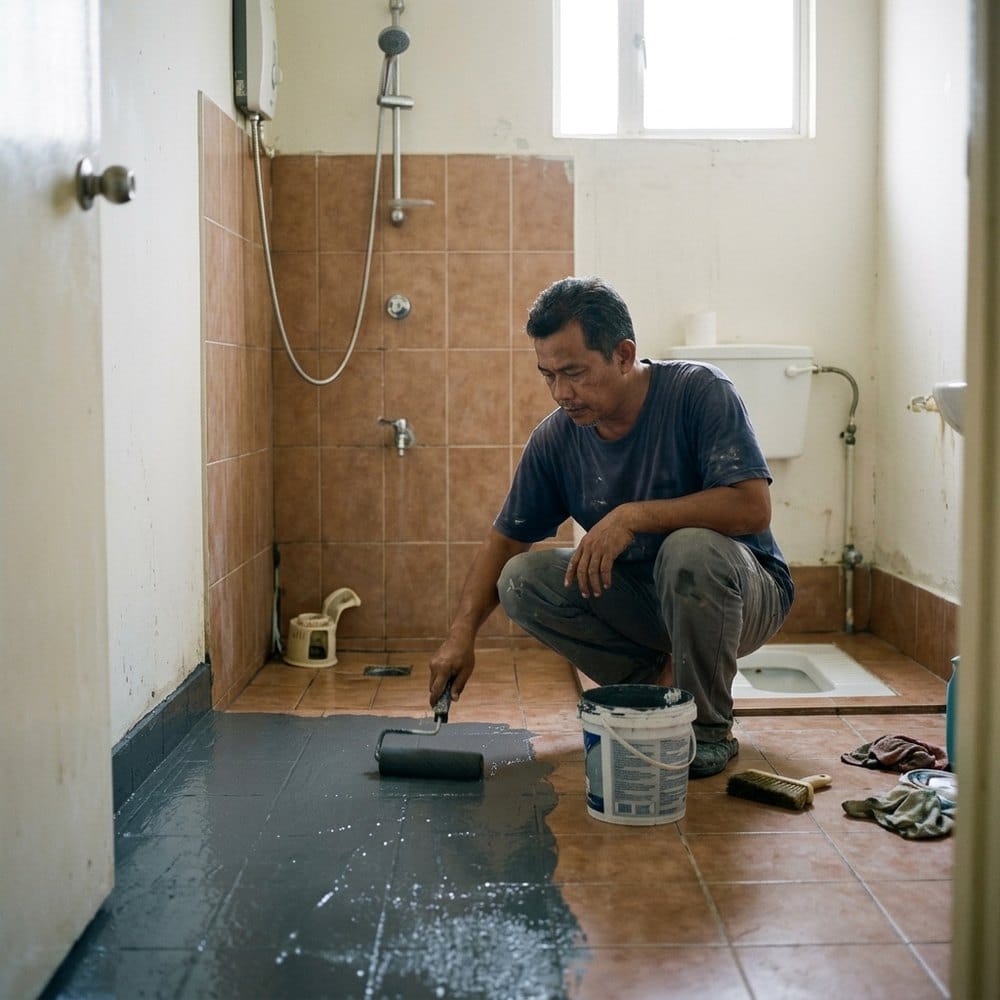
Second, the repair. When the cause is failed waterproofing under the upstairs bathroom, the upstairs owner has seven days to act and a strong reason not to want a week of hacking. A non-hacking treatment fixes the floor with the tiles in place. At EI Sdn Bhd in Shah Alam it starts from RM1,500 per bathroom with 5 years warranty.
What to Do This Week
- Photograph the stain with the date visible, and again every few days. A spreading stain is evidence.
- Notify the JMB or MC in writing and keep a copy. The seven-day clock starts from the notice.
- Note when it gets worse — after the upstairs shower, after rain, or all the time. That single detail often separates bathroom, roof and pipe.
- Do not paint over it before the inspection. Paint hides the evidence the inspection needs.
- Keep Form 28 when it arrives. It is the document the Tribunal will ask for if the repair never happens.
What the Inspection Should Record
Form 28 is only as good as the inspection behind it. If you are the owner below, ask that the inspection notes these points — they are what a neighbour or a Tribunal will look for.
- The location of the stain relative to the unit above — directly under the shower, the floor trap, the toilet, or elsewhere.
- Moisture readings on your ceiling, and on the floor and walls of the unit above.
- What happened when the upstairs bathroom was used — a stain that spreads within an hour of a shower points one way; a stain that is wet all day points to a pipe.
- Which pipes run through the slab, and whether they serve one parcel or several. That decides whether the repair is a private matter or common property.
If the inspection skips these, the Form 28 conclusion is easy to dispute and the leak drags on. A short diagnostic report from a waterproofing contractor can fill the gap.
Frequently Asked Questions
Short answers to the questions people ask most.
The party named in Form 28. The leak is presumed to come from the unit above unless shown otherwise; if the defect is in something that serves several parcels, such as a common stack pipe, it is common property and the management body is responsible.
Seven days from receiving the owner’s notice, and five days after the inspection to issue Form 28.
The Certificate of Inspection for inter floor leakage. It states the cause of the leak and the party responsible for fixing it, and it is issued by the JMB or MC.
No. Only the management body issues it. A contractor can provide the diagnosis the inspection relies on, and carry out the repair.
Once Form 28 names them, the matter can be taken to the Strata Management Tribunal.
It can be referred to the Commissioner of Buildings, who can appoint a registered professional to determine the cause.
Not necessarily. Where the cause is failed waterproofing, a non-hacking treatment can fix the floor with the tiles left in place.
No. It is a compromise some neighbours agree to. The Regulations assign responsibility to the party named in Form 28.
Related Insights
Four more guides on the same problem.
Stuck With a Leak From Upstairs?
Send a photo of the stain and tell us whether you are the owner above or below. We will tell you what the inspection should look at.
💬 Ask on WhatsAppFor the service itself, see bilik air bocor Shah Alam.
By messaging us on WhatsApp you consent to Service Pro and the contractor processing your enquiry and any personal data you choose to share, so that we can respond to you. See our Privacy Policy.
Part of the ServicePro.my Home Service Hub Network. All rights reserved.
Disclaimer: Some images used on this page are representational illustrations. Actual site conditions may vary.
Common Questions About Inter Floor Leakage
Questions readers in Shah Alam and the Klang Valley have asked about this topic.