
Air Brake Failure in Heavy Lorries: Warning Signs & Fixes
Commercial air brakes are highly reliable, but when pneumatic pressure drops, your fully loaded 10-ton lorry becomes a lethal hazard. Learn how to identify compressor failures and air leaks before they cause a catastrophe.
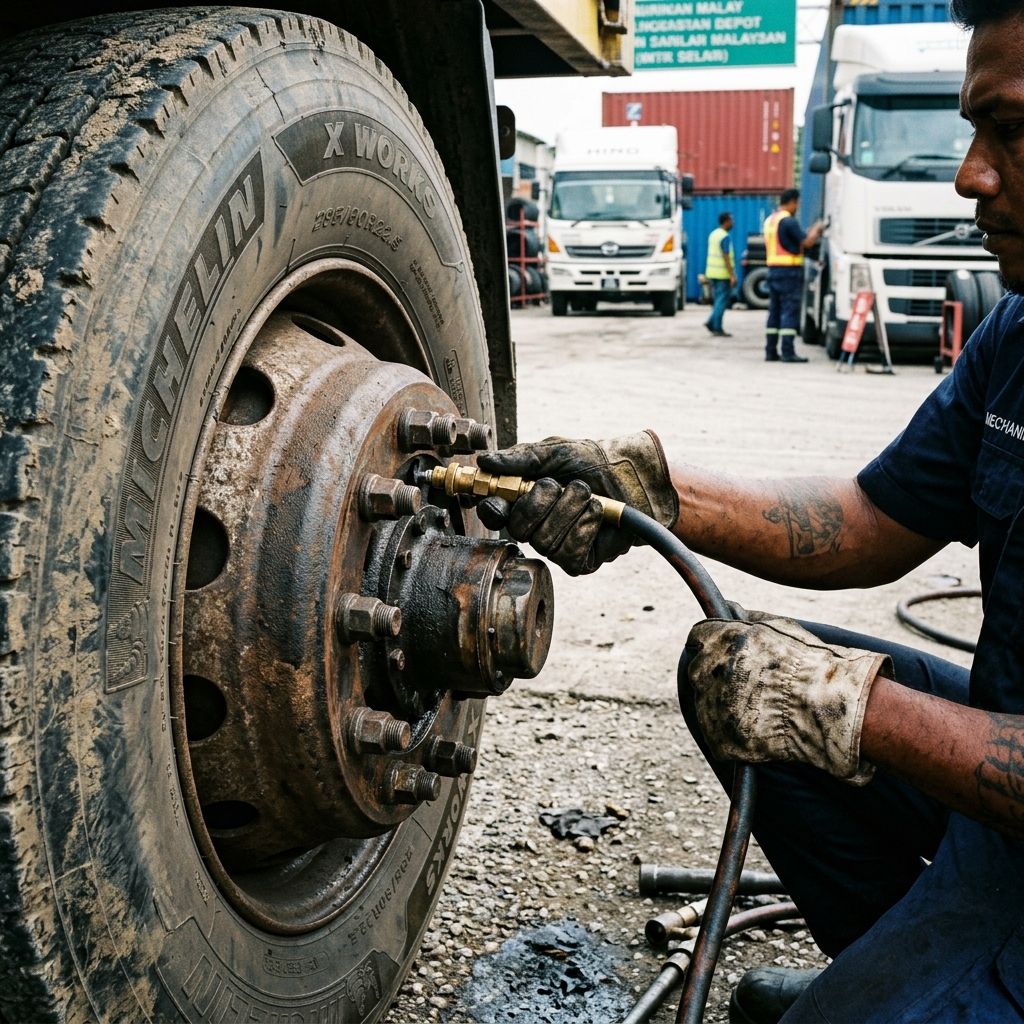
A spongy brake pedal in a diesel lorry is a critical emergency. Unlike passenger cars that use hydraulic fluid, 1 to 10-ton commercial lorries rely on compressed air to engage the brake pads. A sudden loss of air pressure will either lock your wheels completely or eliminate your ability to stop.
Authority Reference: Verified against JPJ Commercial Vehicle Brake Regulations
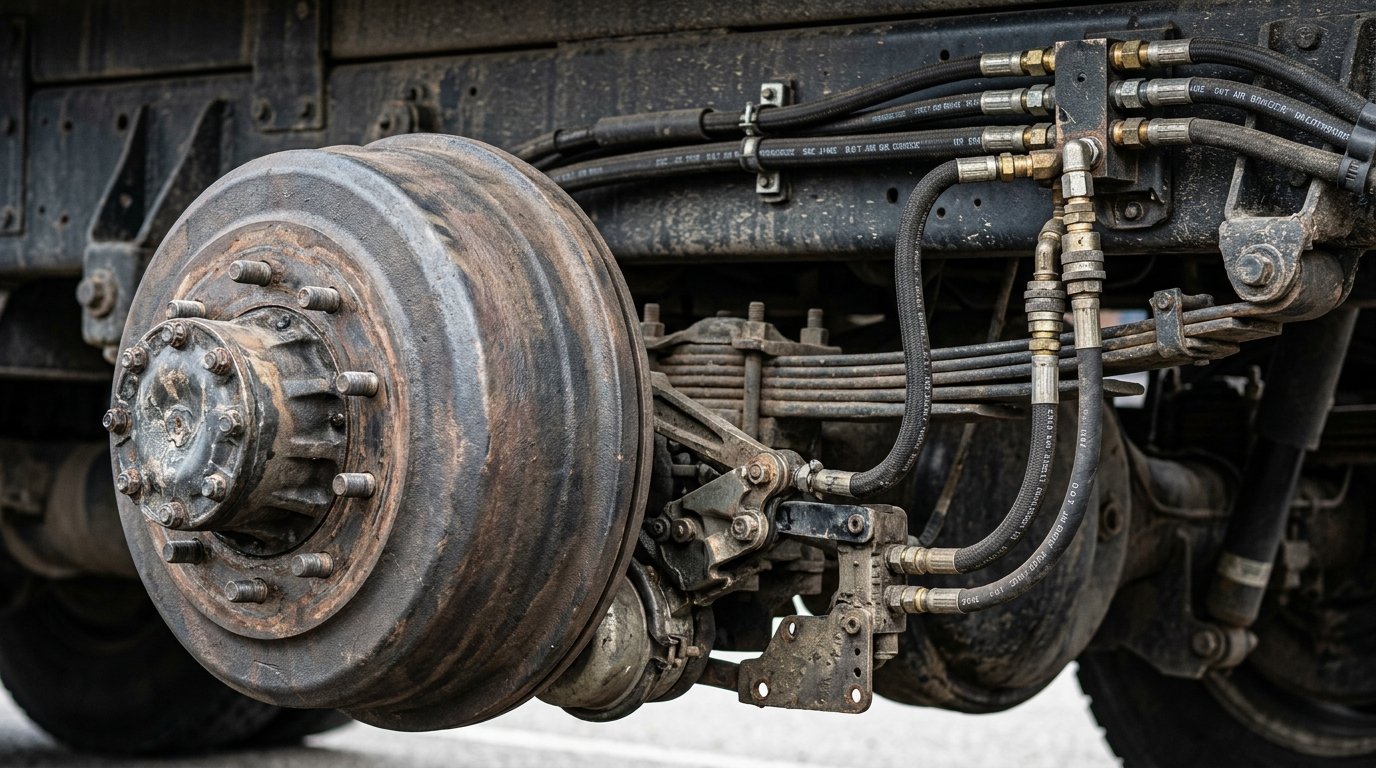 The complex network of pneumatic hoses, valves, and drums must maintain strict pressure tolerances to stop a heavy load safely.
Primary Causes of Air Brake Pressure Loss
If your dashboard air pressure gauge is dropping abnormally fast, one of these three components in the pneumatic system is failing:
Air Compressor Failure
The engine-driven compressor is the heart of the system. If it fails to build pressure up to 120 PSI, your tanks will eventually run empty, triggering the emergency spring brakes.
Moisture in the Lines
When the air dryer fails, moisture builds up in the pneumatic lines. This water can corrode the internal valves or freeze in cold conditions, blocking air flow entirely.
Ruptured Hoses & Valves
Rubber air hoses degrade over time. A microscopic crack in a hose, or a failing relay valve, will cause a constant audible hiss as pressurized air escapes the system.
Hearing a loud hiss from under your lorry?
Have a Mechanic Inspect Now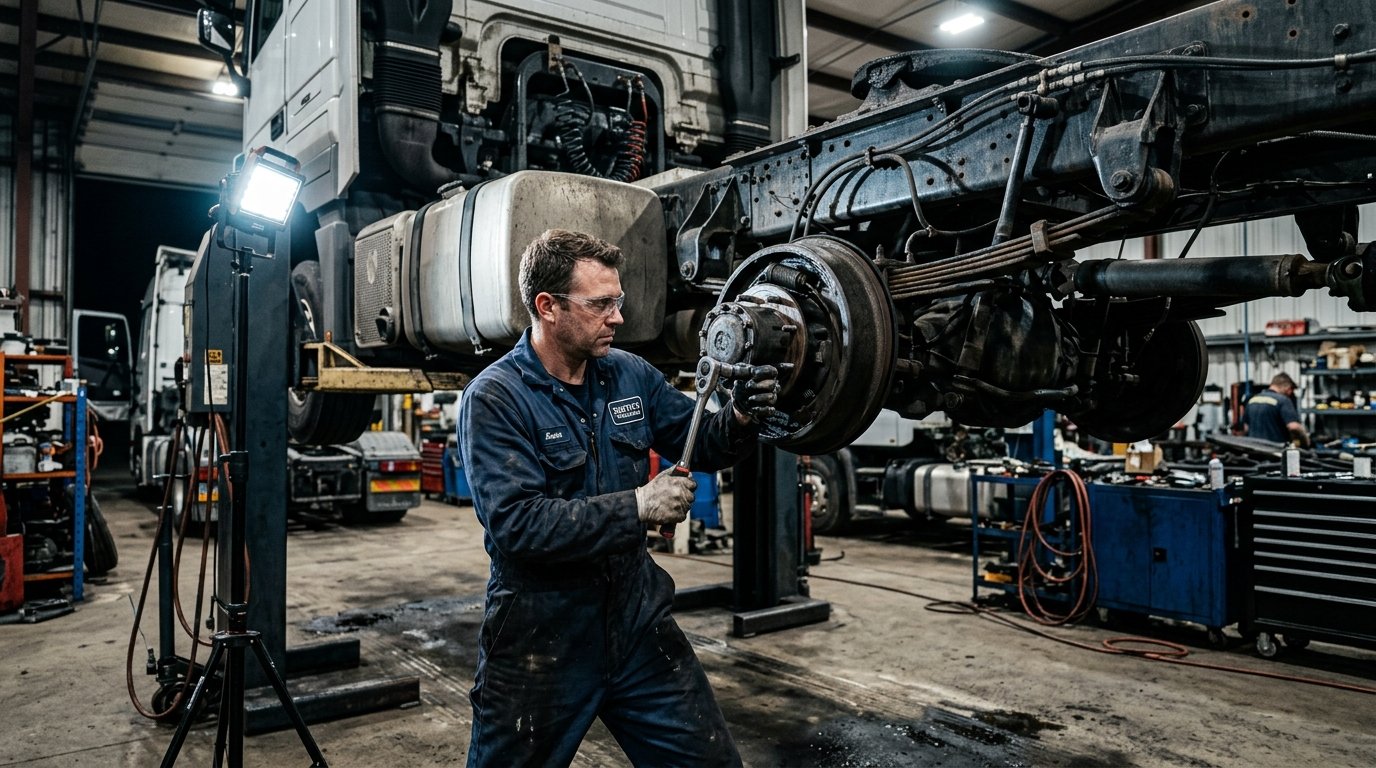 Certified diesel technicians can quickly identify micro-leaks and replace degrading air hoses before they blow out on the highway.
How to Perform a Daily Air Brake Check
Commercial drivers must perform a mandatory pre-trip air brake inspection to ensure the system holds pressure. Follow this basic test:
- Build Pressure: Start the engine and let the air pressure build to the cut-out point (usually around 120-125 PSI).
- Static Leak Test: Turn the engine off, release the parking brakes, and do not touch the brake pedal. The pressure should not drop more than 2 PSI in one minute.
- Applied Leak Test: Press and hold the foot brake pedal firmly for one minute. The pressure should not drop more than 3 PSI.
- Low Pressure Warning: Pump the brake pedal to bleed air. The low-pressure warning light and buzzer must activate before the pressure drops below 60 PSI.
Frequently Asked Questions
If there is a massive loss of air pressure, the heavy spring brakes in the rear axles will automatically deploy once the pressure drops below a critical threshold (usually 20-45 PSI), violently stopping the lorry.
Slack adjusters should be checked during every routine preventive maintenance service. Modern lorries use automatic slack adjusters, but they can still seize and require manual inspection.
You will hear a distinct hissing sound from the brake lines or valves when the engine is off. Additionally, the air pressure gauge on the dashboard will drop rapidly.
Commercial lorries are equipped with spring brakes. If air pressure drops below a critical level (usually 60 psi), the emergency spring brakes will automatically deploy, bringing the lorry to an aggressive stop.
Air tanks should be drained daily, especially in humid climates like Malaysia, to remove moisture and oil buildup. This prevents internal corrosion and valve freezing.
A slow build-up of air pressure usually indicates a worn-out air compressor piston, a massive leak in the delivery line, or a faulty governor failing to regulate pressure.
No, it is highly illegal and dangerous. You must safely pull over immediately and wait for the air pressure to rebuild or call for a mobile mechanic if the system fails to pressurize.
Don’t Gamble with Air Brakes
If your brake pedal feels spongy or your air pressure builds slowly, pull over immediately and dispatch our mobile mechanics.
Request Urgent Brake ServiceLooking for complete commercial fleet maintenance? Visit our main Lorry Repair Kepong service hub.
Part of the ServicePro.my Automotive Hub Network. All rights reserved.