
What to Do When Your Commercial Lorry Overheats in Traffic
A temperature gauge spiking into the red while stuck in heavy traffic is a driver’s worst nightmare. Knowing exactly what to do in the first 60 seconds can mean the difference between a RM 200 hose repair and a RM 20,000 cracked engine block.
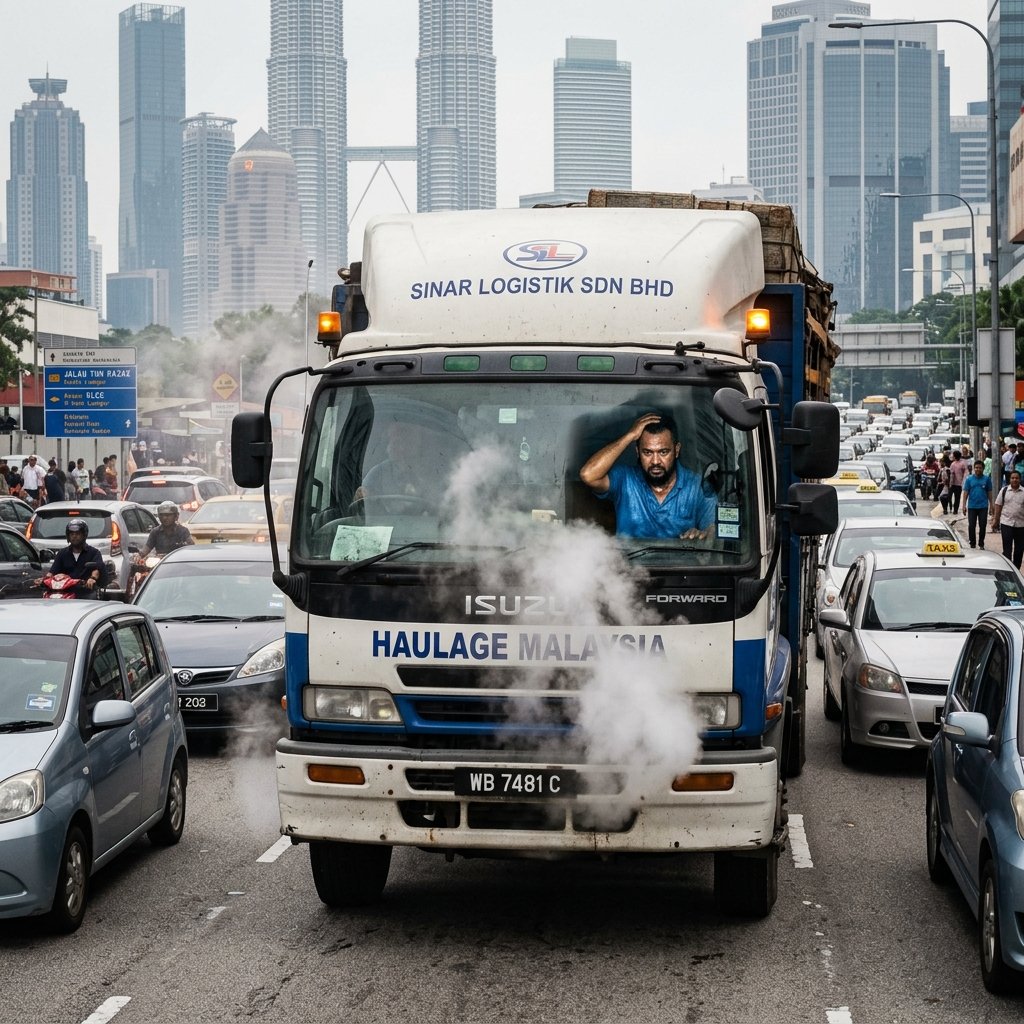
Panic causes catastrophic damage. When steam pours from the hood, the instinct is to immediately shut the engine off or open the radiator cap. Both of these actions can cause severe, permanent damage to the engine block or result in severe burn injuries.
Authority Reference: Verified against SAE Certified Heavy-Duty Cooling System Specifications
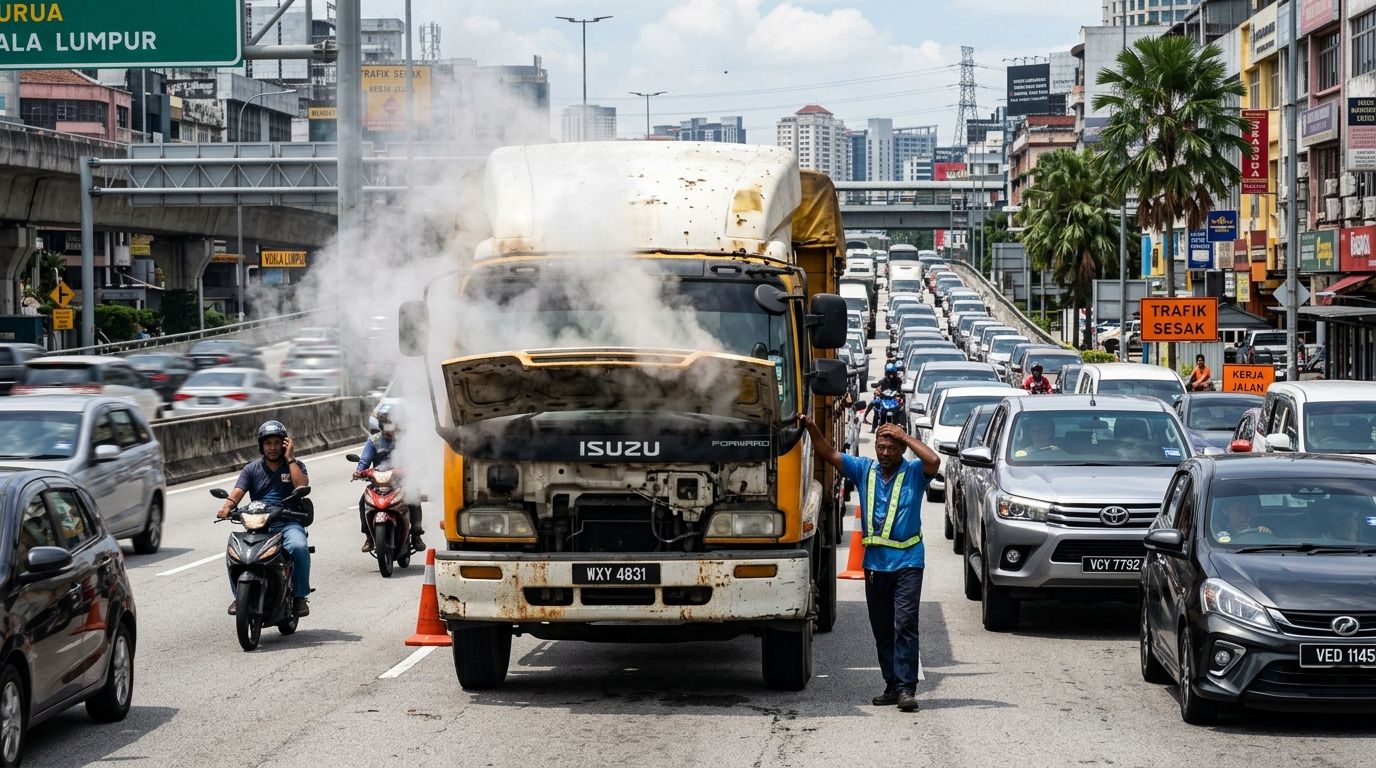 Heavy payloads combined with stop-and-go traffic place immense thermal stress on a commercial diesel cooling system.
The 3-Step Emergency Response Protocol
If your lorry’s temperature gauge enters the red zone, or the ECU triggers a high-temperature warning buzzer, instruct your drivers to follow these steps immediately:
Immediate Action Plan
Turn Off the A/C and Turn ON the Heater: It sounds counterintuitive, but turning the cabin heater to maximum draws immense heat away from the engine block, acting as a secondary radiator. This can buy you crucial minutes.
Pull Over and Idle (Do Not Turn Off): If you are moving, pull to the shoulder. Shift to neutral and let the engine idle. Shutting off a boiling engine stops the water pump, causing the stationary coolant to instantly vaporize and crack the block.
Never Open the Radiator Cap: Commercial cooling systems operate under extreme pressure. Opening a boiling radiator will cause a violent explosion of scalding steam and coolant. Wait at least 45 minutes before inspecting.
Are you currently stranded with an overheating engine?
Dispatch a Mobile Mechanic Now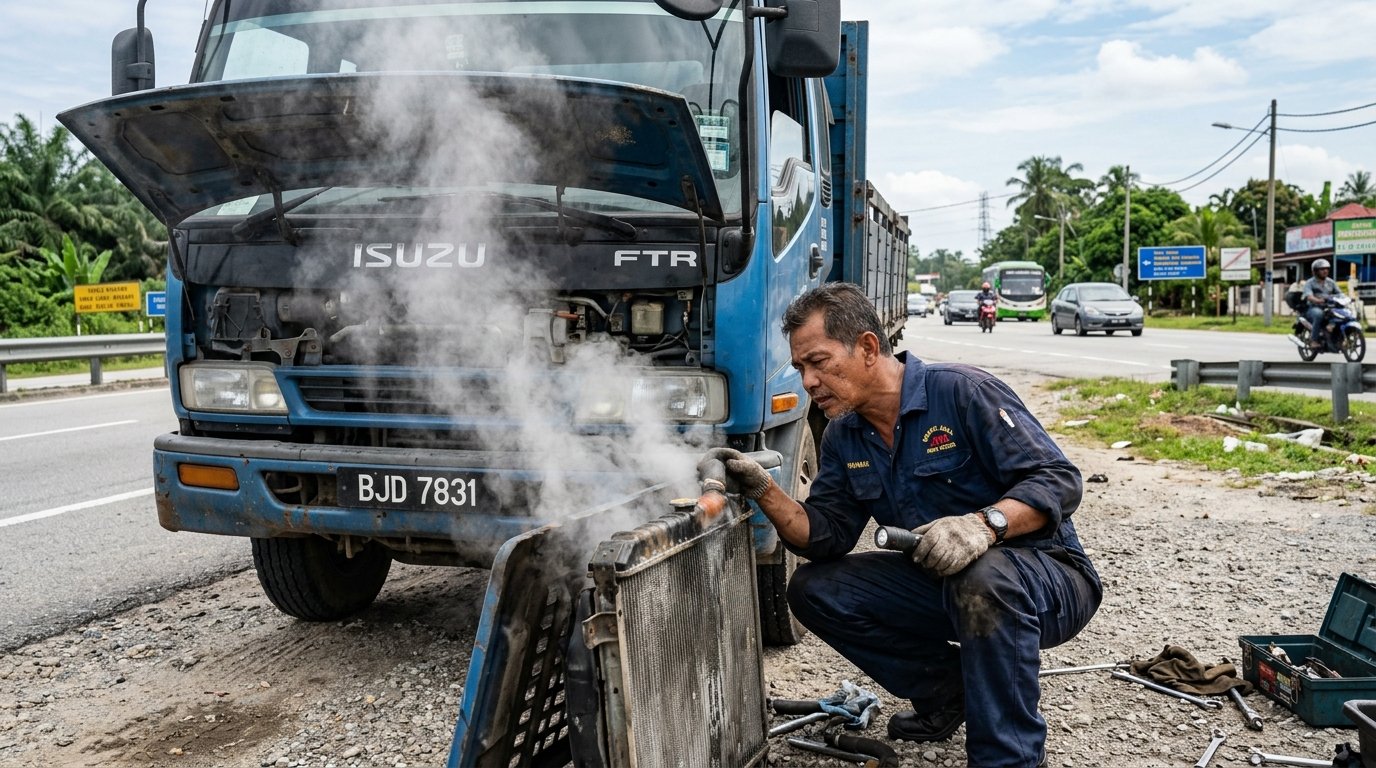 Mobile mechanics can pressure test the cooling system on the roadside to identify burst hoses or failing water pumps.
Common Causes of Overheating in Heavy Traffic
Unlike highway driving, stop-and-go traffic provides zero natural airflow through the radiator grille. The cooling system must rely entirely on its mechanical components:
- Failed Fan Clutch: The engine cooling fan must engage fully at slow speeds. If the viscous clutch fails, the fan spins too slowly to pull air through the radiator.
- Blocked Radiator Fins: Dirt, bugs, and road debris clog the external fins of the radiator, preventing heat transfer.
- Stuck Thermostat: If the mechanical thermostat fails to open, hot coolant is trapped inside the engine block and cannot circulate to the radiator.
- Blown Coolant Hose: The immense pressure can cause degraded rubber hoses to rupture, instantly dumping all coolant onto the road.
Frequently Asked Questions
Absolutely never. Pouring cold water into a boiling hot cast-iron engine block will cause thermal shock, immediately cracking the metal block and destroying the engine entirely.
No. Once the needle is in the red zone, you have only minutes before the cylinder head warps or the head gasket blows. Pull over safely and call a mobile mechanic.
A massive coolant leak from a burst radiator hose or a cracked radiator core is the most frequent cause. A failed water pump or a stuck closed thermostat are also common culprits.
No! Pouring cold water into a severely overheated engine block will cause thermal shock, instantly cracking the metal cylinder head or engine block. Wait for the engine to cool down first.
Overheating under heavy load usually points to a partially clogged radiator that cannot dissipate heat fast enough, or a faulty viscous fan clutch that fails to engage at high temperatures.
Signs of a blown head gasket include thick white smoke from the exhaust, milky white engine oil (coolant mixing with oil), and bubbling pressure inside the radiator overflow tank.
Minor patching or chemical flushing can cost around RM200 to RM400, while replacing a massive commercial heavy-duty radiator can cost between RM1,500 and RM3,500.
Get Expert Roadside Assistance
If your lorry is overheating, don’t risk destroying the engine. Our rapid-response diesel mechanics can diagnose cooling system failures on the spot.
Request Immediate Roadside RescueLooking for complete commercial fleet maintenance? Visit our main Lorry Repair Kepong service hub.
Part of the ServicePro.my Automotive Hub Network. All rights reserved.
Common Questions About Lorry Overheating
Questions from fleet owners and lorry drivers in the Klang Valley about this topic.