How to Remove Embedded Pet Odors from Carpet
A complete guide for Malaysian homeowners — covering the science of uric acid crystals, step-by-step enzymatic treatment, when DIY fails, and how professional hot water extraction works in Malaysia’s tropical humidity.
This persistent reactivation poses a risk to home hygiene. Malaysian Ministry of Health (MOH) guidelines on indoor air quality emphasize the importance of controlling biological contaminants in enclosed spaces. Before resorting to heavy chemical masks, it is vital to understand what’s actually growing in your carpet, as bacteria feeding on these organic deposits amplify the odour and severely compromise your home’s air quality.
How to Get Rid of Strong Dog or Cat Urine Smell?
The most effective way to eliminate strong pet urine odors is to apply an enzymatic cleaner that biologically breaks down uric acid crystals at the molecular level — not masks them. Enzymatic treatment must precede any extraction or steam cleaning.
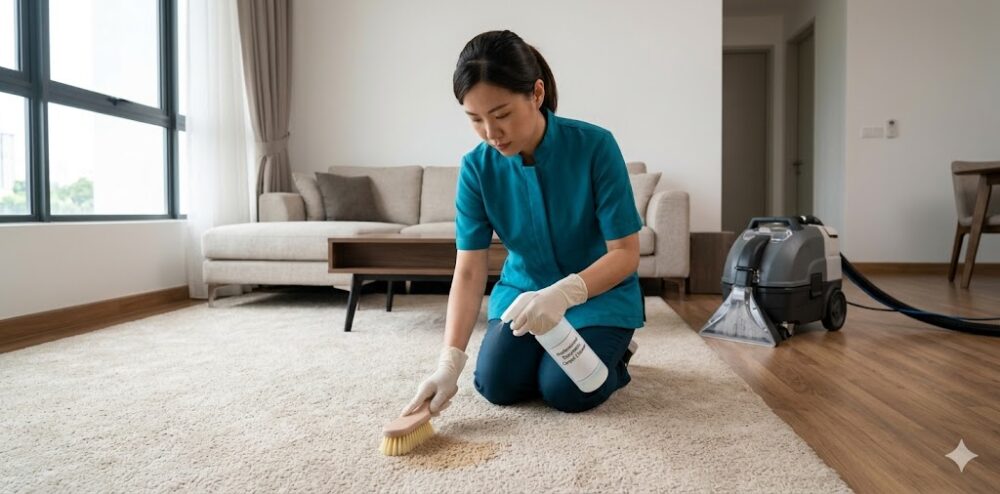
Step-by-Step Protocol for Fresh Accidents
- Blot immediately — do not scrub. Use a clean microfiber cloth or white paper towels. Press firmly and lift straight up. Scrubbing drives urine deeper into the carpet pile and backing.
- Apply cold water first. Rinse the spot with a small amount of cold water and blot again to dilute the concentration before applying any cleaning agent.
- Apply an enzymatic cleaner liberally. Products available in Malaysia include Bactador, BioZyme, and imported Nature’s Miracle (Mid Valley, SS2 PJ, Shopee/Lazada). Apply enough to saturate to the same depth the urine reached.
- Allow 15–20 minutes dwell time. During high-humidity months (October–March Northeast Monsoon), run AC or a fan to prevent secondary mould growth in the wet carpet.
- Baking soda absorption finish. Once damp but not saturated, apply a generous layer of baking soda. Leave overnight and vacuum thoroughly in the morning.
What Causes Pet Odors to Stay Trapped in Carpets?
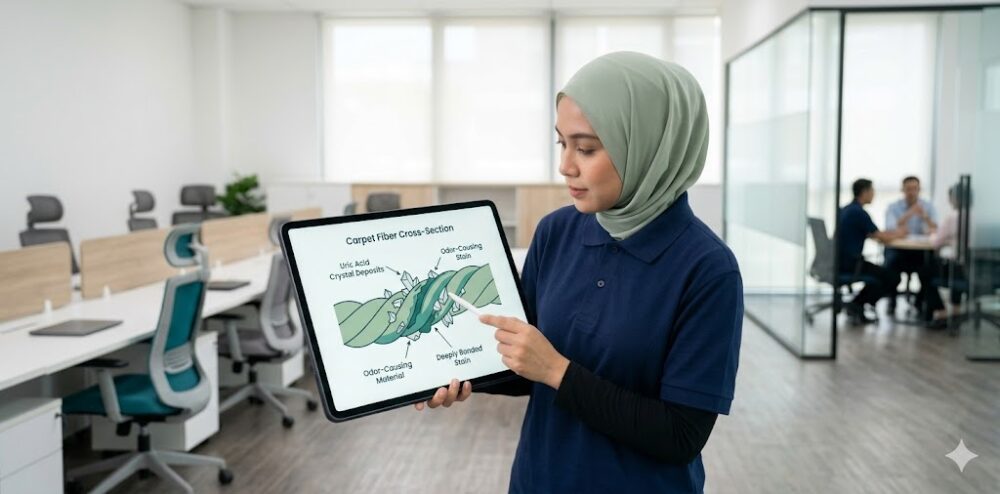
The persistent smell from pet accidents is not caused by the liquid itself — it is caused by uric acid crystals that form as the urine dries. These crystals bond to carpet fibers at a microscopic level and are insoluble in plain water.
Fresh Urine (pH 5–6)
Acidic and relatively easy to neutralize if treated within minutes.
Dried Urine (pH 10–12)
Becomes alkaline as bacteria form ammonia and mercaptans — sharp, persistent odor.
Cat Spray Pheromones
Sulfur-based compounds even more chemically stable — require specific enzymatic breakdown.
Malaysia’s 70–90% Humidity
Residual moisture continuously re-dissolves crystals — why carpets smell worse on rainy days.
How Do You Remove Deeply Embedded Pet Odors?
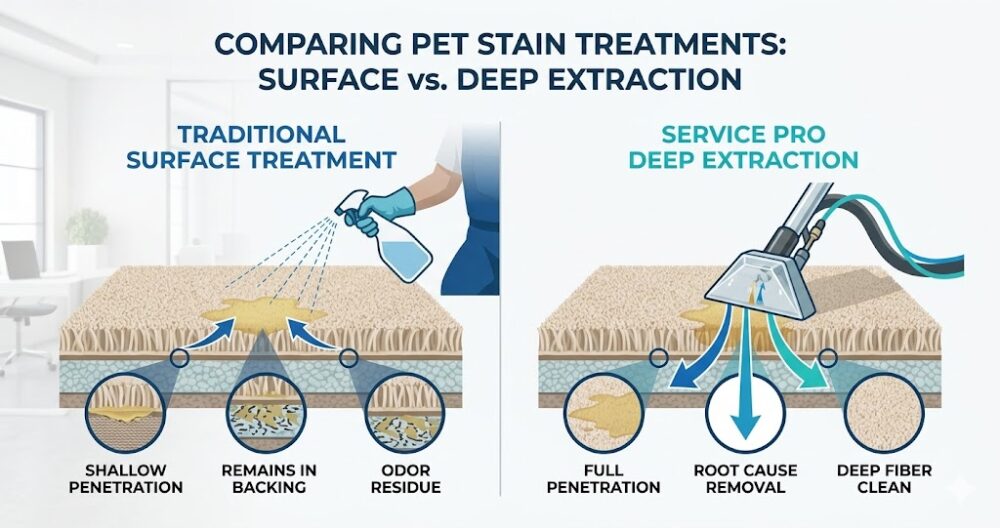
Deeply embedded pet odors require sub-surface extraction to reach urine salt deposits in the carpet underlay — DIY surface treatments consistently fail because they address only the top 10–15% of the carpet pile.
⚠ Why Home Methods Often Fail
Standard supermarket carpet sprays and rented cleaning machines lack the suction pressure (PSI) and water temperature above 90°C required to flush sub-surface contamination. In Malaysian condos — where carpet sits on foam underlay on concrete — urine frequently pools at the concrete level and emits odor indefinitely.
Professional Sub-Surface Removal Protocol
- UV Blacklight Inspection. Reveals old hidden stains no longer visible in daylight but still actively emitting odor. UV torches available at hardware stores in Berjaya Times Square and Ace Hardware outlets.
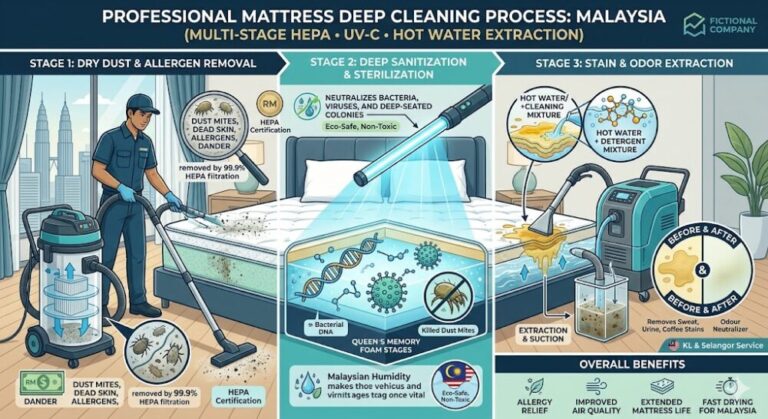
- Enzymatic Pre-Soak. Before hot water extraction, professional technicians apply high-concentration enzyme solution and allow 20–30 minutes dwell time.
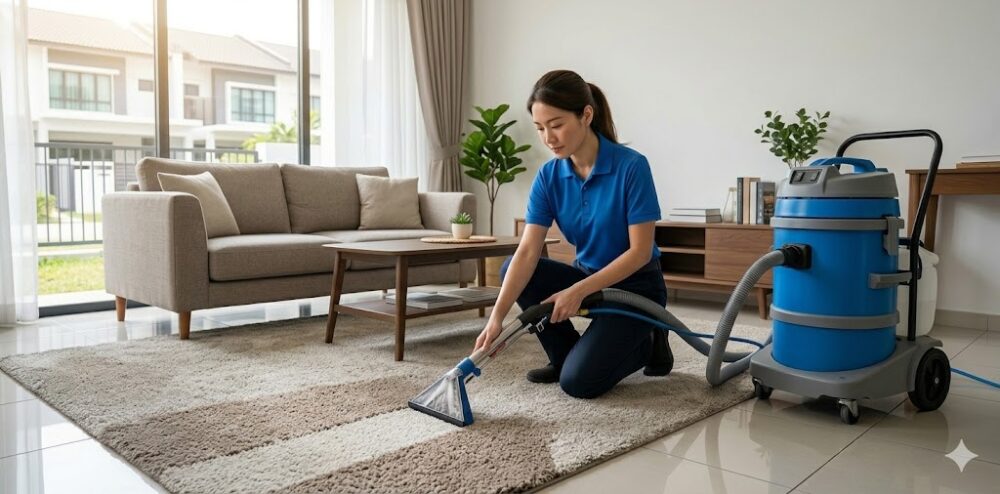
- Hot Water Extraction (HWE). Industrial truck-mounted or portable HWE machines inject heated water (often 95°C+) under pressure and simultaneously extract contaminated water. This is not the same as consumer steam mops.
- pH-Correcting Acid Rinse. Dried urine is strongly alkaline — professionals apply an acidic rinse (citric or phosphoric acid-based) to restore the carpet’s neutral pH and fully release odor compounds.
- Drying and Air Circulation. In Malaysia’s climate, rapid drying is non-negotiable. Professional services deploy air movers and dehumidifiers post-extraction. Carpets left damp for more than 4–6 hours in tropical humidity will develop mildew.
Does Vinegar and Baking Soda Actually Work?
Vinegar and baking soda provide partial odor suppression for mild, surface-level contamination only — they are not effective against deep uric acid deposits and carry a significant risk of compounding the problem in Malaysia’s humid climate.
What It CAN Do
Distilled white vinegar (5% acetic acid) temporarily neutralizes alkaline ammonia on the surface of dried urine. Mix 1:1 with water, apply, dwell 5 minutes, blot dry.
What It CANNOT Do
Ineffective against deep uric acid deposits in carpet backing or underlay. The fizzing reaction only lifts surface particles — it does not penetrate or extract sub-surface contamination.
🇲🇾 The Malaysian Climate Risk
If excess liquid is not fully extracted, carpet backing and underlay retain moisture for 24–72 hours at ambient humidity. Aspergillus and Cladosporium mould species — common in Malaysian homes — colonize damp carpet backing within 24–48 hours, substituting one odor problem for another.
Wool and natural-fiber carpets are particularly vulnerable — vinegar’s acidity can also damage wool fibers and void manufacturer warranties.
How to Prevent Pet Odors from Setting Into Carpets
Prevention is significantly less costly than remediation. Malaysian pet owners should adapt their strategy to the country’s climate realities.
Behavioral and Product Strategies
- Carpet protector sprays (e.g., Scotchgard, 3M Carpet Guard) create a hydrophobic barrier that slows penetration. Reapply every 6–12 months.
- Training mats and waterproof underlay runners in high-traffic pet areas — near doorways and feeding zones — reduce full-carpet contamination frequency.
- Enzyme-based pet laundry additives for pet bedding prevent odor transfer from bedding to nearby carpet.
Malaysia-Specific Seasonal Awareness
Nov–Jan (Northeast Monsoon)
Indoor humidity spikes. Schedule professional cleaning before the monsoon, not after — sub-surface deposits off-gas more intensely in wet months.
Mar–Apr (Inter-Monsoon)
Slightly drier — the optimal window for professional HWE cleaning. Carpets dry faster post-treatment, reducing mildew risk.
AC Dependency in KL/PJ
Homes running AC continuously create temperature differentials causing condensation within carpet layers, reactivating dormant odor compounds. Ensure carpets are fully dry before sustained AC use.
Which Carpet Types Resist Pet Odors Best?
Synthetic fiber carpets (nylon and polyester) are substantially more resistant to pet odor embedding than natural fiber carpets — a critical consideration for Malaysian homeowners choosing floor coverings.
| Carpet Type | Odor Absorption | DIY Cleanability | Professional Cleanability |
|---|---|---|---|
| Nylon (synthetic) | Low–Moderate | Good | Excellent |
| Polyester (synthetic) | Low | Good | Good |
| Polypropylene/Olefin | Very Low | Excellent | Excellent |
| Wool (natural) | High | Poor (acid-sensitive) | Moderate — specialist req. |
| Sisal/Jute (natural) | Very High | Very Poor | Poor — absorbs moisture |
| Berber Loop | Moderate | Moderate | Good |
Still Struggling with Pet Odors?
If DIY methods haven’t resolved the smell — or the accident is more than 24 hours old — embedded contamination in the backing or underlay is the likely cause. Surface treatment will not resolve it.
Schedule a verified carpet cleaning partner →Frequently Asked Questions
A carpet that smells worse after cleaning has had its dormant uric acid crystals re-activated by moisture. When water contacts these crystals, they dissolve and re-release odor compounds. This indicates the deep-seated proteins were not fully extracted — a sub-surface HWE treatment is needed.
Professional carpet cleaning with odor treatment in Malaysia typically ranges from RM1.50 to RM4.00 per square foot, depending on contamination severity, carpet type, and region. Severe sub-surface contamination requiring multiple passes will be quoted separately.
Steam cleaning alone cannot fully remove cat spray odors. Cat spray contains a sulfur-based compound (felinine) that requires enzymatic breakdown before heat treatment — high temperatures without prior enzyme application can permanently bond these proteins to carpet fiber. Correct protocol: enzymatic pre-soak → HWE with hot water → acid rinse → rapid drying.
Yes. Reputable enzymatic cleaners are non-toxic and biodegradable once dry. Ensure the carpet is fully dry before allowing pets or young children back onto the treated area, as wet residue can be ingested. EPA Safer Choice-certified imports are the preferred choice.
With active air circulation (fan + AC), a carpet treated with hot water extraction typically requires 4 to 8 hours to dry. Without air movement, drying time can extend to 12–24 hours with significant mildew risk. Professional services should deploy air movers as standard. Avoid walking on the carpet until fully dry.
With proper sub-surface HWE and enzymatic neutralization, the odor should not return. Recurring odors indicate: (1) urine reached the concrete subfloor and wasn’t treated at that level, (2) the pet has re-marked the same area, or (3) incomplete extraction left uric acid crystals behind. A UV blacklight inspection before and after treatment is the best verification method.
Under the Residential Tenancy Act 2021 (RTA), landlords may deduct reasonable cleaning costs from a tenancy deposit if pet damage beyond normal wear and tear is documented. Tenants are advised to obtain a professional cleaning receipt and post-cleaning inspection report before vacating. Verbal agreements are not enforceable.
Cat urine is significantly more concentrated and chemically complex than dog urine, containing felinine and higher levels of ammonia-forming bacteria. Cat spray is a higher-concentration version still. Dog urine is generally easier to treat with standard enzymatic cleaners. Rabbit and rodent urine respond well to enzymatic treatment, but their high frequency of accidents means sub-surface saturation occurs quickly.
Ready to Book a Professional Carpet Cleaning in Malaysia?
Service Pro connects Malaysian homeowners with verified, background-checked carpet cleaning specialists equipped with industrial HWE machinery and enzymatic odor neutralization protocols.
Book a Verified Carpet Cleaning Partner →The information provided in this guide is for educational purposes regarding indoor hygiene and pet care maintenance. It does not replace professional material-specific cleaning advice. For severe biological contamination, consult an expert. ServicePro.my connects Malaysians with vetted, verified hygiene and home service professionals across the Klang Valley and beyond.
Hygiene Questions. 0
Questions from homeowners within and beyond Klang Valley, answered by our hygiene specialists.
─── MORE HYGIENE INSIGHTS
Keep Reading
Continue building your knowledge on maintaining a hygienically clean home in Malaysia’s tropical climate.