How Often Should You Clean Your Sofa in Malaysia? The Essential Guide
Malaysia’s tropical climate turns your living room fabric into a sponge for biological contaminants. Here’s exactly what you need to know.
Recommended Frequency
How Often Should You Sanitize Your Mattress in Malaysia?
You should professionally sanitize your mattress every six months in Malaysia. Individuals with asthma, eczema, rhinitis, or severe dust mite allergies should increase this frequency to every three to four months.
While weekly bedsheet changes remove surface-level dead skin cells, they do not penetrate the mattress layers where biological contaminants — dust mite colonies, dried sweat, and fungal spores — accumulate over time. Maintaining optimal sleep hygiene requires a two-tiered approach:
- Weekly: Wash all bed linens, pillowcases, and mattress protectors in hot water at a minimum of 60°C to kill surface-level dust mites.
- Every 3–6 Months: Schedule a professional-grade deep extraction to eliminate embedded dust mite colonies, bodily fluids, and mold spores from within the mattress core.
Quick Reference: Malaysian Mattress Sanitization Schedule
| Household Profile | Recommended Frequency |
|---|---|
| Healthy adults, good ventilation | Every 6 months |
| Allergy sufferers, asthma, eczema | Every 3–4 months |
| Households with young children or pets | Every 3 months |
| Non-airconditioned bedrooms in Selangor / KL | Every 3–4 months |
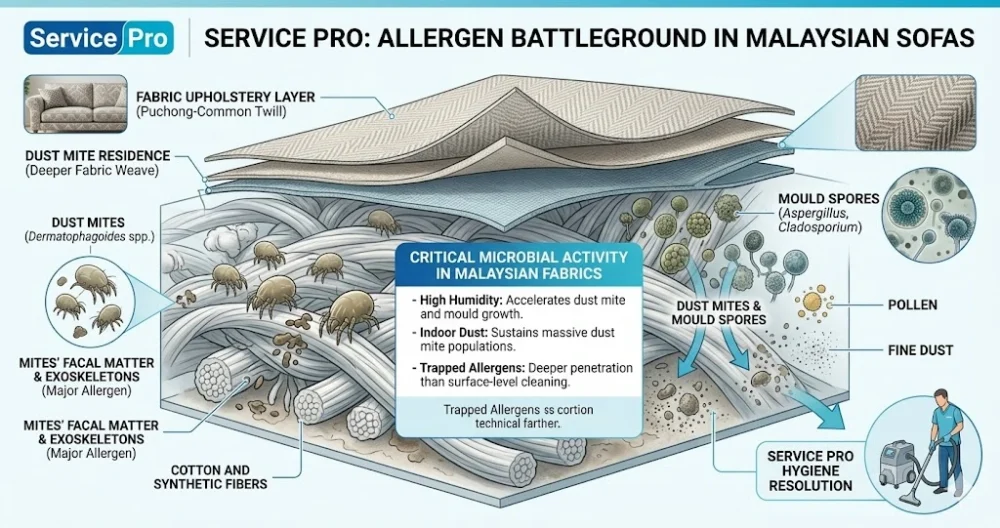
Cross-section diagram: dust mites and allergens embedded deep within mattress foam layers versus a clean, sanitized mattress core.
Climate Impact
Why Does Malaysia’s Climate Make Mattress Contamination Worse?
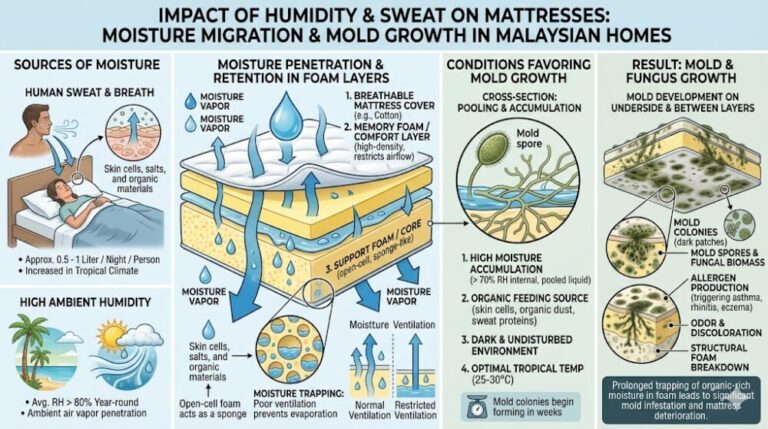
Malaysia’s tropical climate dramatically accelerates the rate at which biological matter accumulates inside your mattress — far faster than in temperate countries. This is the single most important reason why global mattress-cleaning advice (typically recommending annual cleaning) is insufficient for Malaysian homes.
- Excessive Nocturnal Sweating: The average adult loses approximately 500ml of moisture per night. In non-air-conditioned bedrooms, or during hot and humid nights across the Klang Valley, this volume increases significantly — seeping directly into the mattress foam.
- Limited Ventilation in High-Rise Condominiums: Many modern condos in Kuala Lumpur, Petaling Jaya, and Shah Alam are designed with limited cross-ventilation, trapping stagnant, humid air indoors and dramatically accelerating mold and mildew growth.
- Prolific Dust Mite Breeding Conditions: Dust mites thrive at temperatures above 24°C with relative humidity above 70% — conditions that describe most Malaysian bedrooms year-round. An unsanitized mattress in Malaysia can harbor up to 1.5 million dust mites within 12 months.
- Landed Homes with Poorer Air Circulation: Older terrace houses and semi-detached homes — particularly in Subang Jaya, Cheras, and Klang — often retain heat at night, compounding sweat absorption and slowing the natural drying of mattress moisture.
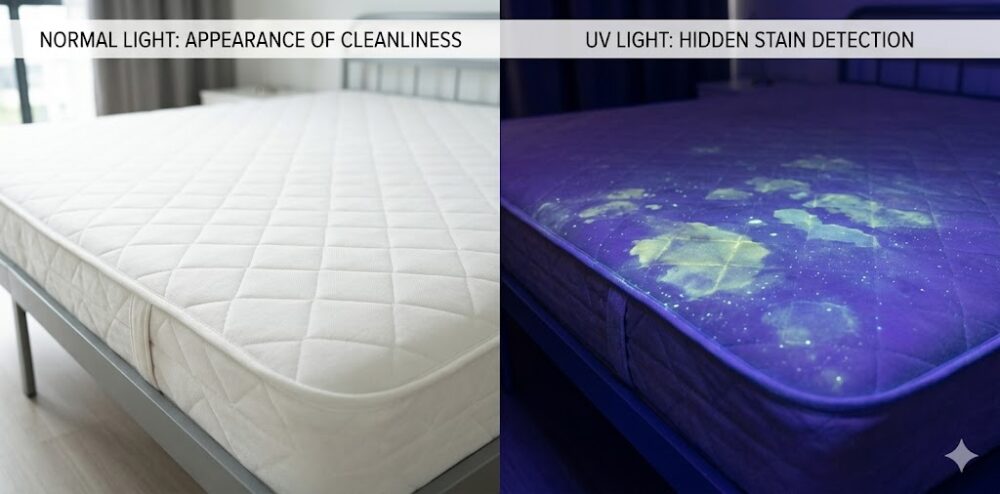
Split-screen comparison: a visually clean mattress (left) vs. the same mattress under UV light, revealing sweat stains and biological contamination.
Health Risks
What Are the Health Risks of Sleeping on an Unsanitized Mattress?
Sleeping on an unsanitized mattress exposes you to concentrated allergens that trigger respiratory distress and dermatological flare-ups. The primary health threat is not the dust mites themselves, but the inhalation of their microscopic fecal particles and decaying body matter, which become airborne as you move in your sleep.
Clinical symptoms that indicate your mattress requires immediate professional sanitization include:
- Morning Allergic Rhinitis: Waking with a consistently blocked nose, sneezing episodes, or itchy, red, or watery eyes — symptoms that typically improve after leaving the bedroom.
- Dermatological Flare-Ups: Unexplained skin rashes, worsening eczema, or acne breakouts along the cheeks, jawline, and back.
- Nocturnal Respiratory Distress: Increased asthma frequency at night, a persistent dry cough, or difficulty breathing that improves during the day.
- Chronic Poor Sleep Quality: Repeatedly disrupted sleep caused by subconscious itching, mild skin irritation, or low-level respiratory obstruction.
Important Note for Malaysian Parents
Children are disproportionately affected by dust mite allergens due to their developing immune systems and greater contact time in bed. If your child regularly experiences nighttime coughing or morning eye irritation, the mattress should be the first surface to inspect and sanitize.

Microscopic dust mite on a mattress fiber. One gram of mattress dust can contain up to 1,000 dust mites — a primary trigger for asthma and allergic rhinitis.
Is Your Sofa Overdue for a Deep Clean?
Service Pro connects you with background-checked hygiene specialists across KL & Selangor. Transparent pricing, no hidden charges.
Cleaning Comparison
DIY Mattress Cleaning vs. Professional Sanitization: What Actually Works?
DIY vacuuming removes only surface-level debris and does not eliminate embedded allergens, bodily fluids, or dust mite colonies deep within the foam. This is the critical distinction that most Malaysian households are unaware of.
| Method | What It Does | What It Cannot Do |
|---|---|---|
| Household vacuuming | Removes loose surface dust and hair | Cannot penetrate foam layers; redistributes fine allergens into the air |
| Baking soda application | Temporarily neutralizes surface odors | No antimicrobial effect; does not kill dust mites or mold |
| Sunning the mattress outdoors | Reduces surface moisture temporarily | Does not reach core layers; ineffective in high-humidity Malaysian weather |
| Spot cleaning with fabric spray | Masks surface odors | Does not address sub-surface biological contamination |
What Professional Extraction Delivers
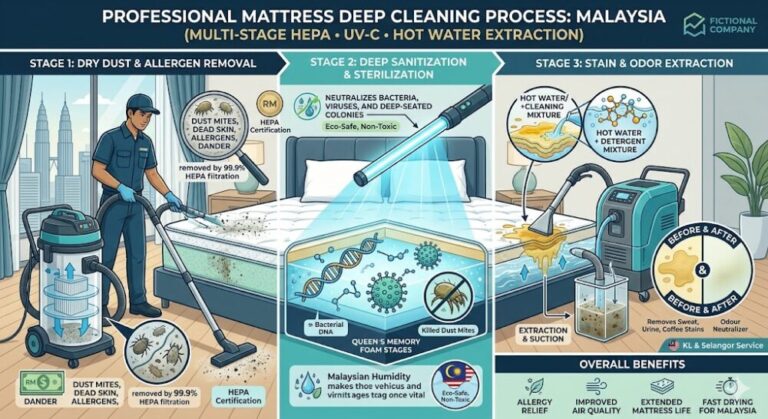
Verified Service Pro partners use industrial hot water extraction (HWE) combined with UV-C light technology. This equipment penetrates deep into your upholstery core, neutralizing live bacterial colonies and extracting compacted biological matter. Read our guide to discover what the extracted dirty water reveals during a professional sofa deep clean.
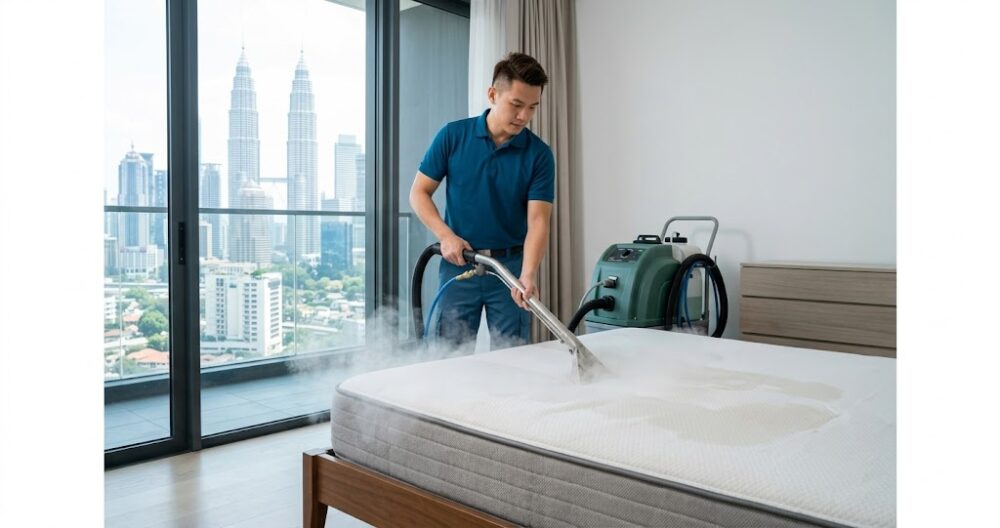
A Service Pro hygiene technician performing professional hot water extraction mattress cleaning in a Kuala Lumpur condominium.
Between-Service Care
How to Maintain Your Mattress Between Professional Cleanings
A professional sanitization every six months is your foundation — but what you do between appointments determines how quickly contamination returns. Follow this maintenance protocol:
Install a waterproof mattress protector immediately after every professional cleaning. Choose a breathable, TPU-laminated protector to minimize heat retention in Malaysia’s climate.
Wash your mattress protector every two weeks alongside your bedsheets, using water heated to at least 60°C to kill surface-level dust mites.
Ensure adequate bedroom ventilation. Run the air conditioner or ceiling fan for at least 30 minutes after waking to reduce residual nocturnal moisture before making your bed.
Vacuum your mattress surface monthly using a vacuum with a HEPA filter. While this does not replace professional treatment, it slows the rate of surface allergen accumulation.
Avoid eating or drinking in bed. Food particles accelerate the growth of mold and attract secondary pests that compound the contamination problem.
FAQ
Frequently Asked Questions About Mattress Sanitization in Malaysia
Hygiene Questions. 0
Questions from homeowners within and beyond Klang Valley, answered by our hygiene specialists.
─── MORE HYGIENE INSIGHTS
Keep Reading
Continue building your knowledge on maintaining a hygienically clean home in Malaysia’s tropical climate.