
Gua Sha: What It Does and Who It Suits
Gua sha went viral as a jade-roller-adjacent beauty trend, and that popularity buried what the technique actually is and where it came from. Here is the real version.
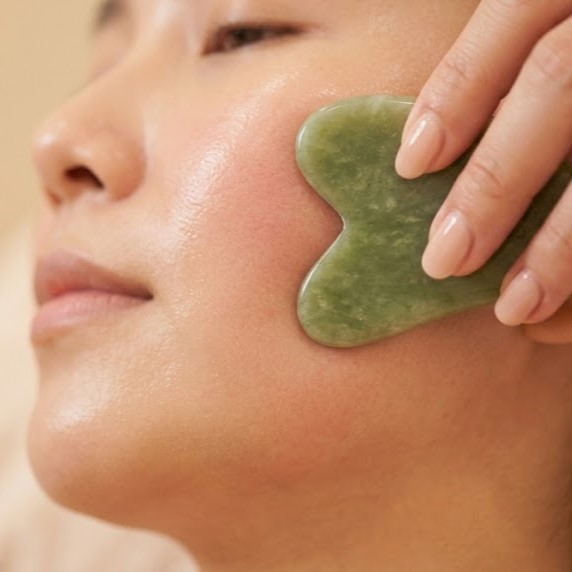
The social-media version of gua sha is a small stone tool, a face, and a claim about instant jawline definition. The traditional practice is older, broader, and honestly a bit more useful than the five-second clips suggest. Most of the confusion online is about pressure and redness — is it supposed to hurt, is redness normal, why does one video show gentle strokes and another shows something closer to scraping.
Authority Reference: General gua sha guidance verified against the Cleveland Clinic. Brow & Co provides beauty and wellness treatments, not medical care.
What Gua Sha Actually Is
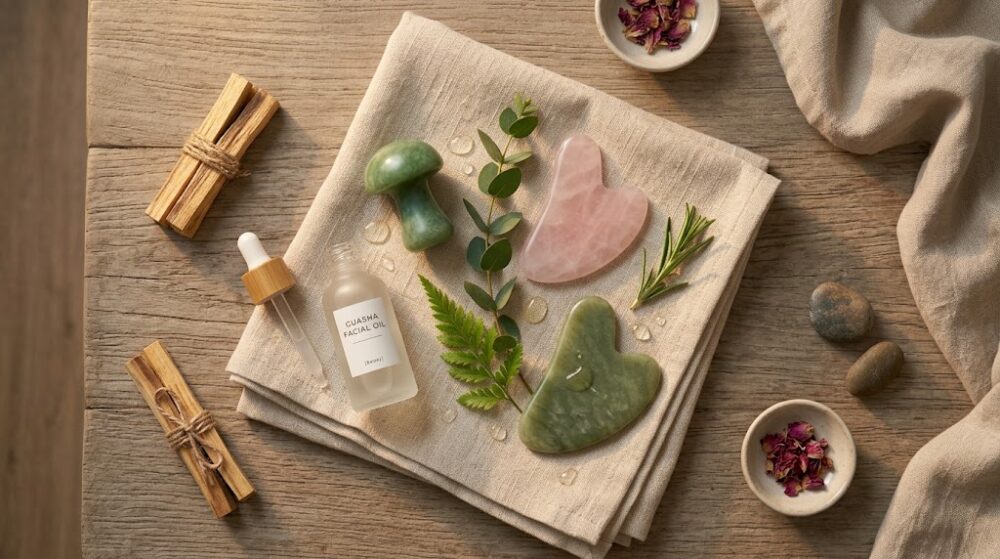
Gua sha uses a smooth-edged tool — traditionally jade or rose quartz, sometimes a simple spoon-shaped stone — drawn across the skin in firm, deliberate strokes along set directions. The technique is old, and it has been used on both the face and the body for very different reasons and with very different pressure.
Facial vs body application
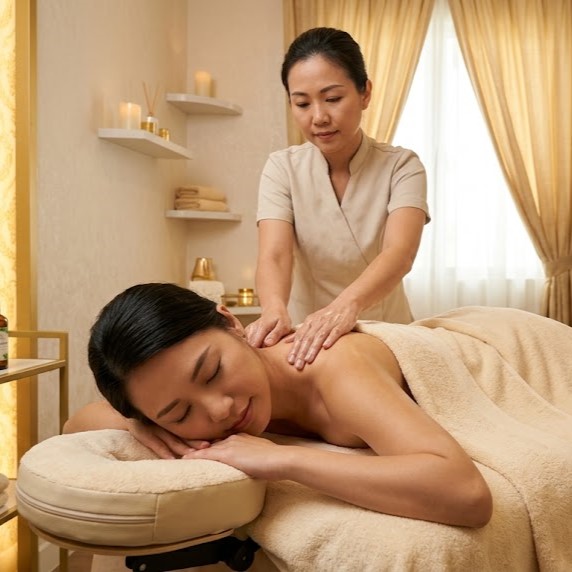
Facial gua sha is gentle — light, gliding strokes along the jaw, cheeks and neck, closer in feel to the lymphatic drainage technique than to anything you would call massage. Body gua sha uses noticeably firmer pressure on larger muscle groups, most often the back, shoulders and neck, and can produce temporary surface redness where the tool passes.
Neither version is supposed to hurt in the sense of causing pain you want to flinch away from. Facial work should feel smooth and soothing throughout. Body work can feel like firm, purposeful pressure — noticeable, but not sharp or unpleasant.
- Facial gua sha: light pressure, no redness expected, relaxing
- Body gua sha: firmer pressure, temporary redness possible on the treated area
- Both use smooth, deliberate strokes — never scraping or digging
- Any sharp pain is a sign to stop, not a sign it is “working”
What to Expect, and Who Should Skip It
A typical session, whether as its own add-on or worked into a facial or massage, lasts somewhere between ten and twenty minutes on the treated area. Facial results tend to look immediate — a brighter, slightly more defined look right after — while body work is more about the release you feel in tight muscle than anything visible.
Any temporary redness on body-treated areas typically fades within a day or two. If it lingers noticeably longer than that, or looks like bruising rather than surface redness, mention it to us.
Who should skip it
- Anyone on blood-thinning medication — check with a doctor first
- Active skin conditions, breakouts or open wounds on the treatment area
- Recent injury, surgery, or bruising in the area
- If in doubt, ask us before booking rather than after
Trained Technique, Honest Claims
Our therapists are trained in the pressure, angles and pathways that make gua sha work as intended, rather than the version that spreads on social media. We will tell you plainly what it does and does not do — it is a relaxing, complementary technique, not a substitute for medical treatment of any condition.
Frequently Asked Questions
What people ask about trying gua sha.
On body work, mild temporary redness on the treated area is normal and usually fades within a day or two. On facial work, you should not see redness — the pressure there is much lighter.
Many clients notice a brighter, slightly more defined look immediately after facial gua sha — largely from the same gentle drainage effect as a lymphatic facial. It is a temporary look, not a permanent structural change.
Yes, ask about it as an add-on when you book — particularly useful on the shoulders and upper back if that is where you carry tension.
Generally yes for facial gua sha with the right light pressure, but tell us if you have particularly reactive or sensitive skin so we can adjust or discuss whether it is the right fit that day.
A jade roller rolls; gua sha glides with a flat, angled edge and follows specific directional strokes. Both work on similar drainage principles, but gua sha allows more precision and, in trained hands, more control over pressure and pathway.
With the right tool and light pressure on the face, many people do. Body gua sha is better left to a trained therapist, since the firmer pressure and pathway knowledge matter more for both safety and effect.
Yes — it is RM38 as a 30-minute add-on, and it is usually added to a session rather than booked as its own standalone visit, and we can talk you through whether it suits what you are looking for.
Popular Related Insights
More honest guides from Brow & Co Kepong.


See What Gua Sha Actually Feels Like
Book a session and ask about adding gua sha. No package to sign, no deposit, no obligation to book again.
🎁 Book Your Massage on WhatsAppLooking for the full range of treatments? Visit our Body Massage in Kepong service page.
Part of the ServicePro.my Wellness Hub Network. All rights reserved.
Disclaimer: Some images used on this page are representational illustrations. Actual treatment rooms, products and results may vary. Beauty and wellness treatments are not medical procedures and individual results differ.
Questions From Kepong Customers
Real questions from people nearby, answered by our team.