Yellow Stains on Your Memory Foam Mattress? Here’s What’s Really Happening — and How to Fix It
Yellow sweat stains are biochemical evidence of oxidised urea, sebum, and microbial activity trapped deep in your foam — not just a surface problem. This complete guide covers DIY treatment protocols, when to call a professional, and how Malaysia’s humidity makes it all worse.
Book professional mattress extraction in the Klang Valley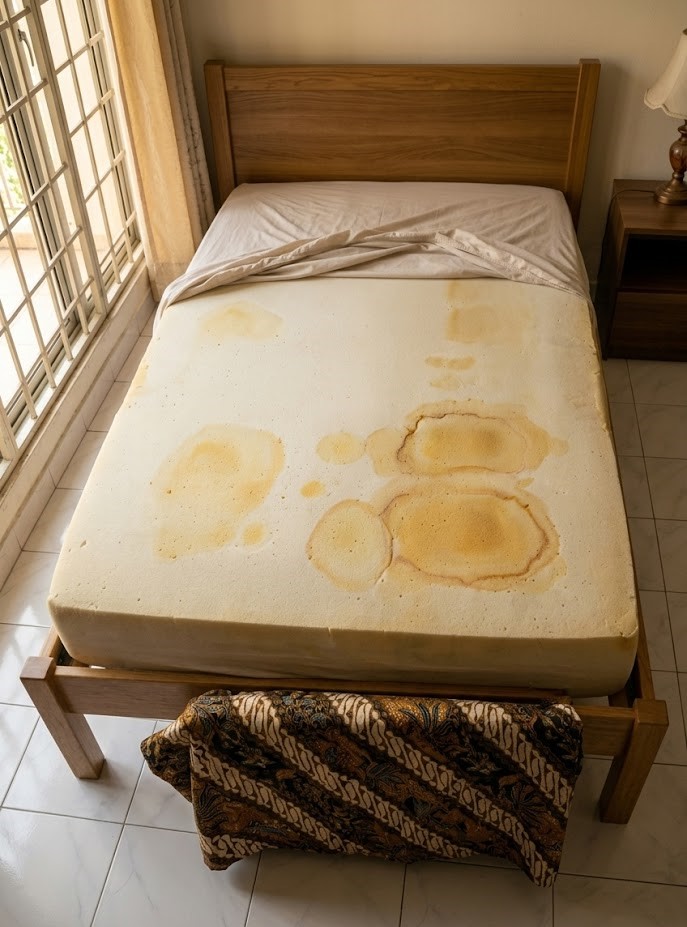
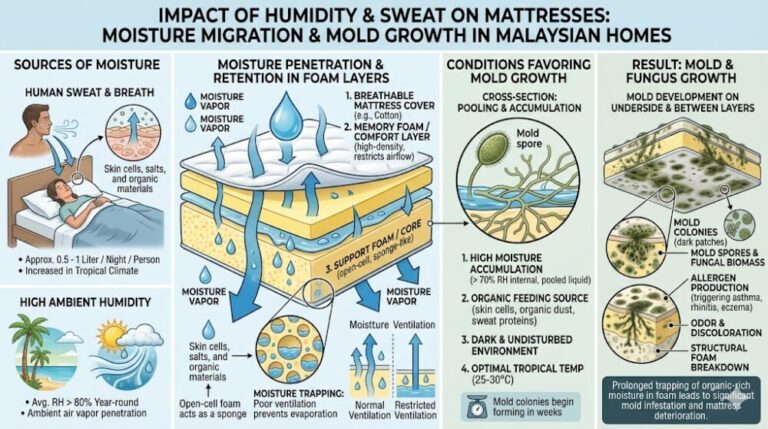
Yellow stains blooming across a memory foam mattress are not simply a cosmetic nuisance — they are biochemical evidence of accumulated sweat, sebum, shed skin cells, and, in many cases, early-stage microbial colonisation driven by Malaysia’s chronically high ambient humidity. In a climate where relative humidity (RH) routinely sits between 70–90%, the porous open-cell polyurethane structure of memory foam becomes a retention matrix for moisture and organic compounds that oxidise over time into the characteristic amber-to-brown discolouration most Malaysian homeowners recognise but rarely understand.
This guide provides a clinically grounded, step-by-step framework for identifying, treating, and preventing sweat-related mattress staining — and clarifies exactly when the contamination level warrants professional hot water extraction (HWE) rather than DIY intervention.
What Causes Yellow Stains on Memory Foam Mattresses?
Yellow stains on memory foam mattresses are caused by the oxidation of urea, uric acid, fatty acids, and proteins present in human perspiration — compounds that, once absorbed into the foam’s open-cell matrix, undergo chemical changes that produce persistent amber and brown pigmentation.
The average adult perspires between 100–200 ml per night. In Malaysia’s high-heat, high-humidity environment — particularly in non-air-conditioned bedrooms in areas like Cheras, Klang, or Johor Bahru — this figure can climb significantly higher. Unlike innerspring or latex mattresses, memory foam’s viscoelastic structure is specifically engineered to conform to body pressure, which means it also conforms to and retains moisture ingress.
The primary biochemical agents responsible for staining include:
- Urea and uric acid: Nitrogenous waste products in sweat that turn yellow on oxidation and degrade into volatile compounds responsible for the characteristic sour odour. (If you suspect a pet or child accident is also contributing to the yellowing, you must also understand how to safely extract old urine stains without damaging the foam).
- Sebum (skin oil): Fatty acids from sebaceous secretions that penetrate mattress fibres and the foam surface, yellowing as lipid oxidation progresses.
- Putrescine and cadaverine: Biogenic amines formed by bacterial decomposition of amino acids in sweat — the primary source of “old mattress” malodour.
- Protein residue: Shed keratinocytes (dead skin cells) that accumulate in foam pores and serve as a nutrient substrate for Dermatophagoides pteronyssinus (house dust mites) and secondary bacterial colonies.
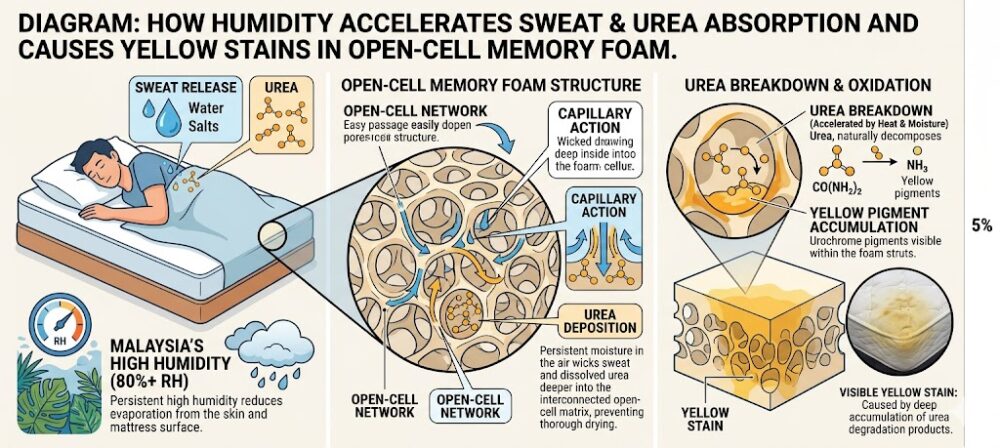 Memory foam’s open-cell structure absorbs and retains sweat compounds that oxidise into permanent yellow pigmentation — accelerated by Malaysia’s high ambient humidity.
The critical distinction for memory foam: water-based cleaning that oversaturates the foam creates a secondary problem. Excess moisture driven deep into the cell matrix will not evaporate within acceptable drying windows — particularly in humid Malaysian interiors — and instead becomes a mould and mildew incubation environment. This is why the moisture management protocol outlined below is non-negotiable.
How to Identify the Severity of Mattress Staining
The severity of sweat staining on a memory foam mattress can be graded on a three-tier scale based on stain area, colour depth, and the presence of secondary indicators like odour or visible microbial growth — each tier requiring a different intervention protocol.
Before selecting a cleaning method, conduct a systematic visual and olfactory assessment:
Surface-Level Discolouration (Light Yellow Patches)
- Appearance: Pale yellow or off-white patches, typically in the central thorax and hip zones
- Odour: Faint or absent
- Timeline: Recent accumulation, typically 3–12 months on an unprotected mattress
- Recommended intervention: DIY enzymatic spot treatment (see protocol below)
Moderate Staining with Embedded Odour (Deep Amber Zones)
- Appearance: Amber to brown-orange patches, defined margins, often overlapping body silhouette zones
- Odour: Persistent sour or musty smell even after airing
- Timeline: 12–36 months of sweat accumulation; may coincide with elevated dust mite populations
- Recommended intervention: Full-surface enzymatic treatment + dry compound method; professional assessment advised
Severe Staining with Microbial Indicators (Dark Brown or Black Margins)
- Appearance: Dark brown stains with irregular edges; possible grey-green mould colonies visible at margins or seams
- Odour: Strong ammonia, musty, or fermentation-type odour
- Indicators: Respiratory irritation in room occupants; visible speckling at foam seams
- Recommended intervention: Professional mattress deep cleaning service using HEPA-rated hot water extraction and antimicrobial treatment; mattress replacement should be evaluated
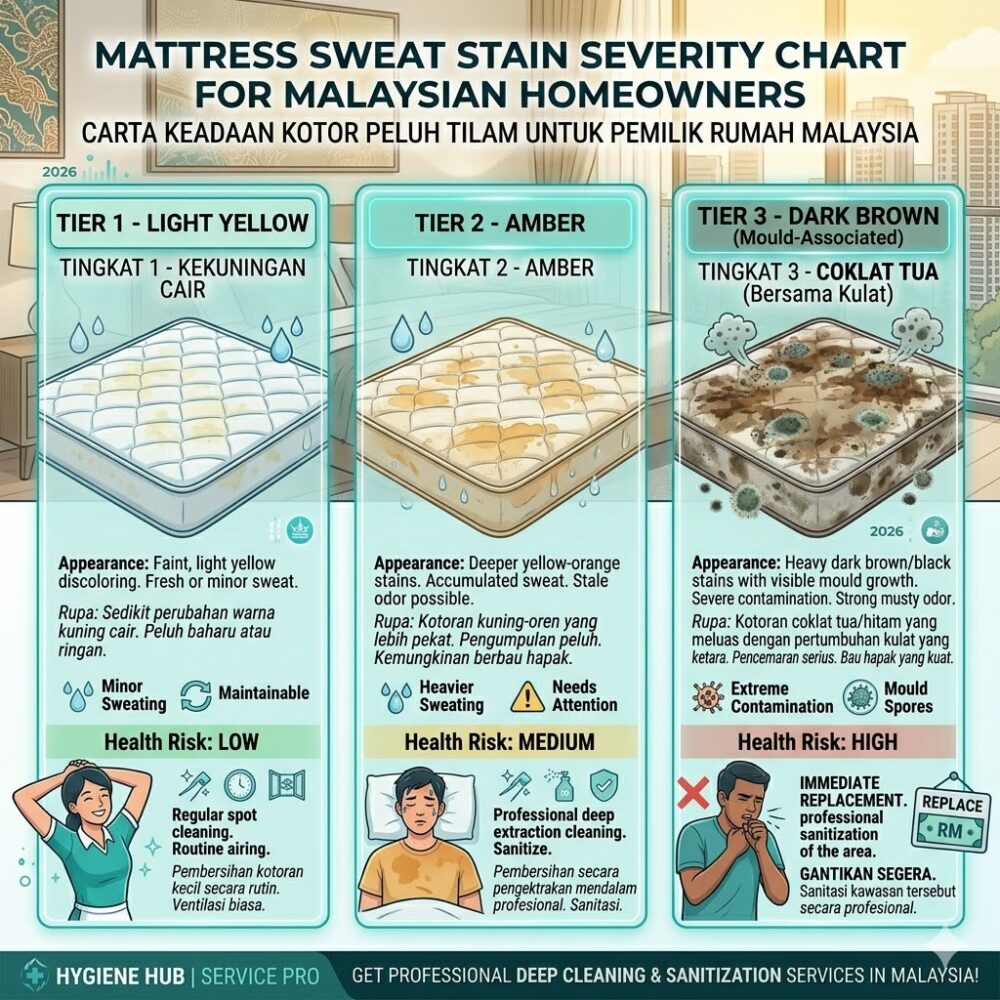 The three-tier mattress staining scale: Tier 1 is DIY-treatable; Tier 3 requires immediate professional intervention.
Step-by-Step DIY Protocol: Treating Sweat and Yellow Stains at Home
Effective DIY treatment of sweat stains on memory foam requires an enzymatic pre-treatment phase, a pH-correcting cleaning solution, and a controlled low-moisture application method — high water volume application will damage the foam and create secondary mould risk.
This protocol is suitable for Tier 1 and mild Tier 2 staining only. Gather materials before beginning; do not rush the dwell times.
What You Will Need
| Material | Function | Source |
|---|---|---|
| Enzymatic cleaner (bio-enzyme formula) | Breaks down urea, proteins, and fatty acids at molecular level | Pet care aisle, pharmacies |
| Baking soda (sodium bicarbonate) | pH neutralisation; absorbs residual VOCs and odour compounds | Supermarket |
| White vinegar (5% acidity) | Mild acid to dissolve alkaline residue; antimicrobial action | Supermarket |
| 3% hydrogen peroxide solution | Oxidative bleaching of yellow pigmentation; limited to surface application | Pharmacy |
| Cold water | Dilution medium; always cold — heat sets protein stains permanently | — |
| Microfibre cloths × 3 | Application and blotting; avoid terrycloth which spreads staining | — |
| Spray bottle | Controlled low-volume application | — |
| Standing fan or dehumidifier | Accelerated drying; critical in Malaysian humidity | — |
Phase 1: Enzymatic Pre-Treatment (Dwell Time: 20–30 Minutes)
- Strip the bed completely. Machine-wash all bedding, including the mattress protector if present, at 60°C — the minimum temperature to denature Der p 1 allergen proteins.
- Blot (do not rub) any fresh moisture with a dry microfibre cloth to reduce the active wet area before chemical application.
- Apply enzymatic cleaner to the stained area using a spray bottle. Saturate lightly — the foam surface should be damp, not wet. Approximately 3–5 sprays per 10 cm² zone.
- Allow 20–30 minutes dwell time. Cover with a damp cloth to prevent rapid evaporation. The enzyme cultures (typically protease, lipase, and amylase blends) require dwell time to digest organic substrates.
- Blot firmly with a clean microfibre cloth using straight downward pressure. Work from the stain margin inward to prevent spreading. Do not use circular motions.
Phase 2: Stain Oxidation Treatment (For Yellow Pigmentation)
- Mix the oxidising solution: Combine 120 ml of 3% hydrogen peroxide, 1 tablespoon of baking soda, and 1–2 drops of mild dish soap in a bowl. Stir gently — do not shake.
- Apply sparingly to the remaining yellowed area using a microfibre cloth. Work in small sections (15 × 15 cm at a time).
- Dwell for 10–15 minutes, then blot. Do not allow the peroxide solution to pool or run into the foam interior.
- Important caution: Do not use hydrogen peroxide concentrations above 3% — higher concentrations will degrade polyurethane foam and can bleach coloured mattress covers unevenly.
Phase 3: Odour Neutralisation and Drying
- Apply a generous, even layer of baking soda across the entire treated surface — not just the stain zone. Use approximately 3–4 tablespoons per 0.5 m².
- Allow 6–8 hours minimum dwell time (overnight is preferred). In Malaysian humidity, shorter dwell periods are less effective as the baking soda requires adequate time to absorb VOCs.
- Vacuum thoroughly using a HEPA-filtered vacuum cleaner. Standard vacuums will simply recirculate fine particulates rather than capturing them. Use the upholstery attachment with slow, overlapping strokes.
- Position a standing fan directly at the mattress surface for at least 2–3 hours post-treatment, or run a room dehumidifier to bring RH below 60% before replacing bedding.
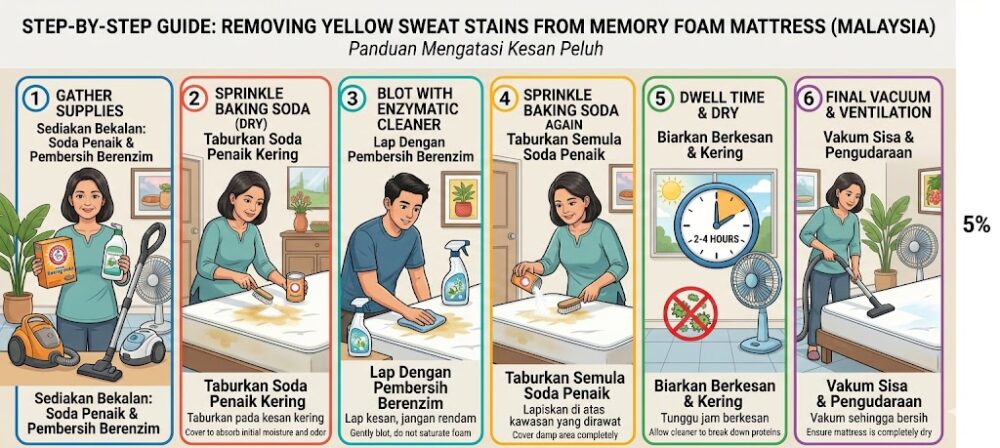 Three-phase DIY stain removal process: enzymatic pre-treatment, oxidation treatment, and odour neutralisation with active drying.
Why Malaysia’s Climate Makes Mattress Staining Worse
Malaysia’s equatorial climate — characterised by year-round ambient temperatures of 26–33°C and relative humidity of 70–90% — creates the precise conditions under which sweat compounds oxidise faster, dry slower, and support microbial activity that accelerates both staining and allergen load in memory foam mattresses.
This is not a hygiene failing unique to any individual household. It is a structural environmental challenge faced by homeowners across Kuala Lumpur, Petaling Jaya, Shah Alam, Penang, and Kota Kinabalu equally — a factor heavily recognised by Malaysian Ministry of Health (MOH) advisories on indoor mould and allergen management.
Key climate-driven compounding factors include:
Hygroscopic Residue Problem
Memory foam’s polyurethane matrix is inherently hygroscopic — it absorbs and retains atmospheric moisture. In a 75–85% RH bedroom, a mattress that was surface-cleaned but not professionally dried will re-absorb ambient moisture within hours, re-activating dormant bacterial colonies and accelerating malodour.
Dust Mite Acceleration
Dermatophagoides pteronyssinus — the primary house dust mite species in Malaysian homes — reaches peak reproductive activity at RH above 75% and temperatures above 25°C. Sweat residue provides the protein substrate (shed skin scales/keratinocytes) that sustains mite colony density.
Monsoon & Inter-Monsoon Humidity Spikes
The November–January Northeast Monsoon period and April–May inter-monsoon months push ambient humidity higher across Peninsular Malaysia, significantly extending drying windows after any wet cleaning event. Attempting DIY mattress cleaning during these periods without active dehumidification creates mould risk.
Haze Season Considerations
During Sumatran peat haze episodes — typically June–October — sealing rooms with closed windows to exclude PM2.5 particulates simultaneously traps indoor humidity and accelerates the staining-and-odour cycle.
📌 Practical implication for Malaysian homeowners: The standard “air it out in the sun” advice ubiquitous on international cleaning blogs is valid in temperate climates with low ambient humidity. In Malaysia, even direct sun exposure will not drive moisture from foam depths if the surrounding air is already saturated. Mechanical drying (fan + dehumidifier) is always the required finishing step.
When DIY Is Not Enough: Recognising the Limits of Home Treatment
Memory foam mattresses with Tier 2–3 staining, confirmed mould colonies at the seam or surface, or persistent odour after two complete DIY treatment cycles require professional hot water extraction and antimicrobial treatment — continued DIY attempts at this stage risk deeper foam contamination and accelerated structural degradation.
Home treatment is effective within a narrow window. The following conditions indicate that professional mattress cleaning service is the clinically appropriate next step:
| Indicator | Clinical Significance | Action Required |
|---|---|---|
| Stain reappears within 2 weeks of DIY treatment | Contamination is sub-surface; surface treatment is not reaching the active zone | Professional HWE |
| Persistent sour/ammonia odour after baking soda treatment | Active bacterial metabolite production; enzymatic surface treatment insufficient | Professional HWE + antimicrobial |
| Visible grey or black speckling at mattress seams | Active mould colonisation (Aspergillus, Cladosporium, or Stachybotrys spp.) | Professional assessment; possible replacement |
| Occupant reports nighttime nasal congestion, skin irritation, or worsening asthma | Elevated Der p 1 allergen load or mycotoxin off-gassing | Immediate professional intervention |
| Mattress older than 7–8 years with chronic staining | Foam cell integrity degraded; deep contamination irreversible by surface methods | Replacement evaluation |
What Professional Mattress Cleaning Achieves That DIY Cannot
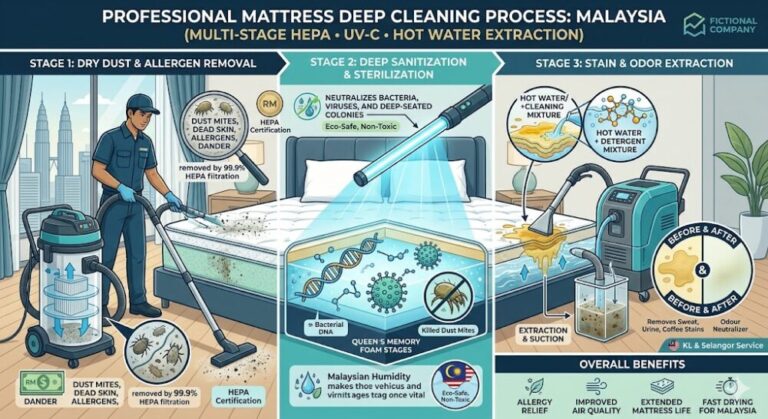
Professional mattress cleaning using HEPA H13-rated hot water extraction delivers water temperature (typically 70–90°C) and extraction pressure that DIY equipment cannot replicate:
Sub-surface Penetration
Commercial HWE wands drive cleaning solution to 4–6 cm depth within memory foam, reaching contamination zones that are entirely inaccessible to spray-and-blot methods.
Controlled Extraction
The simultaneous vacuum extraction in HWE removes dissolved organic compounds and moisture in the same pass, limiting secondary saturation risk.
Sporicidal Treatment
Certified Pest Control Operators (PCOs) and hygiene technicians can apply EPA/KKM-registered sporicidal agents that neutralise mould spore viability — not possible with consumer-grade products.
Allergen Quantification
Some professional services offer pre/post-treatment ELISA swab testing for Der p 1 allergen concentration, providing objective evidence of remediation efficacy — particularly relevant for households with asthmatic or immunocompromised occupants.
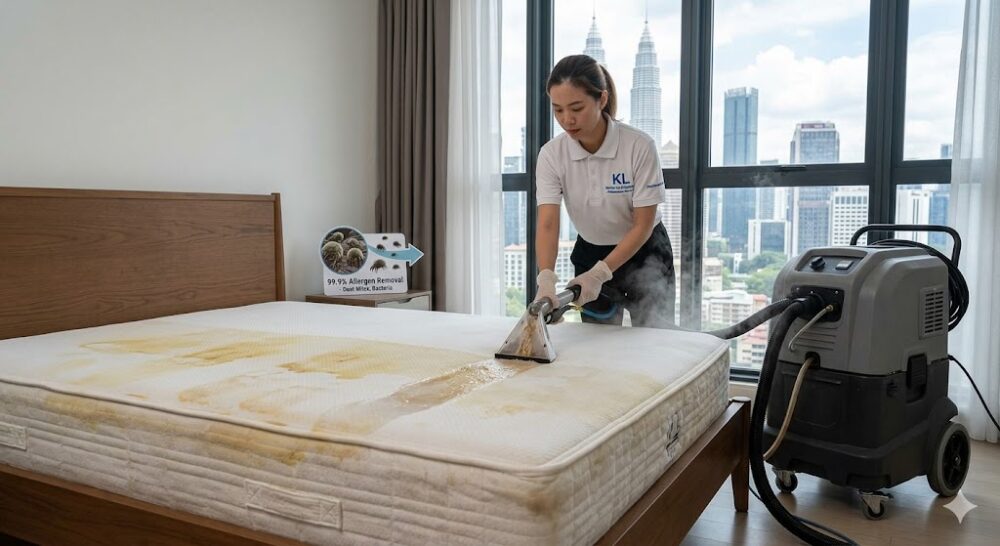 Professional HEPA H13-rated hot water extraction reaches contamination at 4–6 cm depth — beyond the reach of any DIY spray-and-blot method.
How to Prevent Yellow Sweat Stains on Memory Foam Mattresses in Malaysia
The most cost-effective strategy for preventing sweat stains on memory foam mattresses in Malaysia is a layered physical barrier system — a waterproof, breathable mattress protector combined with moisture-wicking bedsheets — which intercepts sweat before it reaches the foam surface.
Prevention is significantly more economical than remediation. A quality mattress protector in Malaysia costs RM 80–250; professional mattress cleaning costs RM 150–400 depending on mattress size and contamination level.
Layer 1 — Waterproof Mattress Protector
Select a protector with a TPU (thermoplastic polyurethane) backing rather than PVC. TPU barriers are breathable and do not trap heat against the sleep surface — critical for comfort in Malaysia’s warm nights. Wash at 60°C monthly.
Layer 2 — Moisture-Wicking Bedsheet
Bamboo-derived viscose or Tencel (lyocell) sheets draw moisture away from the body and toward the protector surface significantly more effectively than cotton percale. Wash weekly at minimum; fortnightly is insufficient in equatorial humidity.
Layer 3 — Active Room Humidity Control
Maintain bedroom RH at 50–60% using a dehumidifier or consistently running air-conditioning at 24–26°C overnight. Above 70% RH, dust mite reproduction and bacterial activity in any mattress type — foam, latex, or pocket spring — become difficult to control through cleaning frequency alone.
Layer 4 — Quarterly Mattress Airing
Rotate the mattress 180° quarterly. In a well-ventilated room (not during haze or rainy season peak), expose the bare mattress surface to indirect airflow for 4–6 hours with a fan running directly over the surface.
Layer 5 — Annual Professional Cleaning
Even with a protector in place, professional mattress cleaning once every 12 months is the recommended maintenance interval for Malaysian households. Households with pets, young children, or occupants with respiratory conditions should increase this to every 6 months.
Mattress Cleaning Cost Guide for Malaysia (2025)
Professional mattress cleaning in Malaysia typically costs between RM 80–400 depending on mattress size, contamination severity, and service scope — with most single-bed HWE services in the Klang Valley completing within 60–90 minutes.
| Mattress Size | Typical Price Range (Klang Valley) | Typical Price Range (Penang/JB) | Drying Time |
|---|---|---|---|
| Single (90 × 190 cm) | RM 80–120 | RM 70–100 | 2–4 hours |
| Super Single (107 × 190 cm) | RM 100–150 | RM 90–130 | 2–4 hours |
| Queen (152 × 190 cm) | RM 150–220 | RM 130–190 | 3–5 hours |
| King (183 × 190 cm) | RM 200–300 | RM 170–260 | 4–6 hours |
| King + Anti-mite treatment | RM 280–400 | RM 240–350 | 4–6 hours |
Prices are indicative market ranges. Final quotations vary by service provider, add-on treatments (anti-dust-mite, deodorisation), and travel zone. Providers operating under the Lembaga Perlesenan Pest Control (LPP) framework are recommended for services involving antimicrobial or anti-dust-mite chemical application.
Frequently Asked Questions About Removing Sweat and Yellow Stains from Memory Foam Mattresses
Tier 1 (light, recent) yellow sweat stains can often be substantially reduced or eliminated using the enzymatic treatment and hydrogen peroxide protocol described above. However, Tier 2–3 staining — where pigmentation has penetrated beyond the surface layer into the foam cell matrix — typically cannot be fully reversed through DIY methods, and professional hot water extraction is required for complete remediation.
No. Chlorine bleach (sodium hypochlorite) will chemically degrade the polyurethane structure of memory foam, causing cellular breakdown and accelerated physical deterioration. It will also strip fire-retardant treatments applied to the foam cover. Use 3% hydrogen peroxide as a far safer and structurally compatible oxidative alternative for surface stain treatment.
In Malaysia’s humid climate, a memory foam mattress treated with a low-moisture DIY protocol requires a minimum of 3–5 hours of active fan drying before it is safe to replace bedding. A mattress subjected to high-volume water application (incorrect method) can take 8–24 hours or longer, and may not dry adequately without a dehumidifier running simultaneously — creating mould risk. Professional HWE services that include industrial hot-air drying can reduce this to 2–3 hours.
The recommended interval is every 12 months for most Malaysian households — reduced to every 6 months for households with infants or toddlers sharing the sleep surface, occupants with asthma or allergic rhinitis, pets in the bedroom, or confirmed history of sweat staining. Malaysia’s year-round humidity means that mite populations and organic compound accumulation occur at a faster rate than in temperate-climate markets where these guidelines were originally established.
Yes — a waterproof mattress protector with a TPU backing is the single most effective preventive measure for yellow sweat staining in memory foam mattresses. Without a protector, perspiration soaks directly into the foam surface from night one. Even a mid-range protector in the RM 80–180 range extends the clean life of the mattress substantially and reduces professional cleaning frequency requirements.
The white residue is dried sodium bicarbonate — the baking soda itself — along with absorbed fatty acid salts and volatile organic compounds it has extracted from the foam surface during dwell time. It is not harmful. It must be vacuumed thoroughly using a HEPA-filtered vacuum to avoid residual powder becoming airborne during sleep, which can irritate respiratory mucosa — particularly in occupants with asthma or allergic rhinitis.
Persistent sweat contamination in a mattress creates three categories of health risk: (1) Allergen accumulation — elevated Der p 1 allergen from dust mite colonies sustained by organic sweat residue, linked to allergic rhinitis, conjunctivitis, and asthma exacerbation; (2) Microbial colonisation — bacterial VOC production (putrescine, cadaverine) and secondary mould growth in highly contaminated foam, which can contribute to chronic sleep-environment irritant exposure; (3) Contact dermatitis — in individuals with sensitive skin, prolonged contact with heavily contaminated foam surfaces can trigger localised skin reactions. This risk profile is particularly relevant in Malaysian households where high ambient humidity accelerates mite and mould activity.
Yes. Memory foam’s open-cell viscoelastic structure has a significantly higher moisture absorption and retention capacity than pocket spring or natural latex mattresses. Latex, in particular, has inherent antimicrobial properties and a denser cell structure that resists moisture ingress. However, memory foam’s superior pressure-distribution and motion-isolation properties remain highly valued — the trade-off is that it requires more diligent hygiene maintenance, particularly in tropical climates like Malaysia’s.
📅 Book Your Professional Mattress Cleaning in the Klang Valley
If your mattress has progressed beyond what home treatment can address — or if it simply has not been professionally cleaned in over a year — ServicePro.my’s verified hygiene partners provide HEPA-rated hot water extraction, anti-dust-mite treatment, and certified deodorisation. All service partners are vetted, background-checked, and equipped with commercial-grade HWE equipment. Same-week bookings available in most Klang Valley postcodes.
Tap your location to open WhatsApp — no forms, no waiting.
The information provided in this guide is for educational purposes regarding indoor hygiene maintenance. Always consult your mattress manufacturer’s care guidelines before applying chemical treatments to memory foam. ServicePro.my connects Malaysians with vetted, verified hygiene and home service professionals across the Klang Valley and beyond.
Hygiene Questions. 0
Questions from homeowners within and beyond Klang Valley, answered by our hygiene specialists.
─── MORE HYGIENE INSIGHTS
Keep Reading
Continue building your knowledge on maintaining a hygienically clean home in Malaysia’s tropical climate.