Can a Dirty Mattress Cause Acne or Skin Rashes? A Malaysian Guide to Mattress Hygiene
Your mattress harbours dust mites, fungal spores, and bacteria that come into contact with your skin for 6–8 hours every night. In Malaysia’s 70–90% humidity, the contamination is significantly worse than in temperate countries — and it may be the undiagnosed cause of your recurring skin problems.
Book professional mattress deep cleaning in the Klang Valley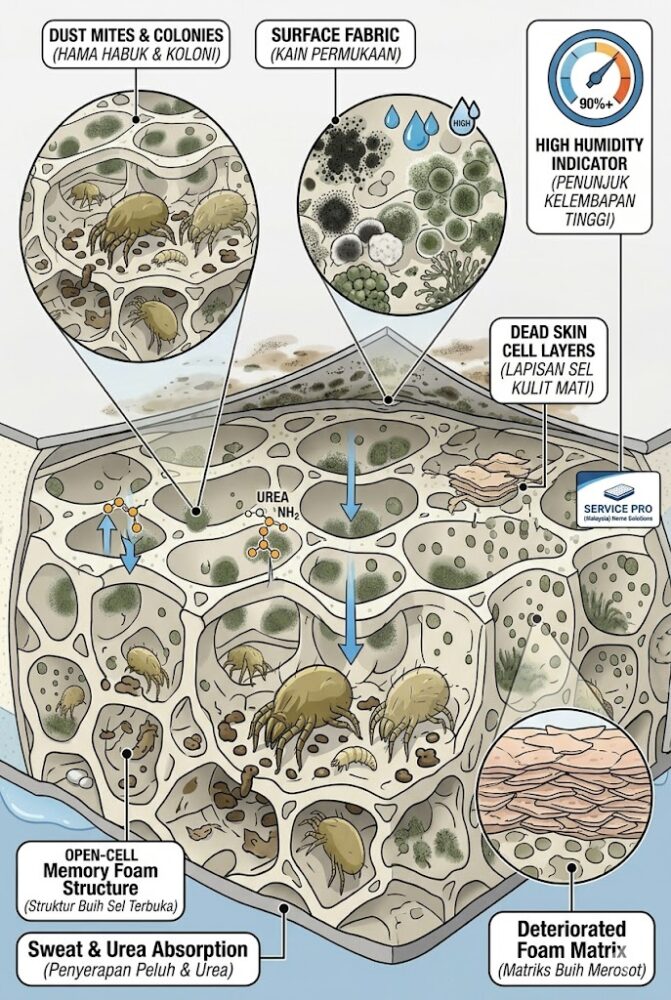
Can a Dirty Mattress Actually Cause Acne and Skin Rashes?
Yes — a dirty mattress can directly trigger acne breakouts and skin rashes. A mattress that has not been deep-cleaned accumulates dead skin cells, sweat residue, dust mites, fungal spores, and body oils, all of which create a breeding ground for bacteria and allergens that come into prolonged contact with your face and body for 6–8 hours every night.
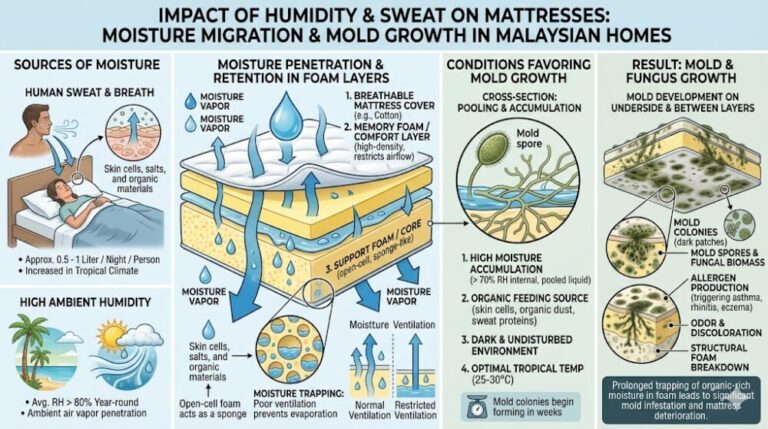
In Malaysia’s tropical climate (average humidity: 70–90%), this problem is significantly more severe than in temperate countries. High moisture accelerates both dust mite reproduction and mould growth inside mattress foam — two of the most potent skin irritants linked to contact dermatitis and cystic acne.
Key Takeaway: A dirty mattress harbours dust mites, fungal spores, and bacteria that cause acne, contact dermatitis, and allergic skin rashes — especially in Malaysia’s humid conditions. Professional deep cleaning every 6 months is the clinically recommended remedy.
What Is Living Inside Your Mattress Right Now?
A typical unclean mattress that has been in use for 12+ months without professional cleaning contains the following biological contaminants:
- Dust mites (Dermatophagoides pteronyssinus): The most common mattress allergen in Southeast Asia. A single mattress can harbour 1.5 to 2 million dust mites. Their fecal proteins (Der p1, Der p2) are the primary trigger for eczema and allergic contact dermatitis.
- Dead skin cells (dander): Humans shed approximately 30,000 to 40,000 skin cells per hour. These cells settle into mattress fibres, feeding dust mites and bacteria.
- Sweat and sebum: Each person loses roughly 200ml of sweat per night. This moisture saturates the mattress core, creating an ideal environment for bacterial and fungal colonisation.
- Fungal spores (e.g., Aspergillus, Cladosporium): Highly prevalent in Malaysian homes due to humidity. These spores penetrate the skin barrier and trigger inflammatory skin responses.
- Bacteria (Staphylococcus aureus): This bacteria, commonly found on human skin, thrives in warm, humid mattress environments. When it contacts open acne lesions or minor abrasions, it worsens inflammation.
- Chemical residues: Residual detergent, body lotion, and fabric softener from bedding can seep into mattress surfaces and act as contact allergens.
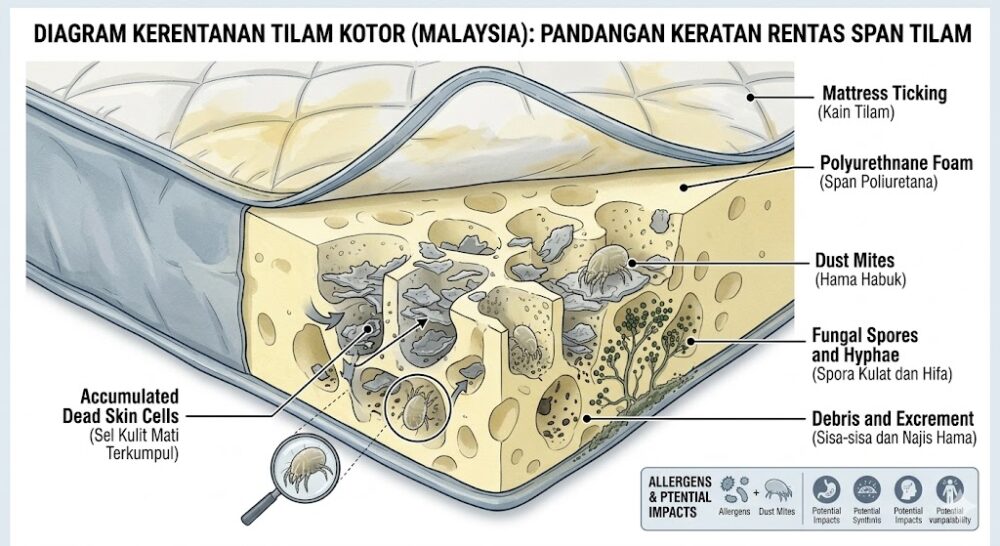 A mattress cross-section illustrating common biological contaminants. In Malaysian humidity, fungal and mite colonies grow significantly faster than in drier climates.
How Does a Dirty Mattress Cause Acne Specifically?
A dirty mattress contributes to acne through three distinct biological mechanisms:
Prolonged Bacterial Contact
When your face presses against a pillow or mattress surface contaminated with S. aureus and skin-surface bacteria for hours at a time, the bacteria infiltrate sebaceous glands and hair follicles. This leads to comedonal and inflammatory acne, particularly along the jawline, cheeks, and forehead — the areas with the most pillow contact.
Dust Mite Allergen-Induced Inflammation
Dust mite proteins trigger an IgE-mediated immune response in sensitised individuals. This systemic inflammatory state increases sebum production and skin barrier permeability — both known acne-aggravating factors. Research links high Dermatophagoides allergen exposure to worsening acne vulgaris in young adults.
Physical Occlusion and Heat
A mattress that retains heat and moisture creates a warm, humid microenvironment against your skin surface all night. Occlusive heat is a documented acne trigger, trapping sebum inside pores and accelerating bacterial proliferation.
Who Is Most at Risk in Malaysia?
- Teenagers and young adults sleeping on unclean mattresses in shared rooms or hostels
- Adults with known eczema (ekzema) or sensitive skin
- Residents in high-humidity areas: Klang Valley, Penang, Johor Bahru, Kota Kinabalu
- Anyone who has not had their mattress professionally cleaned in over 12 months
What Types of Skin Rashes Can a Dirty Mattress Cause?
Beyond acne, a contaminated mattress is clinically associated with the following dermatological conditions:
| Skin Condition | Trigger from Mattress | Common Presentation |
|---|---|---|
| Allergic Contact Dermatitis | Dust mite proteins (Der p1/Der p2) | Red, itchy patches on arms, neck, face |
| Atopic Eczema (Ekzema Atopik) | Dust mite and mould allergen exposure | Dry, cracked, weeping skin; worse at night |
| Urticaria (Hives / Gatal-gatal) | Mould spore inhalation + skin contact | Raised, red welts; intense itching |
| Folliculitis | S. aureus bacterial contamination | Inflamed hair follicles; pustules on back/thighs |
| Fungal Skin Infections (Kurap) | Candida or Trichophyton from mattress | Circular, scaly rash; common in moist skin folds |
| Perioral Dermatitis | Bacterial + chemical allergen contact | Small bumps and redness around mouth/chin |
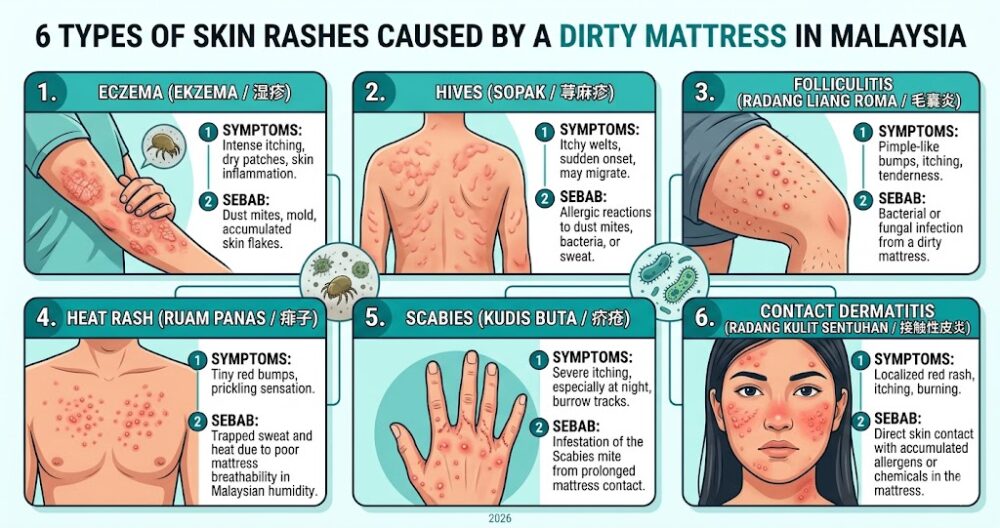 Skin conditions commonly linked to mattress contamination. Malaysian dermatologists note a significant rise in dust mite-related eczema cases, particularly among condo and apartment residents.
Why Is This Problem Worse in Malaysian Homes?
Malaysia’s physical environment creates uniquely aggressive mattress contamination conditions compared to temperate climates.
Tropical Humidity — The Core Accelerator
At 70–90% relative humidity, dust mite populations double in size compared to populations at 50% humidity. Malaysian homes — particularly older terrace houses with limited airflow and modern condominiums with sealed AC environments — create ideal mite habitats.
Air-Conditioning Creates a False Sense of Cleanliness
Many Malaysians assume that sleeping in an air-conditioned room prevents mattress contamination. This is incorrect. AC units cool the air but do not reduce internal mattress humidity. The moisture retained from sweat has no mechanism to escape a dense foam mattress in a sealed room — creating a cold-and-damp internal environment optimal for mould growth.
Mattress Materials Common in Malaysia
Latex foam: Highly susceptible to mould colonisation internally despite appearing clean on the surface. Memory foam: High moisture absorption; slow to dry. Most common in mid-range to premium Malaysian mattresses. Spring/pocket coil: The coil cavity is a known dust mite habitat if the upholstery layer is not periodically cleaned.
Common Malaysian Home Types and Their Risk Levels
- Condo/Apartment units: High risk. Limited natural ventilation. Sealed environments trap moisture. Shared HVAC systems can circulate mould spores.
- Terrace houses (teres): Moderate-to-high risk. Ground floor units in high-humidity areas (near rivers, in Klang Valley lowlands) are especially vulnerable to mould wicking up through flooring.
- Linked bungalows / semi-D: Moderate risk. Better ventilation, but large floor areas mean mattresses are often in rooms that are under-used and infrequently sunned.
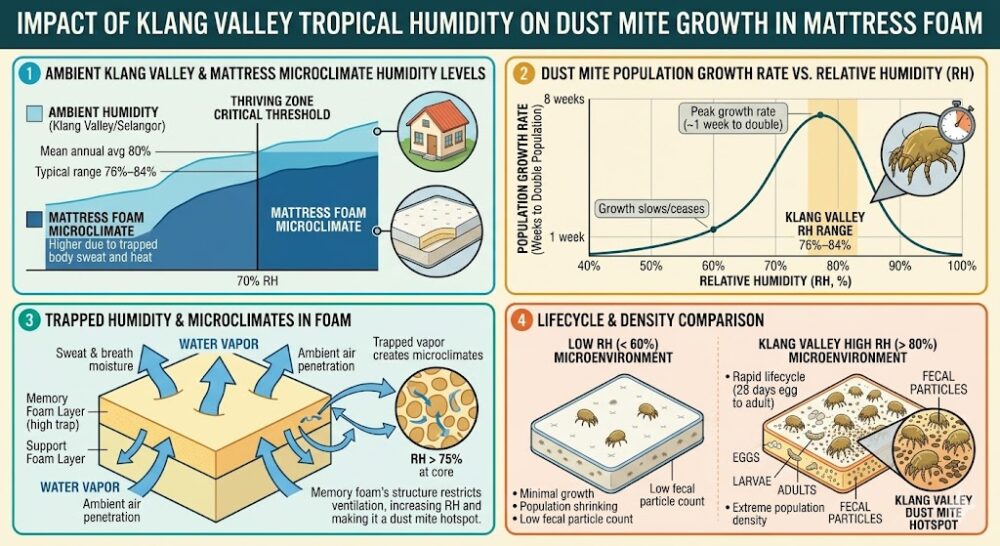 Dust mite reproduction rates at varying humidity levels. Malaysian homes consistently operate at humidity levels that support maximum mite colony growth.
How Often Should You Clean Your Mattress in Malaysia?
Given local climatic conditions, the cleaning frequency recommended for Malaysia differs from generic global advice:
Wash Bedsheets at 60°C or Above
Change and wash bedsheets at 60°C or above to kill dust mites on contact. This is the single most impactful DIY intervention.
Sun and Rotate Your Mattress
Air your mattress in natural sunlight for 2–4 hours. Direct UV radiation at Malaysian intensities (UV Index 8–12+) kills surface bacteria and reduces surface mould. Rotate the mattress 180 degrees.
HEPA Vacuum the Mattress Surface
Vacuum the mattress surface using a HEPA-filter vacuum cleaner. Do not use a standard household vacuum — it recirculates fine allergen particles.
Professional Deep Cleaning (Hot Water Extraction)
Schedule a professional mattress deep cleaning service using hot water extraction (steam cleaning), which penetrates the foam core, eliminates embedded dust mite colonies, extracts biological waste, and applies anti-microbial treatment. This is the only method proven to reduce internal allergen loads.
📍 Local Note: For residents in high-humidity zones such as Shah Alam, Klang, Petaling Jaya, Cheras, and Ampang, a 4-month professional cleaning cycle is strongly advisable given accelerated mite and mould growth rates. To eliminate deep-seated allergens, bacteria, and fungal contamination that home vacuuming cannot reach, schedule a professional mattress deep cleaning service with certified hygiene technicians who use clinical-grade hot water extraction equipment.
What Does Professional Mattress Cleaning Actually Do?
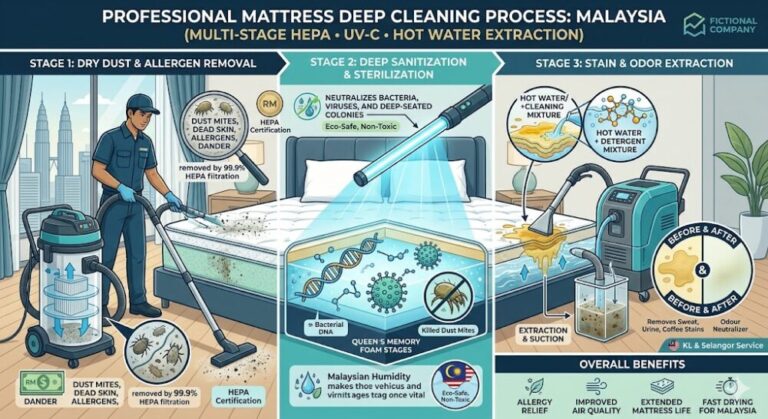
Professional mattress cleaning is not the same as vacuuming or surface wiping. A certified hygiene service uses a multi-stage clinical protocol:
HEPA Dry Vacuuming
High-powered HEPA vacuum extraction removes surface debris, dead skin cells, hair, and loose dust mite matter without dispersing allergen particles into the room air.
Hot Water Extraction (Steam Cleaning)
Water heated to 70–80°C is injected under pressure into the mattress foam layers and immediately extracted via industrial suction. At this temperature, dust mites are killed within 10 minutes of exposure. Endorsed by the AAAAI as the gold standard for allergen reduction.
Anti-Microbial Treatment
A hospital-grade, skin-safe antimicrobial solution (typically benzalkonium chloride or botanical alternatives) is applied to inhibit bacterial and fungal re-colonisation post-cleaning.
High-Speed Drying
Industrial air movers accelerate drying to prevent re-introduction of moisture — a critical step often skipped by non-certified operators that can make the mould problem worse.
UV-C Light Sanitisation
Some certified providers in Klang Valley offer UV-C wand treatment as an add-on, which kills residual surface pathogens. Available as a premium service upgrade.
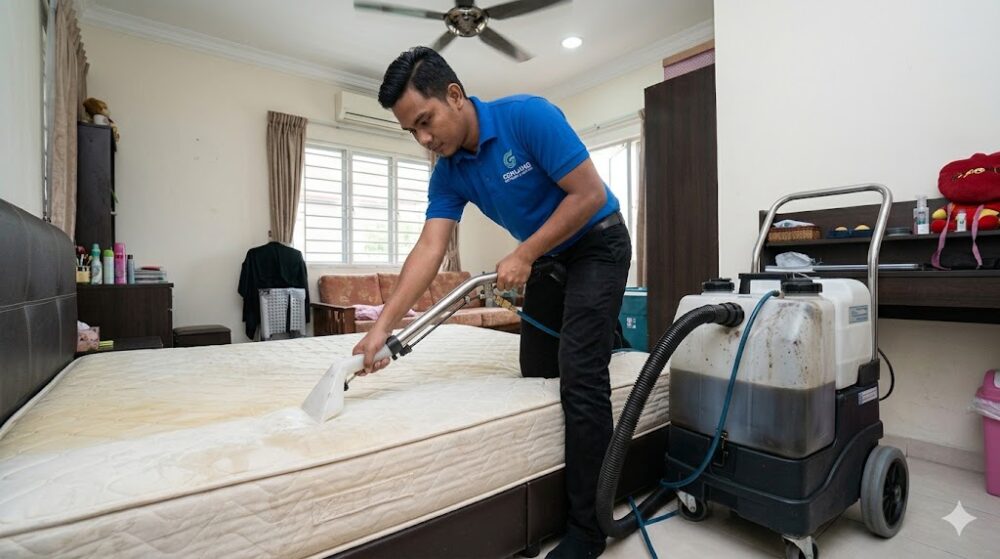 A ServicePro-verified hygiene technician performing hot water extraction on a memory foam mattress. The process reaches internal foam layers inaccessible to household vacuums.
Is Your Mattress the Hidden Cause of Your Skin Problems?
ServicePro connects you with vetted, certified hygiene technicians across Klang Valley, Selangor, KL, Penang, and Johor who use clinical-grade hot water extraction equipment backed by satisfaction guarantees.
Schedule certified mattress cleaning in the Klang ValleyFrequently Asked Questions About Dirty Mattresses and Skin Problems in Malaysia
Yes — back acne (bacne) is commonly linked to mattress contamination. The prolonged skin-to-surface contact during sleep allows bacteria, sweat residue, and dust mite allergens from the mattress to clog follicles along the back, shoulders, and upper arms.
If your rash is most severe in the morning immediately after waking, appears on skin areas that contact the mattress (back, shoulders, face), and improves when you sleep elsewhere (e.g., a hotel or guest room), your mattress is a likely trigger. Consult a dermatologist (pakar dermatologi) for a confirmed diagnosis.
Professional mattress cleaning in Malaysia typically costs between RM80 to RM180 for a single queen-size mattress, depending on the service package, location (Klang Valley vs. East Malaysia), and whether UV-C or anti-allergen treatment is included. King-size mattresses generally range from RM120 to RM220.
No. Standard vacuuming removes only surface debris. It’s crucial to understand why standard vacuuming isn’t enough to eliminate dust mites. Dust mites and their fecal matter are embedded deep within mattress foam layers. Only hot water extraction at temperatures above 60°C is clinically proven to destroy mite colonies at all mattress depths. HEPA vacuuming is a useful supplement, not a substitute.
Yes. Mould species such as Aspergillus, Cladosporium, and Alternaria — all commonly found in Malaysian mattresses — produce mycotoxins and spore proteins that cause contact dermatitis, urticaria (hives), and worsening eczema on direct skin contact. Mould-contaminated mattresses also pose respiratory risks.
A professionally cleaned mattress dried with industrial air movers typically dries within 3 to 5 hours in Malaysian conditions. Without forced drying, evaporation in high-humidity Malaysian air can take 12–24 hours, during which mould re-colonisation risk is significant. Always confirm that your service provider uses post-extraction drying equipment.
Partially. Direct sunlight at Malaysia’s UV Index (8–12) does kill surface-level dust mites and inhibits mould on the exterior. However, it does not penetrate the mattress core where the majority of the mite colony resides. Sunning is a useful monthly maintenance step, not a replacement for professional deep cleaning.
Yes. Children with atopic eczema are significantly more reactive to dust mite allergen exposure. For children diagnosed with eczema in Malaysia, Ministry of Health Malaysia (MOH) guidelines on skin health and hygiene, alongside allergist protocols, recommend professional hot water extraction cleaning every 3–4 months, combined with weekly 60°C sheet washing and allergen-proof mattress encasements.
📅 Book Your Certified Mattress Deep Cleaning in the Klang Valley
If you or a family member are experiencing recurring skin rashes, morning acne flare-ups, or worsening eczema, your mattress may be the undiagnosed source of contamination. Our vetted hygiene technicians use clinical-grade hot water extraction equipment with satisfaction guarantees.
The information in this article is intended for general educational purposes regarding indoor hygiene and allergen management, and does not constitute medical advice. For persistent acne or skin rashes, please consult a registered dermatologist. ServicePro.my connects Malaysians with vetted, verified hygiene and home service professionals across the Klang Valley and beyond.
Hygiene Questions. 0
Questions from homeowners within and beyond Klang Valley, answered by our hygiene specialists.
─── MORE HYGIENE INSIGHTS
Keep Reading
Continue building your knowledge on maintaining a hygienically clean home in Malaysia’s tropical climate.