
Home Care vs. Care Centre: Which is Right for Your Loved One’s Recovery?
Detailed decision framework: Comparing medical intensity, social connection, caregiver relief, and cost between home nursing and residential care.
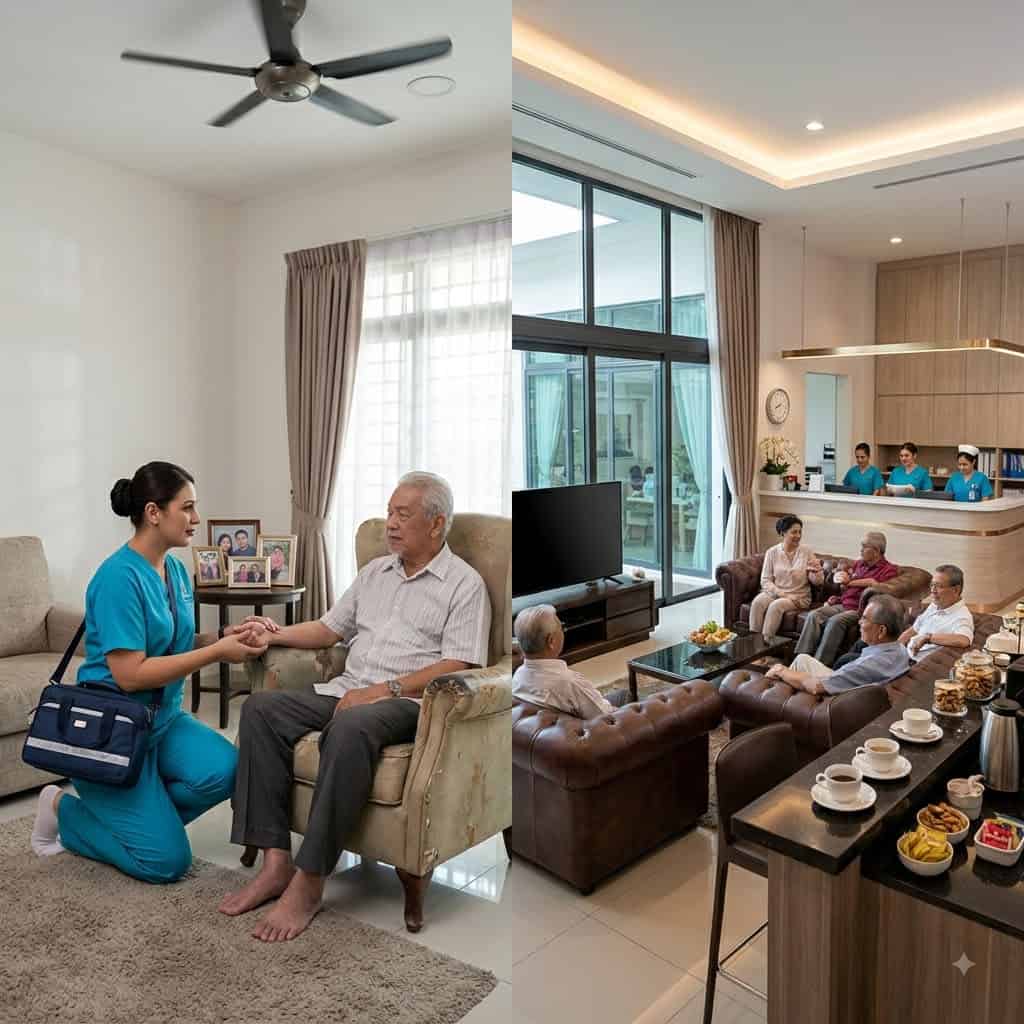
When an elderly family member requires medical assistance, families face a core dilemma: Should we arrange home nursing visits while keeping them in their familiar home environment, or enroll them in a residential care centre?
At The Healer, we offer both models because different recovery stages call for different care environments.
Geriatric Clinical Practice: Patients with mild, stable conditions often excel under scheduled Home Care, whereas post-stroke rehabilitation and moderate-to-severe dementia require 24/7 residential supervision.
Authority Reference: Verified against Ministry of Health Malaysia (MOH) Home Nursing & Domiciliary Care Guidelines
Decision Matrix: Home Care vs. Residential Care
Option A: Home Care Visits (Best for Stable, Independent Seniors)
Home care sends registered nurses and doctors directly to your parent’s residence in Perak for scheduled health checks, wound dressing, tube changes, or physical therapy sessions.
- Pros: Senior stays in familiar surroundings; ideal for mild conditions.
- Cons: No 24/7 emergency presence; family still manages overnight monitoring.
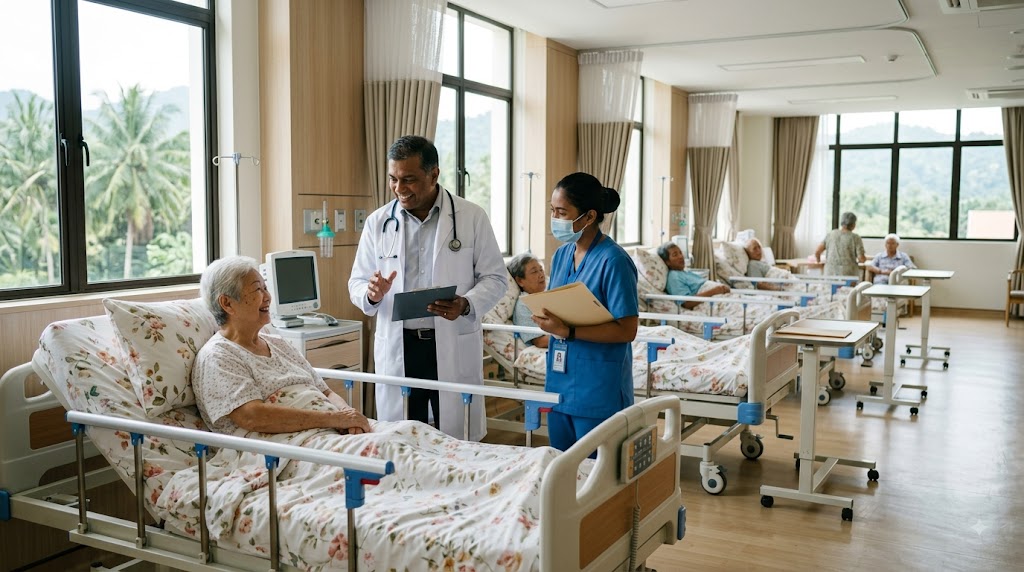 Residential care offers vibrant daily social interactions and continuous medical supervision.
Option B: Residential Care Centre (Best for Intensive Rehab & 24/7 Safety)
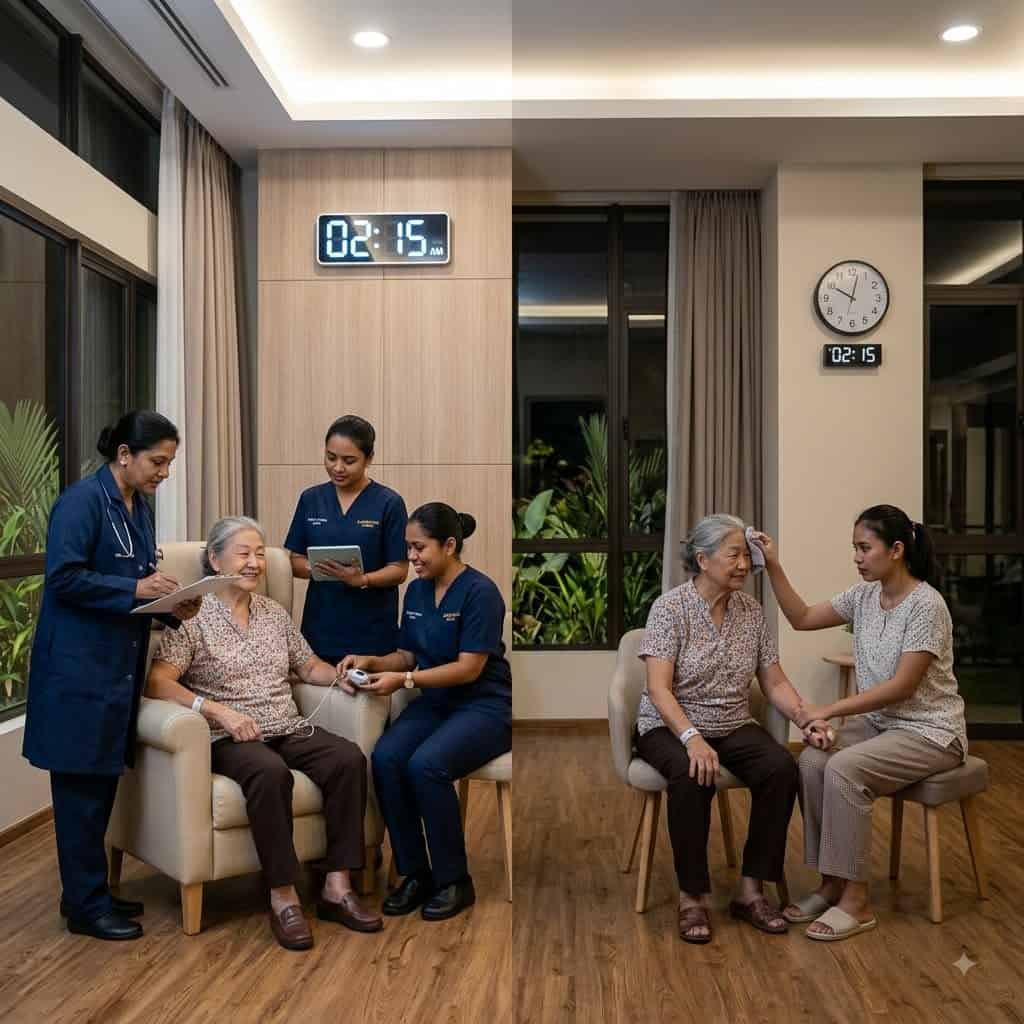
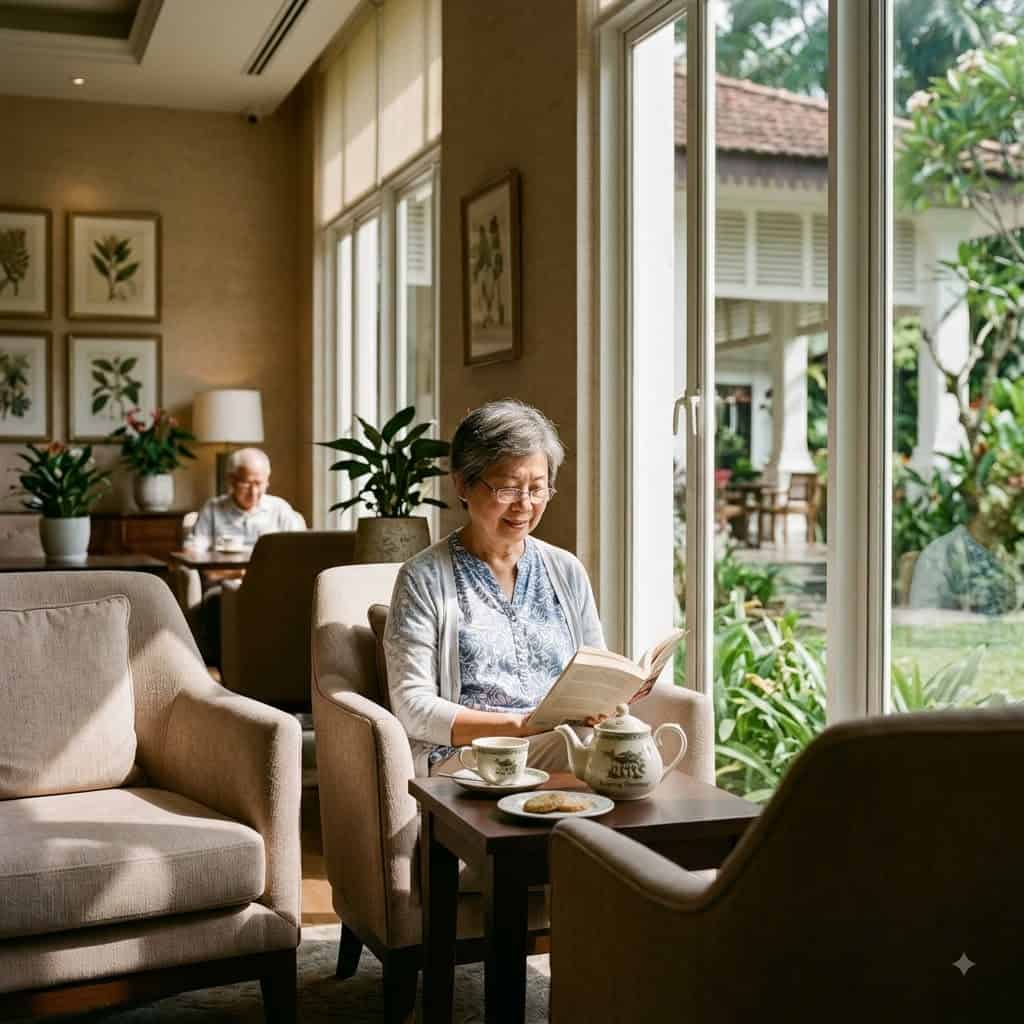
Our nursing home in Taiping is a single-storey bungalow offering full residential living with 24/7 nursing, doctor supervision, TCM acupuncture, prepared meals, and daily garden activities.
- Pros: 24/7 medical safety, intensive daily rehab, rich social life, zero caregiver burden for outstation children.
- Cons: Requires an initial adjustment period for the senior.
Still Undecided Which Care Model Fits?
Consult with Dr. Tan to evaluate your parent’s current mobility and medical needs objectively.
Neither model is better in the abstract. The right answer follows the senior’s clinical stage, which is why The Healer runs both and reviews the fit as conditions change.
Can You Combine Both Models?
Yes. Many families start with a 30-day residential stay at our Taiping centre for intensive post-stroke rehabilitation, then transition to Home Care visits once the senior regains mobility and confidence.
How the Two Models Compare on Cost
Cost rarely decides this on its own, but families are entitled to the real figures. The comparison depends heavily on how many hours of professional attendance are actually needed:
Home care remains the more economical option while needs stay intermittent. Once daily attendance plus overnight supervision is required, residential care is usually the lower total cost as well as the safer arrangement.
The honest summary: home care wins on cost for stable, intermittent needs, and loses on both cost and safety once continuous supervision becomes necessary.
Frequently Asked Questions
Helpful answers to common questions about Home Care Vs Care Centre.
In-home care provides scheduled caregiver or doctor visits at the senior’s private residence, whereas residential care centres provide 24/7 communal living, continuous staffing, and structured daily clinical routines.
Home care is ideal for seniors who are relatively independent or require only specific intermittent medical assistance, such as weekly wound dressing, physiotherapy, or catheter changes.
Residential care is superior when seniors require 24/7 supervision, have high fall risks, suffer from advanced dementia, or when family members face severe caregiving exhaustion.
Hiring 24/7 qualified private nurses at home in Malaysia costs RM 6,000 to RM 9,000 per month, compared to RM 2,500 to RM 4,500 for full-board residential care centre living.
Home care cannot eliminate loneliness during hours when caregivers are absent. Care centres provide built-in peer socialization, communal dining, and group activities that combat depression.
Yes. MMC-registered doctors provide comprehensive house calls in Taiping for chronic illness management, physical examinations, and prescription adjustments.
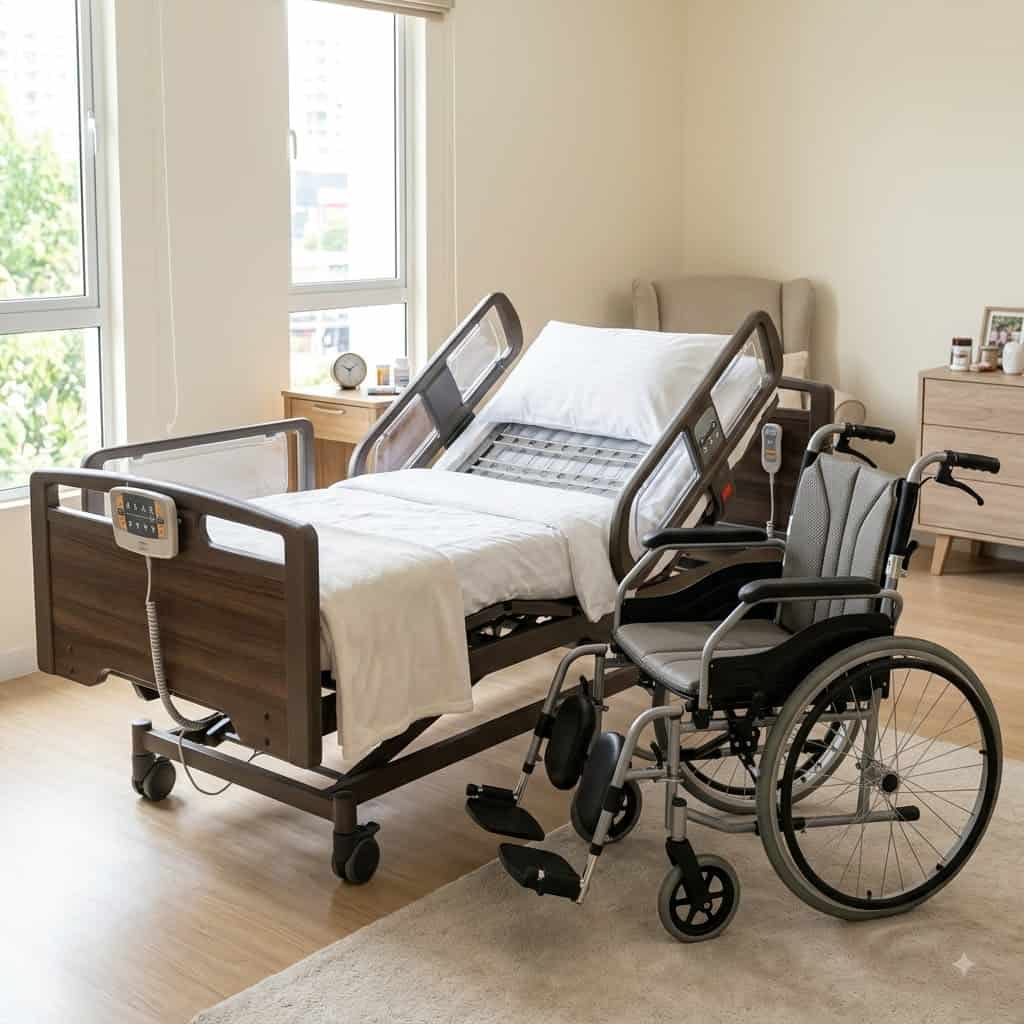
Modifications typically include hospital bed installation, bathroom grab bars, non-slip floor coating, ramp installation, and emergency alert systems.
Yes. Many families start with home care visits and transition smoothly to residential care as care needs become more intensive.
Popular Related Insights
Explore key guides and healthcare insights for elderly care in Taiping.

Ready to Explore Elderly Care Options in Taiping?
Book a free virtual tour, schedule a doctor consultation, or speak directly to our medical team today.
💬 WhatsApp Us NowPart of the ServicePro.my Healthcare Hub Network. All rights reserved.
Common Questions About Home Care vs Residential Care
Helpful answers from our healthcare team on this subject.