Hand Numbness & Wrist Pain? Non-Surgical Carpal Tunnel Relief in Klang Valley
Malaysia’s booming tech and shared-services sector means hundreds of thousands of knowledge workers are logging 8–12 hours daily at a keyboard — making Carpal Tunnel Syndrome one of the most under-reported occupational injuries in the country.
ServicePro.my Healthcare Insights • Physiotherapy & Rehab • 10 Min Read
Book Your Sungai Buloh Clinical Assessment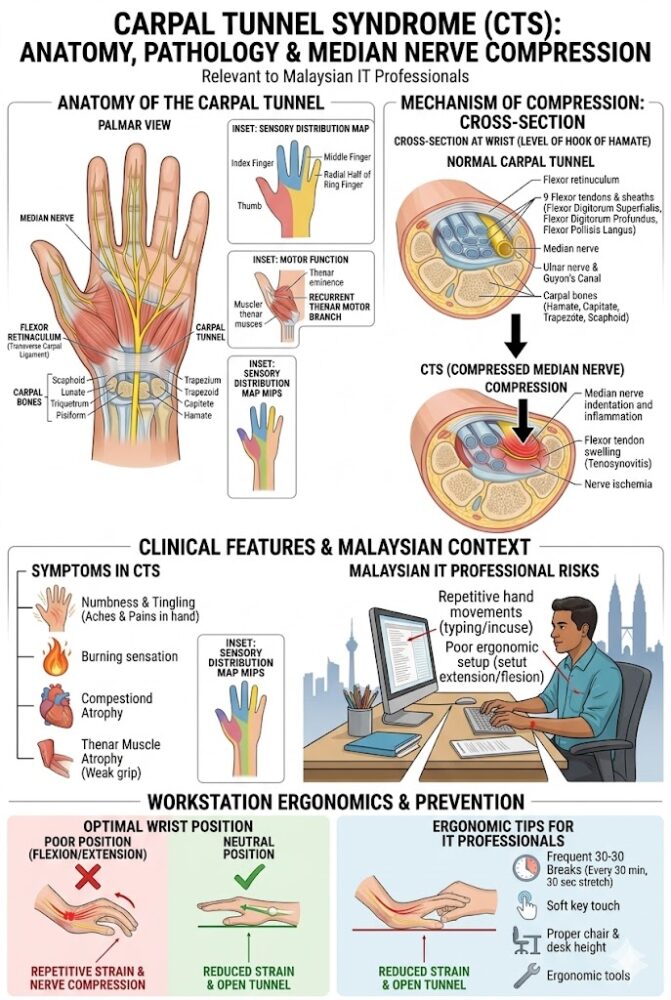
What Is Carpal Tunnel Syndrome and Why Is It So Common Among Malaysian Office Workers?
Carpal Tunnel Syndrome (CTS) is a condition caused by compression of the median nerve as it passes through the carpal tunnel — a narrow channel in the wrist — producing hand numbness, tingling, and wrist pain that progressively worsens without treatment.
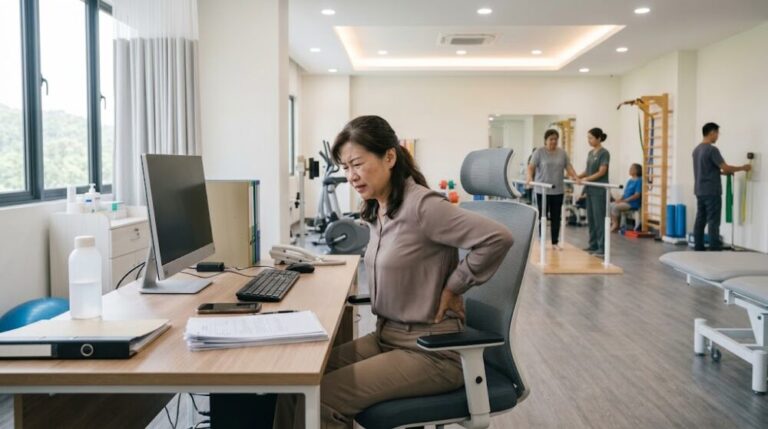
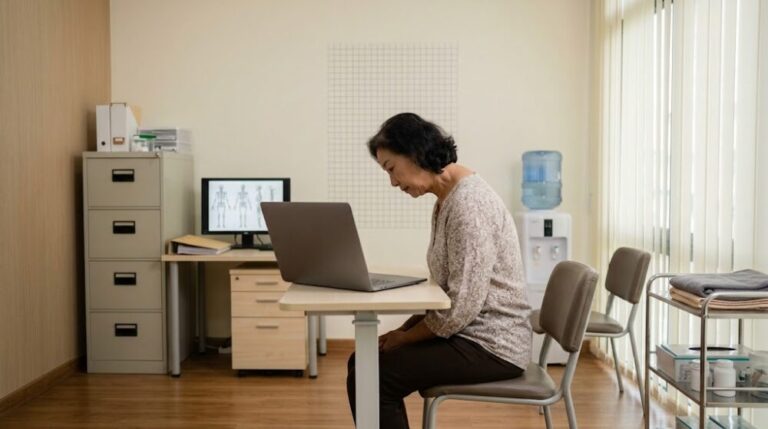
Malaysia’s rapid digitisation has created a massive, largely sedentary workforce. Data-entry clerks in Bangsar South, software engineers in Cyberjaya, and competitive gamers running long sessions in Cheras share one common ergonomic risk factor: sustained, repetitive wrist flexion under load. This compresses the median nerve over thousands of daily micro-repetitions.
What Are the First Signs of Carpal Tunnel Syndrome to Watch For?
The earliest warning sign is intermittent tingling or numbness in the thumb, index finger, middle finger, and half of the ring finger — the exact distribution of the median nerve.
Many Malaysian patients initially dismiss this as “pins and needles” from sleeping awkwardly. The clinical red flags that distinguish true CTS include:
- Nocturnal symptoms: Waking at 2–4am to shake your hand out (“flick sign”)
- Grip weakness: Difficulty opening jars, dropping objects
- Thenar atrophy: Muscle wasting at the base of the thumb (advanced cases)
- Symptom relief from shaking the wrist: A classic positive Flick Test
- Pain radiating up the forearm toward the elbow (if your pain is strictly lateral, you may want to learn about comprehensive tennis elbow treatment for forearm pain in Malaysia)
💡 The Phalen’s Test (Self-Check): Press the backs of both hands together, fingers pointing downward, and hold for 60 seconds. Reproduction of your numbness/tingling within 60 seconds is a strong clinical indicator of CTS.
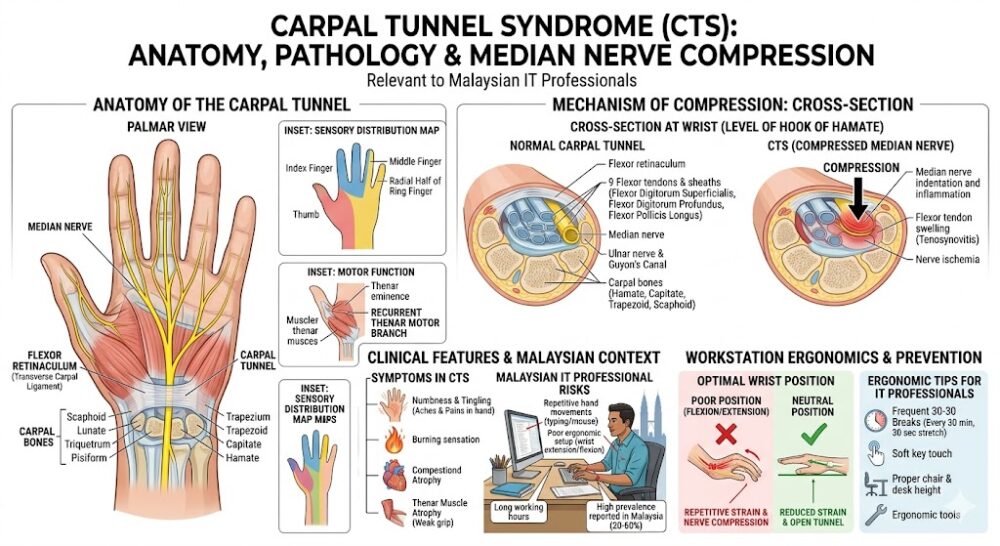 Clinical anatomy of the carpal tunnel — the transverse carpal ligament, median nerve, and flexor tendons all pass through this narrow channel in the wrist.
Why Do Malaysian IT Professionals, Admin Staff, and Gamers Develop CTS Faster?
Prolonged static wrist loading — holding the wrist in sustained flexion or extension while performing repetitive fine motor tasks — accelerates median nerve irritation significantly faster than manual labour that allows wrist movement variety.
The Malaysian knowledge-worker environment has specific aggravating factors not seen in temperate climates:
| Risk Factor | Why It’s Worse in Malaysia |
|---|---|
| Air-conditioning dependency | Chronic cold exposure (office ACs set to 18–22°C) causes peripheral vasoconstriction, reducing blood flow and nerve conduction velocity |
| Long commutes | Gripping steering wheels or handlebars adds wrist load before and after desk work |
| Extended screen hours | Malaysian tech workers average 9.5 hours of screen time daily (above ASEAN average) |
| Poor ergonomic setups | Most condominiums lack dedicated home-office space; laptop-on-sofa posture is prevalent |
| Gaming peripherals | Mechanical keyboards and gaming mice encourage ulnar deviation and prolonged grip tension |
Who Is Most at Risk in Klang Valley?
Any person performing more than 4 hours of continuous keyboard or mouse work daily in a non-ergonomically optimised environment is at elevated risk. High-risk profiles include:
Software Developers & Data Analysts
Extreme keystroke volumes; sustained wrist extension throughout long coding sessions.
Administrative Executives & Data-Entry Operators
Sustained mouse and numpad use in fixed, repetitive movement patterns.
E-Sports Players & Content Streamers
6–12 hour sessions with wrist in constant extension and high-tension grip.
Call Centre Agents
Common in PJ, KL Sentral, and Cyberjaya hubs — sustained headset and keyboard posture.
Graphic Designers & Architects
Sustained stylus and mouse precision work with repetitive fine motor demands.
Should You Have Surgery for Carpal Tunnel Syndrome in Malaysia?
Surgery is not the first-line treatment for mild-to-moderate CTS — the majority of cases in Malaysia can achieve significant or complete relief through structured, non-surgical clinical rehabilitation.
Carpal tunnel release surgery (open or endoscopic) remains an effective last resort for severe, long-standing cases with confirmed thenar muscle atrophy. However, it carries genuine consideration points:
Surgical Consideration Points
- Recovery period: 4–12 weeks of restricted hand use post-operatively
- Risk of scar tenderness and pillar pain (pain at the base of the hand)
- Nerve recovery is not immediate — sensation may take months to normalise
- Recurrence is possible if root biomechanical causes are not corrected
Malaysian private hospital costs for carpal tunnel release range from approximately RM 3,000 to RM 8,000 depending on anaesthesia type and facility, with SOCSO coverage applicable for work-related cases.
📋 Clinical Consensus (MOH Malaysia CPG): The Ministry of Health Malaysia (MyHealth) Clinical Practice Guidelines on CTS recommend conservative management — including physiotherapy — as the preferred first-line approach for mild and moderate presentations before surgical referral is considered.
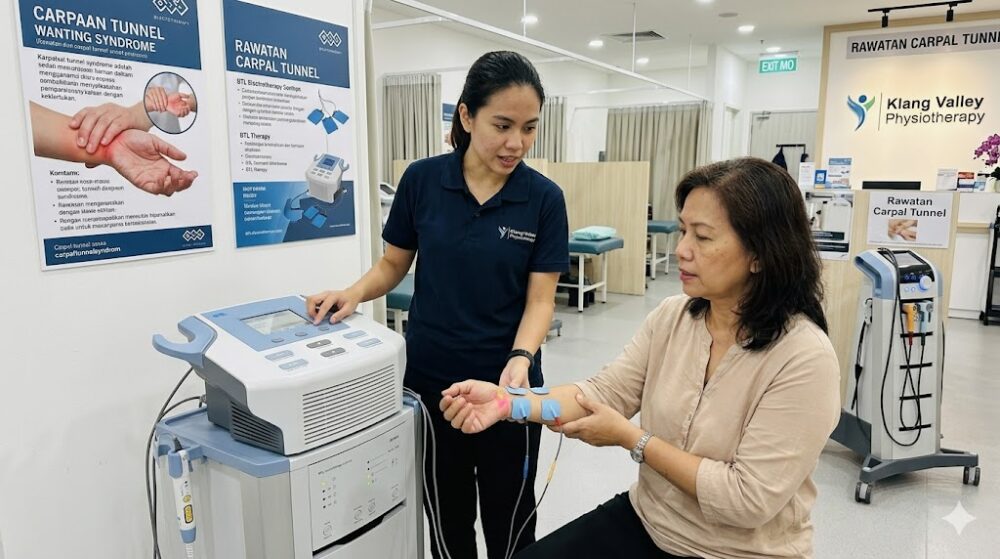 A licensed physiotherapist applying BTL electrotherapy to a patient’s wrist and forearm — a non-surgical, evidence-based CTS intervention used in Klang Valley clinics.
What Is BTL Multi-Channel Electrotherapy and How Does It Treat Carpal Tunnel Without Surgery?
BTL multi-channel electrotherapy uses precisely calibrated electrical currents — delivered simultaneously across multiple tissue depths — to reduce median nerve inflammation, restore nerve conduction velocity, and accelerate soft tissue healing in CTS patients.
BTL is a Czech-engineered medical device brand widely recognised in European and Malaysian rehabilitation clinics. The “multi-channel” designation is clinically significant: it allows the treating physiotherapist to target the carpal tunnel, the forearm flexor compartment, and the cervical nerve root simultaneously — addressing the entire kinetic chain, not just the wrist in isolation.
What Are the Specific BTL Electrotherapy Modalities Used for Carpal Tunnel?
A comprehensive BTL protocol for CTS typically combines three complementary electrotherapy modalities, each targeting a different physiological mechanism.
TENS — Transcutaneous Electrical Nerve Stimulation
Gate-control theory — blocks pain signal transmission at the spinal cord level.
Immediate pain and paresthesia relief. Applied at the wrist and proximal forearm.
NMES — Neuromuscular Electrical Stimulation
Electrically evokes contractions in the thenar and forearm flexor muscles.
Prevents thenar atrophy; maintains muscle recruitment patterns while hand is symptomatic.
Therapeutic Ultrasound (USCT)
Acoustic micro-vibration creates deep tissue thermal and non-thermal effects.
Reduces fibrosis around the transverse carpal ligament; enhances fluid mobility within the tunnel.
LLLT — Photobiomodulation (where available)
Photon absorption stimulates mitochondrial activity in neural and connective tissues.
Accelerates nerve repair and reduces pro-inflammatory cytokine activity.
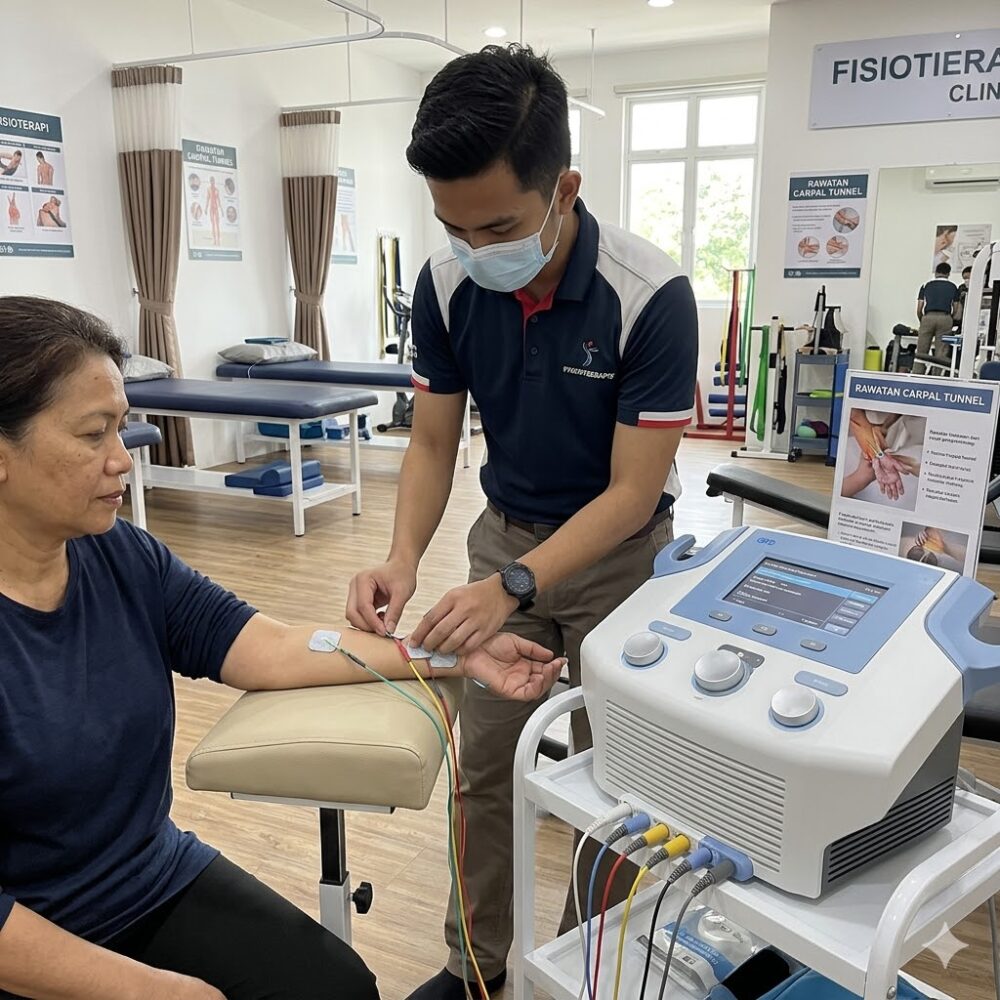 BTL multi-channel electrotherapy in clinical use — targeting the carpal tunnel and forearm flexor compartment simultaneously for comprehensive median nerve relief.
What Is Soft Tissue Manipulation for Carpal Tunnel and Does It Work?
Specialised soft tissue manipulation (STM) for CTS focuses on mechanically releasing adhesions within the carpal tunnel, restoring the glide of the median nerve, and decompressing the flexor retinaculum — producing clinical outcomes comparable to steroid injection in mild-to-moderate cases.
STM is not generic massage. Trained physiotherapists or manual therapists use specific anatomical knowledge to perform:
Median Nerve Neurodynamic Mobilisation (Neural Flossing/Gliding)
A series of precise upper-limb movements that physically mobilise the median nerve through its entire pathway — from the cervical spine through the brachial plexus, forearm, and into the carpal tunnel. Restores the nerve’s ability to slide freely within its connective tissue sheath.
Transverse Carpal Ligament Release
Sustained, directional pressure applied to the volar (palm-side) wrist targets the transverse carpal ligament — the “roof” of the carpal tunnel — to increase the tunnel’s internal volume.
Trigger Point Therapy to Flexor Digitorum Superficialis & Pronator Teres
Active trigger points in these forearm muscles are a major and frequently overlooked driver of CTS-like symptoms. Release of these trigger points often produces immediate reduction in hand numbness.
Fascial Release of the Thoracic Outlet
In Malaysian workers with poor forward-head posture (common in laptop users), scalene and pectoralis minor tension creates a secondary nerve entrapment proximal to the wrist. Addressing this “double crush” phenomenon is essential for durable outcomes.
What Does a Full Non-Surgical Carpal Tunnel Treatment Programme Look Like in Klang Valley?
A structured, evidence-based non-surgical CTS programme in a Klang Valley clinic typically spans 6–12 sessions over 4–8 weeks, combining BTL electrotherapy, soft tissue manipulation, nerve gliding exercises, and ergonomic correction.
| Phase | Week | Focus |
|---|---|---|
| Acute Relief Phase | Week 1–2 | TENS + ultrasound to reduce nerve irritability; night splinting prescribed |
| Tissue Mobilisation Phase | Week 2–4 | STM, nerve flossing, trigger point release, NMES to rebuild thenar function |
| Functional Rehabilitation Phase | Week 4–6 | Grip strengthening, ergonomic retraining, workstation assessment |
| Maintenance & Prevention Phase | Week 6–8 | Interval therapy; home exercise programme; reassessment |
How Much Does Non-Surgical CTS Treatment Cost in Malaysia?
💰 Standard physiotherapy session: RM 80 – RM 180 per session
💰 BTL electrotherapy add-on: RM 40 – RM 100 per session
💰 Full programme (6–12 sessions): Approximately RM 600 – RM 2,000
Many private health insurance plans in Malaysia (AIA, Prudential, Great Eastern) cover physiotherapy under their outpatient or personal accident riders. SOCSO (PERKESO) covers work-related CTS rehabilitation.
If symptoms are bilateral, have persisted for more than 6 months, or if you have diabetes mellitus (which slows nerve healing), discuss a nerve conduction study (NCS/EMG) with your treating physician before commencing physiotherapy. Specialist referral to a neurologist or orthopaedic hand surgeon is appropriate for moderate-to-severe grading confirmed on NCS.
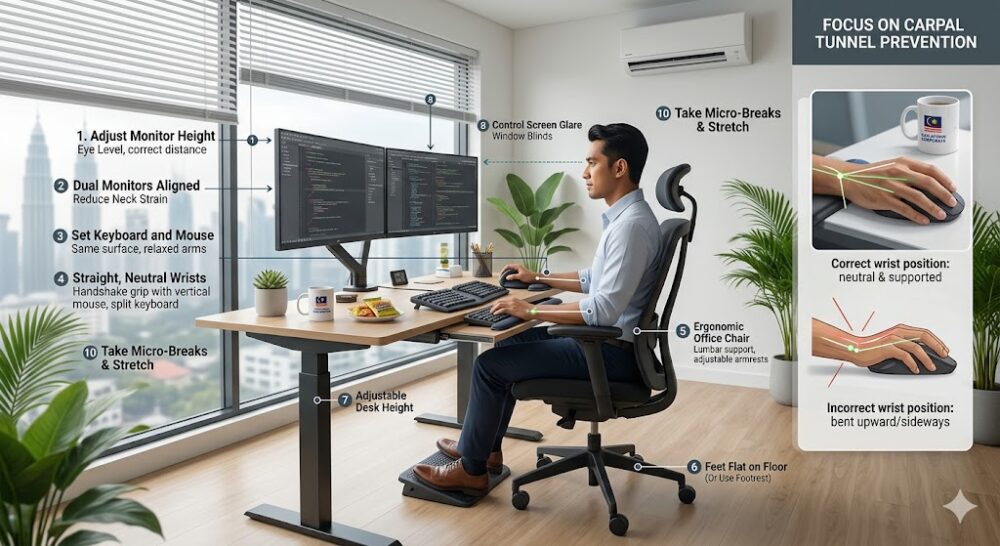 An ergonomically corrected workstation with wrist rest and elevated monitor — the single most impactful environmental change for CTS prevention in Malaysian home and office settings.
How Can Malaysian IT Professionals Prevent Carpal Tunnel Syndrome from Recurring?
Long-term CTS prevention requires a permanent change to workstation ergonomics, typing mechanics, and micro-break habits — not just a course of treatment.
Workstation Ergonomics
- Monitor at eye level — use a laptop stand and external keyboard if working from home in a condo
- Keyboard positioned so elbows are at 90° and wrists are neutral (neither flexed nor extended)
- Mouse close to the body; avoid reaching
- Wrist rest only during pauses, not during active typing — a common Malaysian misconception
Micro-Break Protocol
- Every 45–60 minutes: 5-minute break from keyboard and mouse
- During breaks: Wrist extension stretch (prayer position in reverse), median nerve glide exercises
- Set a phone alarm — relying on memory does not work
For Gamers
- Limit continuous gaming to 90-minute blocks before a 15-minute physical break
- Switch to an ergonomic vertical mouse for non-gaming computer use
- Wrist and forearm warm-up before competitive sessions is not optional — treat it like an athlete treats pre-game stretching
Thermal Management
- In heavily air-conditioned offices (common in KLCC, PJ, Bangsar): wear a light wrist sleeve to maintain peripheral circulation
- Avoid placing wrists directly on cold metal desk surfaces
Frequently Asked Questions About Carpal Tunnel Syndrome Treatment in Malaysia
Yes — untreated CTS can cause permanent median nerve damage, resulting in irreversible hand numbness and thenar muscle wasting that surgery may not fully reverse. Early intervention, ideally within the first 6–12 months of symptoms, produces the best outcomes. Malaysians are advised not to “wait and see” beyond 3 months of consistent symptoms.
CTS specifically numbs the thumb, index, middle, and radial half of the ring finger — not the little finger, which is ulnar nerve territory. If your little finger (kelingking) is numb, a different nerve entrapment (cubital tunnel / ulnar neuropathy) is more likely. A nerve conduction study (NCS/EMG) at a neurology or rehabilitation medicine department in any Malaysian hospital will confirm diagnosis definitively.
For mild-to-moderate CTS, structured physiotherapy — including electrotherapy and soft tissue manipulation — achieves clinically significant symptom resolution in the majority of patients without surgery. A 2023 systematic review in the Journal of Orthopaedic & Sports Physical Therapy confirmed that manual therapy combined with nerve mobilisation produced outcomes comparable to corticosteroid injection at 3-month follow-up.
Most mild-to-moderate CTS cases respond within 6–12 sessions spanning 4–8 weeks, though early improvement is typically felt within the first 3 sessions. Severe or long-standing cases may require 16–20 sessions, particularly when thenar atrophy is present.
A wrist splint manages symptoms but does not resolve the underlying nerve compression. Nocturnal splinting (worn during sleep, keeping the wrist in neutral position) is a well-evidenced adjunct to physiotherapy — it prevents the uncontrolled wrist flexion that occurs during sleep and is often the main driver of nighttime symptoms. It should not replace active treatment.
A complete non-surgical CTS rehabilitation programme in Klang Valley typically costs between RM 600 and RM 2,000 for a full 6–12 session course, compared to RM 3,000–RM 8,000 for surgery. Costs vary by clinic tier, modalities used, and whether additional investigations (NCS, ultrasound imaging) are required.
Yes — competitive and recreational gaming is a clinically recognised risk activity for CTS, especially in players exceeding 4 hours of daily gaming with a conventional mouse grip. The combination of sustained wrist extension, repetitive clicking, and reaction-time-driven grip tension creates the same median nerve loading profile as office work. Malaysian e-sports athletes should treat wrist health maintenance with the same seriousness as any physical sport.
For new-onset or mild-to-moderate wrist pain and hand numbness, a registered physiotherapist is the appropriate first-line clinical contact and can triage whether a specialist referral is needed. An orthopaedic hand surgeon or neurologist should be consulted if nerve conduction studies confirm moderate-to-severe CTS, if conservative therapy fails after 8–12 weeks, or if rapid muscle wasting is occurring. All Malaysian physiotherapists are registered under the Malaysian Physiotherapy Association (MPA) and regulated by the Allied Health Professions Act 2016 (Act 774).
📅 Book Your Wrist Pain Assessment in the Klang Valley
Whether you suspect carpal tunnel or another wrist condition, the right diagnosis is everything. Our vetted physiotherapy partners across Sungai Buloh and the Klang Valley provide accurate clinical assessment and non-surgical CTS rehabilitation from the very first session.
Tap your location to open WhatsApp — no forms, no waiting.
The information in this article is intended for general educational purposes and does not constitute medical advice. Always consult a clinician registered with the Malaysian Medical Council (MMC) or a physiotherapist registered with the Malaysian Physiotherapy Association (MPA) for a diagnosis and personalised treatment plan. ServicePro.my connects Malaysians with vetted, verified healthcare and home service professionals across the Klang Valley and beyond.
Healthcare Questions. 0
Questions from our followers and readers within and beyond Klang Valley, answered by our healthcare specialists.
─── MORE HEALTHCARE INSIGHTS
Keep Reading
Continue building your knowledge on maintaining a healthy community in Malaysia.