
Malaysia Electricity Tariff 2026: Rates, AFA & Bill Statistics
What Malaysians pay per kWh, how the monthly fuel surcharge (AFA) has moved in 2026, who is protected by the 800kWh threshold, and why bills rose. Every figure links to its source.
Key Statistics: Electricity Bills in Malaysia
The headline figures for Peninsular Malaysia’s domestic electricity users.
per kWh, the base tariff from 1 July 2025 to 31 December 2027
domestic electricity users in Peninsular Malaysia
per kWh fuel surcharge (AFA) in September 2026
the AFA in May 2026; by August it had nearly tripled
monthly protection threshold from 1 September 2026, up from 600 kWh
of domestic users are under the new threshold
estimated bill cut for a household using about 700 kWh
degrees Celsius for three days triggers a Level 1 heat alert
What Is the Electricity Tariff in Malaysia?
The base electricity tariff in Peninsular Malaysia is 45.40 sen per kWh, down from 45.62 sen, for the regulatory period running from 1 July 2025 to 31 December 2027. The Energy Commission said the new schedule would cut the average electricity cost by up to 19% compared with the previous period, and it covers more than 23.6 million domestic users (Energy Commission via The Vibes).
Bills are now built from separate energy, capacity, network and retail components, plus a monthly fuel adjustment (AFA) that follows global fuel prices.
What Is the AFA on My Electricity Bill?
AFA (Automatic Fuel Adjustment) is a monthly surcharge or rebate per kWh, set by the Energy Commission, that passes changes in fuel costs through to bills. It began in July 2025. In 2026 it turned into a surcharge from May and rose from +1.38 sen per kWh in May to +3.80 sen in August, nearly three times higher, before easing to +3.67 sen in September (Energy Commission via paultan.org).
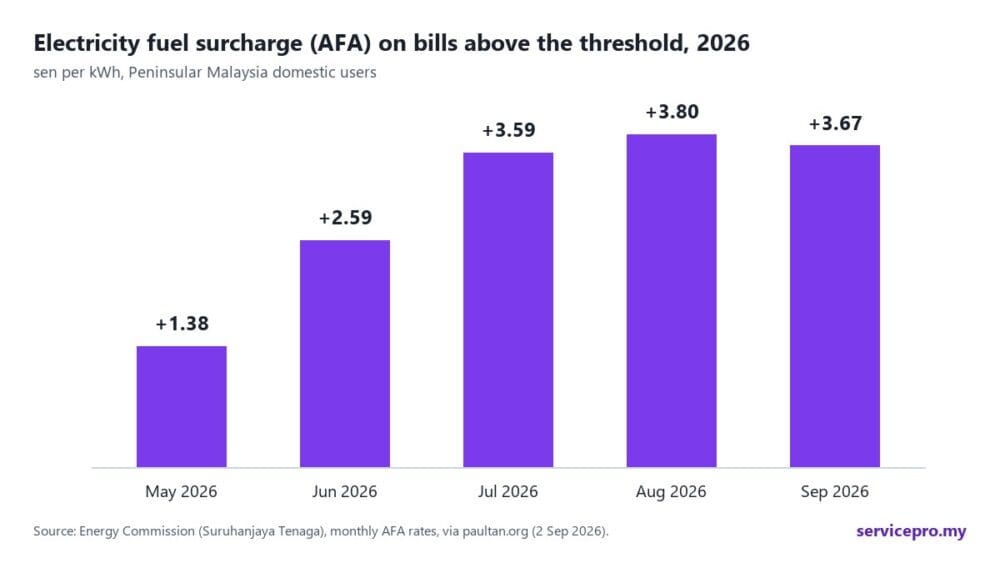
| Month | Change | AFA (sen per kWh) |
|---|---|---|
| May 2026 | Surcharge begins | +1.38 sen |
| June 2026 | Up | +2.59 sen |
| July 2026 | Up | +3.59 sen |
| August 2026 | Peak so far | +3.80 sen |
| September 2026 | Slightly lower | +3.67 sen |
Source: Energy Commission (Suruhanjaya Tenaga) monthly AFA rates, via paultan.org. Rates as charged to users above the protection threshold.
Who Pays the AFA Surcharge?
From 1 September 2026 to 31 December 2026, domestic users who consume 800 kWh or less a month are exempt from the AFA, the retail charge and the Sales and Service Tax. The threshold was raised from 600 kWh, extending protection to about 90% of domestic users in Peninsular Malaysia, more than 8 million households and about 1 million more than before (TNB via The Star).
TNB said a household using about 700 kWh a month can expect a bill reduction of about 13%, and that RM120 million to RM150 million will be spent absorbing the AFA difference until 31 December 2026.
| Monthly use | Before 1 September 2026 | From 1 September 2026 |
|---|---|---|
| 600 kWh or less | AFA exempt | AFA, retail charge and SST exempt |
| 601 to 800 kWh | Pays AFA | AFA, retail charge and SST exempt |
| Above 800 kWh | Pays AFA | Pays AFA |
Source: TNB via The Star and Energy Commission via paultan.org. The 800 kWh threshold runs to 31 December 2026.
Why Did Electricity Bills Go Up in 2026?
Two things pushed bills up: the AFA turned into a surcharge from May 2026, and households used more power. On 16 September 2026 Prime Minister Anwar Ibrahim said haze and hotter weather had driven up consumption in some homes, noting that about 80% of domestic users consume 600 kWh or less, and called a special meeting for 17 September 2026 that led to the higher threshold (The Vibes).
How Hot Did Malaysia Get in 2026?
On 28 March 2026, MetMalaysia placed seven areas at Level 2 heatwave status and 13 more at Level 1. Level 2 means maximum temperatures of 37 to 40 degrees Celsius for at least three consecutive days; Level 1 means 35 to 37 degrees (MetMalaysia via NST).
Hot weather is when air-conditioners run longest, which is why the hottest months and the highest bills tend to arrive together.
Keeping Your Home Cool for Less
The cheapest kilowatt-hour is the one you never use. Two practical steps make the biggest difference in a Malaysian home: keep the air-conditioner clean so it does not have to work harder than it should, and stop the afternoon sun from heating the room in the first place.
Blinds and curtains on west-facing windows cut the heat that reaches the room, and a regular aircond service keeps filters and coils clear.
Sources and How to Cite This Page
Tariff figures come from the Energy Commission, AFA rates from the Energy Commission’s monthly announcements, threshold figures from TNB, and heat alert levels from MetMalaysia. We link the first outlet that published each official figure. The comparison between May and August is calculated by Service Pro.
Cite this page: Service Pro, “Malaysia Electricity Tariff 2026: Rates, AFA & Bill Statistics”, https://servicepro.my/lifestyle-insights/electricity-tariff-malaysia-statistics/. Journalists and bloggers are welcome to use these figures, tables and charts with a link to this page.
Hot Room, High Bill?
Cut the Heat Before It Reaches the Room
Tell us which windows get the afternoon sun. Service Pro connects you with one verified blinds and curtains specialist, and you deal with them directly on WhatsApp.
WhatsApp About Blinds