
Waterproofing Membrane Malaysia: Torch-On vs Liquid
A flat concrete roof needs a waterproof skin, and in Malaysia that skin is usually one of two things: a torch-on sheet membrane or a liquid-applied membrane. Both work. They fail in different ways, and the choice depends on the roof more than the brand.
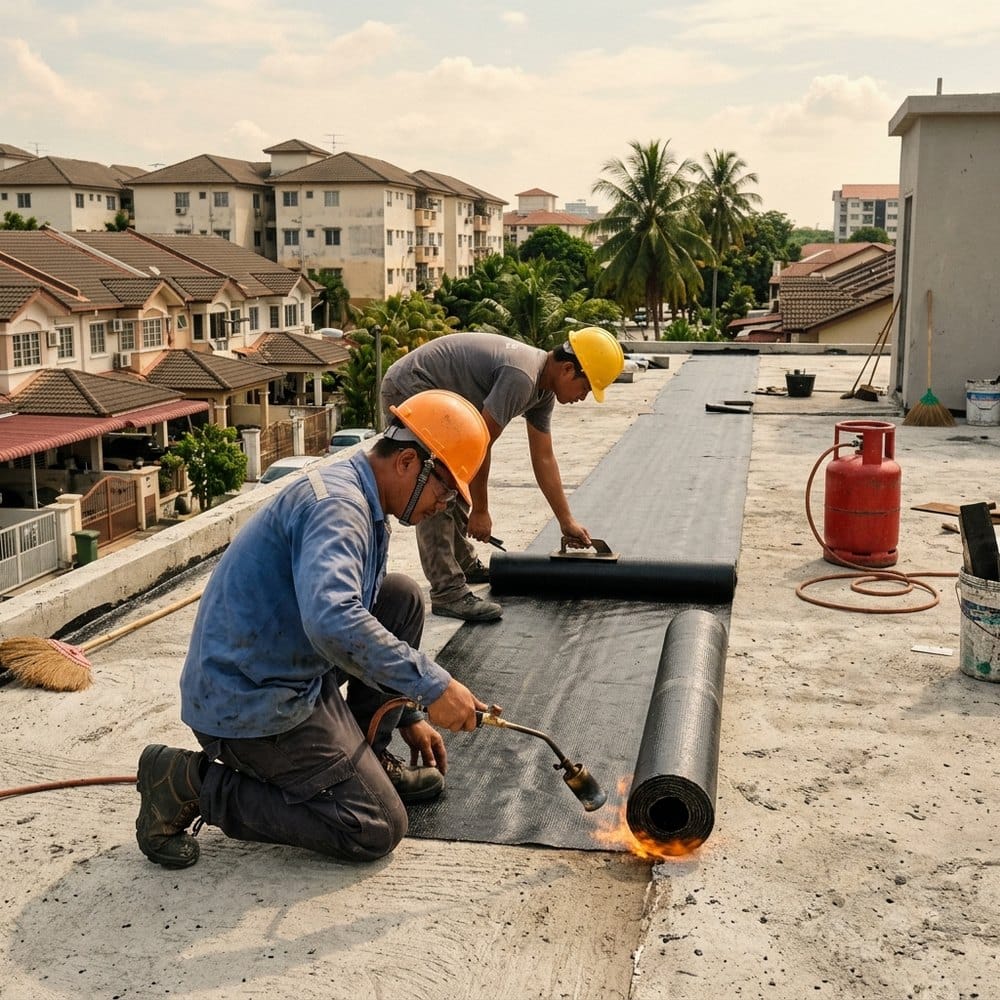
Torch-On and Liquid Membranes, Side by Side
| Torch-on membrane | Liquid-applied membrane | |
|---|---|---|
| What it is | Bitumen-based sheets, heated with a torch and bonded to the slab, with overlapping seams | A liquid (often polyurethane or acrylic) brushed, rolled or sprayed to form a seamless layer |
| Seams | Overlaps at every sheet edge — the usual weak point | None — one continuous skin |
| Awkward details | Harder around pipes, drains and upstands | Easier: the liquid follows any shape |
| Application risk | Open flame on site | No flame; thickness depends on the applicator |
| Typical 2026 price | RM8 – RM15 per sq ft | RM10 – RM18 per sq ft (liquid PU) |
Prices are market ranges from published 2026 Klang Valley guides. Acrylic roof coatings sit lower, at roughly RM4 to RM10 per sq ft, but they are a coating rather than a full membrane system.
Which One Suits Your Roof
Lots of pipes and upstands
A roof crowded with pipes, drains, water tank stands and air-conditioner brackets has many details for a sheet to be cut around. A liquid membrane flows round them without seams, which is often the deciding factor.
Large, open, simple slabs
A big flat slab with few penetrations is where sheet membranes are quickest to lay and give a consistent thickness, because the factory set the thickness, not the applicator.
Foot traffic
A roof terrace people walk on needs a surface protected against wear — either a hard-wearing top coat or a protective layer over the membrane.
Near anything that burns
Torch-on means an open flame. Next to timber, plastic tanks or older buildings, a liquid system avoids the risk entirely.
What Actually Makes a Membrane Last
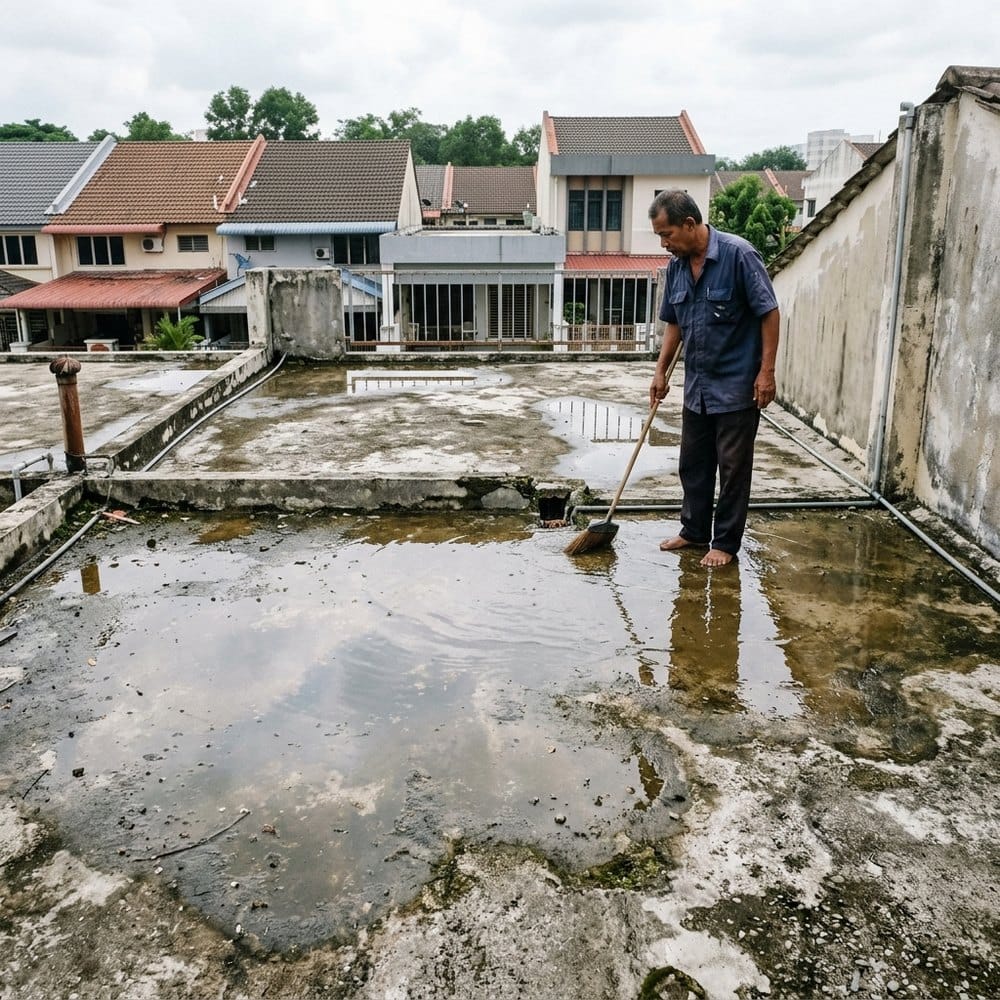
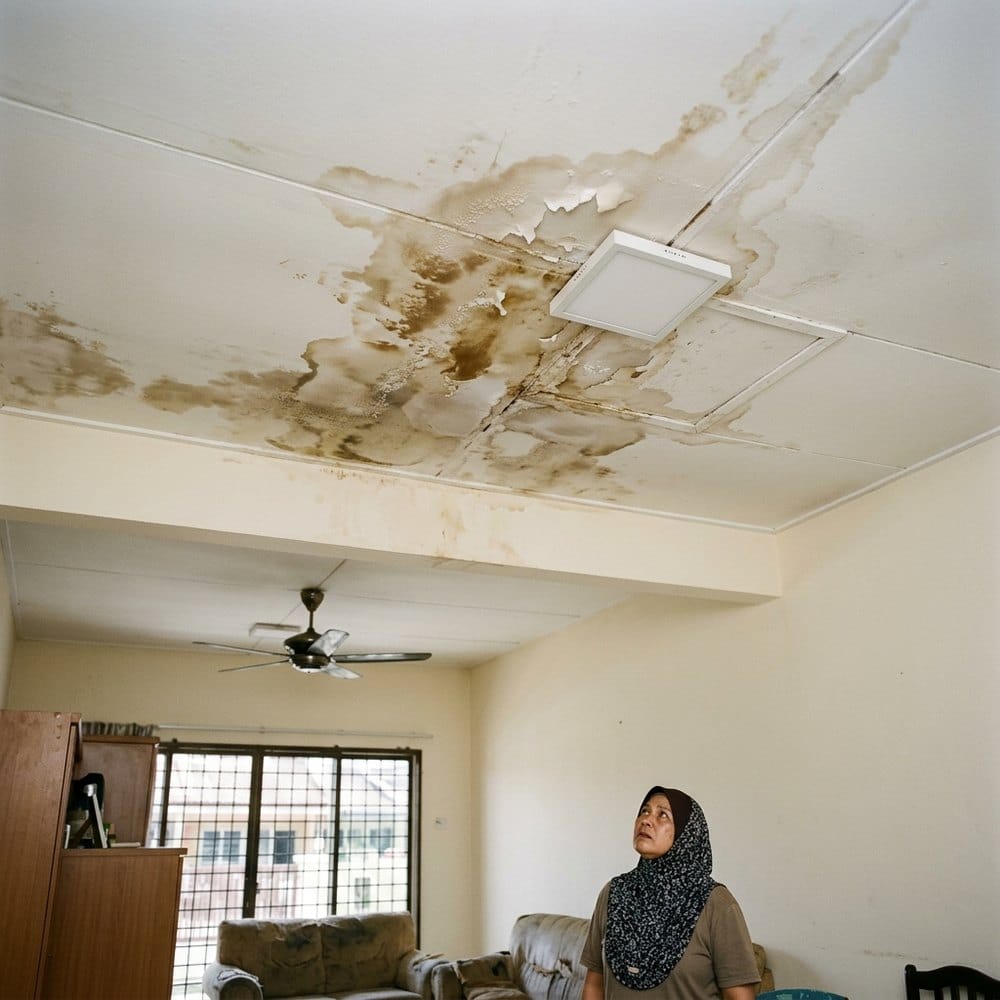
Most membrane failures are not material failures. They are preparation failures. A membrane bonded to a dusty, damp or cracked slab lifts; a membrane laid on a slab without a fall to the drains sits under ponding water every storm. One Lowyat owner’s repeated leak was finally traced to exactly this — waterproofing laid without a slope towards the gutter.
So a good job starts before any membrane arrives: cracks repaired, the surface cleaned and primed, falls checked, and the details at drains and upstands planned. After installation, a ponding test — flooding the roof to a shallow depth for a period and checking below — is the standard way to prove it before handover.
Workmanship on building projects in Malaysia is assessed against CIDB’s CIS 7 quality assessment standard (QLASSIC), the industry’s benchmark for building construction work. For a home roof, the practical test is simpler: ask the contractor how they will prepare the slab and how they will prove it holds water.
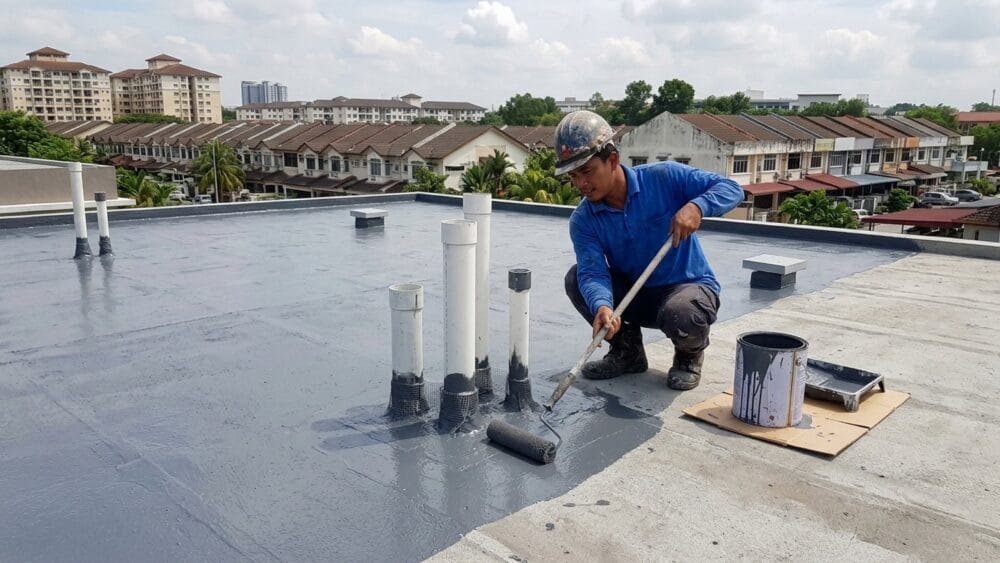
Membranes at EI Sdn Bhd
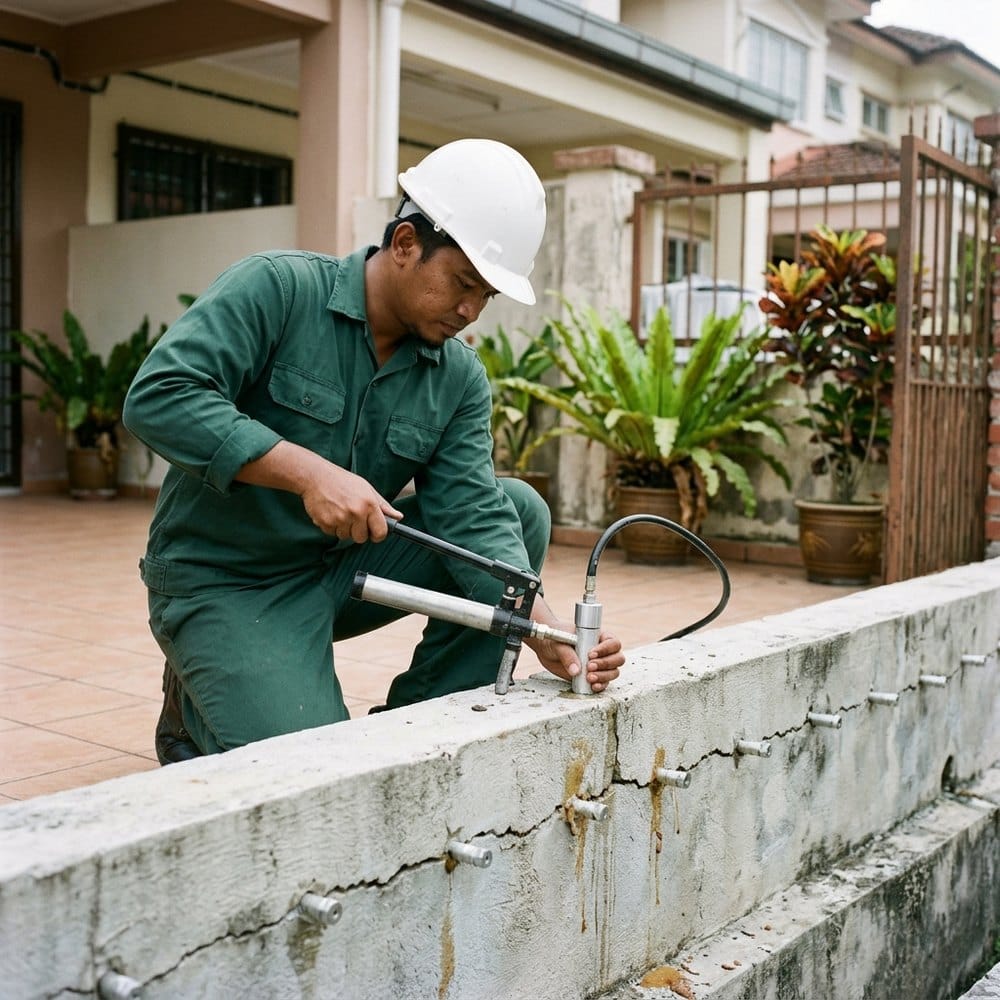
EI Sdn Bhd in Shah Alam lists heat-torch membranes and PU and epoxy coatings for concrete surfaces among its services, alongside the crack repair and grouting that should come first. The system is chosen after the roof has been inspected, and the work carries 5 years warranty.
Crystalline and Cementitious Systems
Two more families come up in Malaysian quotes. Cementitious waterproofing is a cement-based coating, common under tiles in bathrooms and on surfaces that will be covered. Crystalline treatments react with the concrete itself: one Lowyat contributor described a white chemical applied by ponding a toilet slab for several hours, reacting with the concrete to form crystals that fill its pores and capillaries.
Neither replaces an exposed roof membrane in full sun. They are chosen for where they will sit — under tiles, inside wet areas, or on concrete that stays covered.
What to Ask About a Membrane Quote
- Which system and which thickness — or, for sheets, which grade.
- How the slab is prepared: cleaning, crack repair, primer, and whether the old layer comes off.
- How falls to the drains are handled, if water ponds today.
- How pipes, drains and upstands are detailed — the joints are where membranes fail first.
- Whether a ponding test is done before handover.
- The warranty, in writing.
How Long a Roof Membrane Lasts
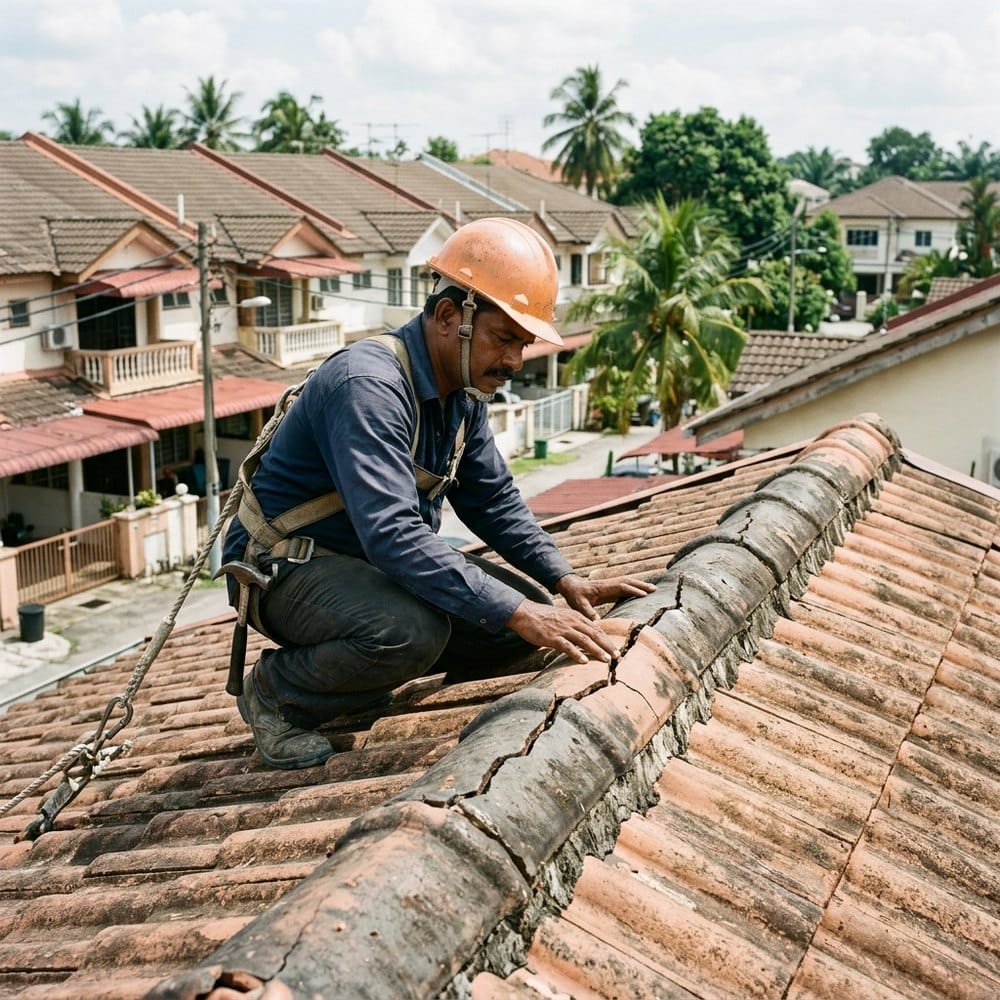
A membrane’s life depends less on the product than on three things: how well the slab was prepared, whether water is allowed to pond on it, and how much sun and foot traffic it takes. An exposed flat roof in Shah Alam gets both heavy afternoon storms and strong sun, so a top coat that resists UV matters. Check the membrane once a year, before the transition rains — clear the drains, look for lifting at the edges and around pipes, and repair small defects before they become leaks. A membrane that is inspected and maintained lasts far longer than one that is only looked at once the ceiling below is wet.
Do Bathrooms Use the Same Membranes?
Not usually. Inside a bathroom the waterproofing sits under tiles and screed, so it is normally a cementitious or liquid coating rather than a torch-on sheet. When that hidden layer fails, the choice is between hacking the tiles to replace it or treating the floor without hacking — covered in bathroom waterproofing: non-hacking vs hacking.
Frequently Asked Questions
Short answers to the questions people ask most.
Neither in general. Liquid suits roofs with many pipes and details; torch-on suits large, simple slabs. Surface preparation matters more than the choice.
Published 2026 Klang Valley guides put torch-on at about RM8 to RM15 per sq ft and liquid PU at about RM10 to RM18 per sq ft.
Mostly poor preparation: a dirty or damp slab, unrepaired cracks, or no fall to the drains so water ponds on the roof.
Flooding the finished roof or floor to a shallow depth for a period and checking for leaks below, before the job is handed over.
It uses an open flame, so it needs care near timber, plastic tanks and anything combustible. Liquid systems avoid the flame.
It is a coating, cheaper at about RM4 to RM10 per sq ft, and suits different conditions from a full membrane system.
Only with a wear-resistant top coat or a protective layer over it.
Yes. A membrane laid over unrepaired cracks is one of the most common reasons it fails.
Related Insights
Four more guides on the same problem.
Choosing a Membrane for Your Roof?
Send photos of the roof, including the pipes and drains. We will tell you which system is likely to suit it.
💬 Ask on WhatsAppFor the service itself, see baiki bumbung bocor Shah Alam.
By messaging us on WhatsApp you consent to Service Pro and the contractor processing your enquiry and any personal data you choose to share, so that we can respond to you. See our Privacy Policy.
Part of the ServicePro.my Home Service Hub Network. All rights reserved.
Disclaimer: Some images used on this page are representational illustrations. Actual site conditions may vary.
Common Questions About Waterproofing Membranes
Questions readers in Shah Alam and the Klang Valley have asked about this topic.