
Fever, Dehydration and Home IV Drips: When to Call a Doctor to the House in Taiping
A doctor at the bedside can do more than most families expect — and less than some hope. Knowing which situation you are in is the whole decision.

Clinical Standard: Dengue remains endemic across Perak, and the danger window is not the peak of the fever — it is the defervescence phase, when the temperature falls and families assume recovery has begun. Warning signs appearing at that point require assessment within hours, not the next day.
Authority Reference: Aligned with Ministry of Health Malaysia clinical practice guidance on dengue and acute illness management
An elderly parent in Taiping spikes a fever overnight. They are unsteady, they have not kept water down since the afternoon, and the thought of a queue at the emergency department is worse than the illness. Someone in the family asks whether a doctor can just come to the house and put up a drip.
Often, yes. A home care in Taiping covers examination, diagnosis, prescription and a medical certificate at the bedside, and where the problem is dehydration in an otherwise stable patient, intravenous fluids can be given at home. But the same call also exists to identify the patient who should not stay home — and that filtering is the part worth understanding before you need it.
What a Doctor Can Actually Do at the Bedside
A home visit is not a stripped-down consultation. The doctor carries what is needed for a full assessment of acute illness: examination of the chest and abdomen, blood pressure and oxygen saturation, temperature, a bedside urine dipstick, rapid diagnostic swabs, blood sampling for laboratory processing, and a portable ECG where cardiac symptoms are present.
Treatment given on the spot commonly includes intravenous fluids and anti-emetics, nebulised bronchodilators for lelah or a COPD flare, antibiotics where indicated, and immediate dispensing of medication so nobody has to find an open pharmacy at night.
The common presentations
- Fever of recent onset — demam panas with suspected dengue, influenza, or a chest or urinary source.
- Food poisoning and gastroenteritis — cirit-birit dan muntah with dehydration, which in the elderly escalates far faster than in a younger adult.
- Urinary tract infection — kencing pedih, or in a senior, new confusion with no other cause.
- Breathlessness from asthma or COPD where a nebuliser and assessment resolve the episode.
- Post-discharge deterioration in someone who came home from hospital recently and is now going backwards.
Home IV Drips: Useful, and Frequently Misunderstood
Intravenous fluid has a specific job — restoring circulating volume and correcting electrolytes in someone who cannot drink enough to keep up with what they are losing. In vomiting, diarrhoea, or a high fever in a frail senior, that is a real and sometimes urgent need. Untreated dehydration in an elderly patient causes kidney injury, confusion and falls, and it does so quickly.
What a drip is not is a general tonic. There is no benefit to routine intravenous fluids in someone who is drinking normally, and there is a small but real risk: fluid given too fast or in too great a volume can overload a patient with heart or kidney disease and precipitate pulmonary oedema. That is precisely why the decision belongs to a doctor who has just examined the patient’s chest, rather than being ordered like a service.
 A home drip suits a patient who is dehydrated but stable. The judgement about which patients those are is the reason a doctor attends rather than a nurse alone.
Dengue: The Window Families Get Wrong
Dengue deserves separate treatment because its natural history misleads people. The fever runs for several days, then breaks. Families relax at exactly the point when the critical phase begins, because plasma leakage — the mechanism that makes dengue dangerous — starts as the temperature settles.
NS1 antigen testing is most useful in the first few days of fever; antibody testing becomes informative later. A bedside blood draw with laboratory processing gives a platelet count and haematocrit, and it is the trend across days rather than any single reading that guides what happens next.
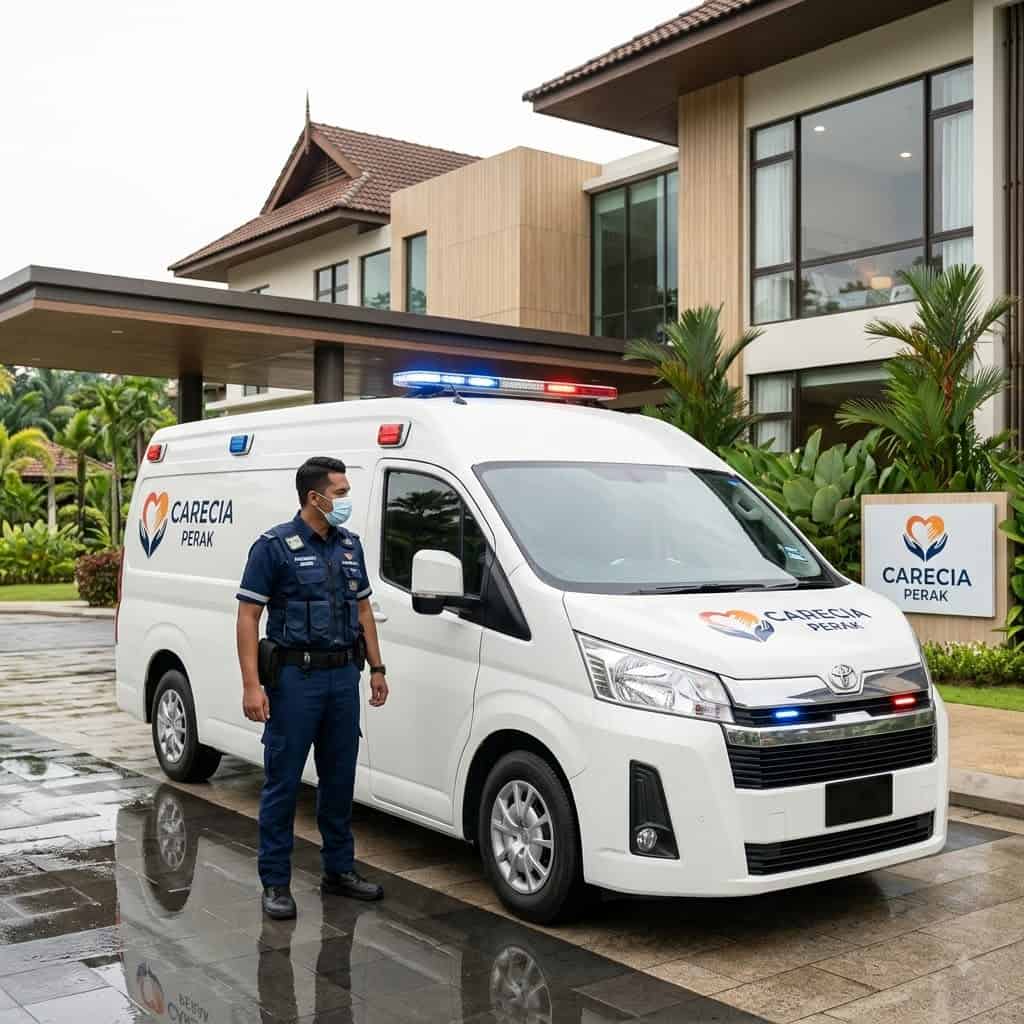
Certain findings mean hospital, immediately and without negotiation: severe abdominal pain, persistent vomiting, bleeding from the gums or nose, black stools, lethargy or restlessness, cold clammy extremities, or a fall in urine output. Any of those in a suspected dengue case is a transfer, not a home review — and private medical transport in Perak is worth arranging rather than driving them yourself if they are unstable.
Someone at Home Unwell and You Are Unsure?
A doctor can assess at the bedside across Taiping, treat what is treatable at home, and tell you plainly when hospital is the safer choice.
When Hospital Is the Right Answer
A good home service tells you when not to use it. Call for emergency transport rather than a house call if you see chest pain or pressure, sudden weakness on one side of the body or slurred speech, severe breathlessness or blue lips, unresponsiveness or a seizure, a suspected fracture after a fall, or any of the dengue warning signs above.
Stroke and heart attack are strictly time-limited. Treatment that restores blood flow works within a narrow window, and a home visit spends part of it. In those situations the correct call is the ambulance, and the doctor visit is the wrong tool no matter how convenient it feels at 2am.
What It Costs
A daytime doctor house call in Taiping is RM 150 to RM 220, covering consultation, examination, prescription and a medical certificate issued during the visit. Outside 8am to 6pm, or for urgent same-day dispatch, the band is RM 250 to RM 350. Intravenous fluids, medications, dressings and laboratory processing are billed at cost on top of the visit fee.
Fees are confirmed at booking, before anyone is dispatched. For families outside Taiping managing a parent’s care from a distance, an online doctor consultation is a lower-cost first step for non-urgent questions — our guide to telemedicine for seniors covers when a video call is sufficient and when someone genuinely needs to lay hands on the patient.
Frequently Asked Questions
Helpful answers to common questions about House Calls & Home IV Drips.
Yes, where the patient is dehydrated but stable — typically after vomiting, diarrhoea or a high fever. The doctor examines the chest and assesses heart and kidney status first, because fluids given to someone with cardiac or renal impairment can cause fluid overload. That assessment is why the decision is medical rather than something you order.
No. Intravenous fluids correct a genuine deficit of fluid or electrolytes; they do nothing for fatigue in someone who is drinking normally, and they carry a small risk of overload. Persistent tiredness in a senior warrants investigation — anaemia, thyroid, kidney function, medication effects — rather than a drip.
The dangerous phase usually begins as the fever falls, which is the point families assume recovery has started. Severe abdominal pain, persistent vomiting, bleeding gums or nose, black stools, lethargy or restlessness, cold clammy skin, or reduced urine output all mean immediate hospital assessment.
Yes. Blood is drawn at the bedside and sent for laboratory processing — full blood count, renal and liver profile, HbA1c, uric acid and dengue NS1 are all routinely available. For a suspected dengue case the platelet and haematocrit trend across several days matters more than any single result.
Medication is dispensed during the visit for common acute problems, which is much of the value at night or over a weekend. Anything specialised or requiring a controlled supply may still need a pharmacy, and the doctor will tell you before leaving.
Yes. An MC is issued during the visit where clinically justified, along with referral letters to a specialist or hospital if onward care is needed.
Chest pain or pressure, sudden one-sided weakness or slurred speech, severe breathlessness or blue lips, unresponsiveness or seizure, a suspected fracture after a fall, and any dengue warning sign. Stroke and heart attack treatments are time-critical, and a home visit consumes part of that window.
RM 150 to RM 220 during the day, covering consultation, examination, prescription and a medical certificate. Outside 8am to 6pm or for urgent same-day dispatch it is RM 250 to RM 350. Intravenous fluids, medicines and laboratory processing are billed at cost, and the total is confirmed when you book.
Popular Related Insights
Explore key guides and healthcare insights for elderly care in Taiping.



Ready to Explore Elderly Care Options in Taiping?
Book a free virtual tour, schedule a doctor consultation, or speak directly to our medical team today.
💬 WhatsApp Us NowPart of the ServicePro.my Healthcare Hub Network. All rights reserved.
Disclaimer: Some images used on this page are representational illustrations of clinical procedures and senior accommodations. Actual layout and equipment may vary.
Common Questions About House Calls & Home IV Drips
Helpful answers from our healthcare team on this subject.