
Diabetic Foot Ulcers and Bedsores: Treating Chronic Wounds at Home in Taiping
A wound that has not improved in four weeks is not healing slowly. It is not healing — and the dressing being used is usually part of the reason.

Clinical Standard: Malaysia has one of the highest diabetes prevalence rates in the region, and diabetic foot complications remain a leading cause of non-traumatic lower-limb amputation. The great majority of those amputations are preceded by an ulcer that was treated too late or treated with the wrong dressing.
Authority Reference: Aligned with Ministry of Health Malaysia diabetic foot and wound management guidance
Two wounds dominate elderly home care in Taiping. One starts on the sole of a diabetic foot that stopped feeling pain years ago — luka kencing manis, often discovered only when a sock sticks. The other starts over the tailbone, hip or heel of someone who cannot shift their own weight in bed — kudis baring.
They look different and they arise differently, but they fail to heal for overlapping reasons, and both respond to the same shift in approach: stop covering the wound and start treating what is stopping it from closing.
Why These Wounds Stall
Healing needs blood supply, an absence of infection, a moist wound bed, and relief from the pressure or friction that caused the damage. Chronic wounds are chronic because at least one of those four is missing — and in an elderly diabetic patient, often three are.
Diabetes narrows the small vessels that feed the skin and blunts the nerves that would otherwise report an injury. A blister forms inside a shoe, goes unnoticed because there is no pain, and is walked on for days. By the time it is seen it is already an ulcer with dead tissue in it.
Pressure sores follow a different route to the same place. Sustained weight over a bony prominence cuts off circulation to skin that is already thin. Two hours of unrelieved pressure is enough to start the process in a frail patient, and once the tissue underneath has died the visible skin break is the last thing to appear, not the first.
The Gauze and Iodine Problem
Most stalled wounds arriving in our care share one history: dry gauze, povidone iodine, changed daily at home with the best intentions for months.
The trouble is that a wound bed heals at the right moisture level. Dry gauze wicks moisture away and then bonds to the new tissue forming underneath, so every change tears off the fragile layer that grew since the last one. The wound is being reset each day. Povidone iodine adds a second problem — it is toxic to the very cells doing the repair, so routine long-term use on a healing bed works against the goal.
Modern dressings do the opposite. Hydrogels and hydrocolloids hold the bed at a controlled moisture level and lift away without stripping tissue. Silver and iodine-impregnated dressings are used deliberately and for a limited period when bacterial load is the specific problem, then stepped down.
 Offloading does more for a pressure sore than any dressing. A wound that is still being sat on will not close, whatever is taped over it.
Debridement: Removing What Cannot Heal
Dead tissue — yellow slough or black eschar — will not turn back into skin, and while it sits in the wound it feeds bacteria and physically blocks new growth from crossing. It has to come out.
Sharp debridement removes it with sterile instruments at the bedside and is done by a clinician, not a family member. Autolytic debridement uses the body’s own enzymes under a moisture-retentive dressing to soften and separate dead tissue over several days — slower, painless, and appropriate where sharp debridement is not.
One exception matters: stable dry black eschar on a heel with poor circulation is usually left alone. Opening it in a limb that cannot supply blood to heal the result converts a stable wound into an open one that will not close. That judgement needs an assessment of the limb’s blood supply first.
Offloading: The Part Everyone Skips
The most sophisticated dressing available will not close a wound that continues to be crushed. Pressure relief is not an accessory to wound care, it is the treatment.
- Reposition on a schedule, not on request. A bedbound patient needs a position change roughly every two hours, written down, including overnight.
- Float the heels off the mattress entirely using a pillow under the calf. Heel sores are common and almost entirely preventable.
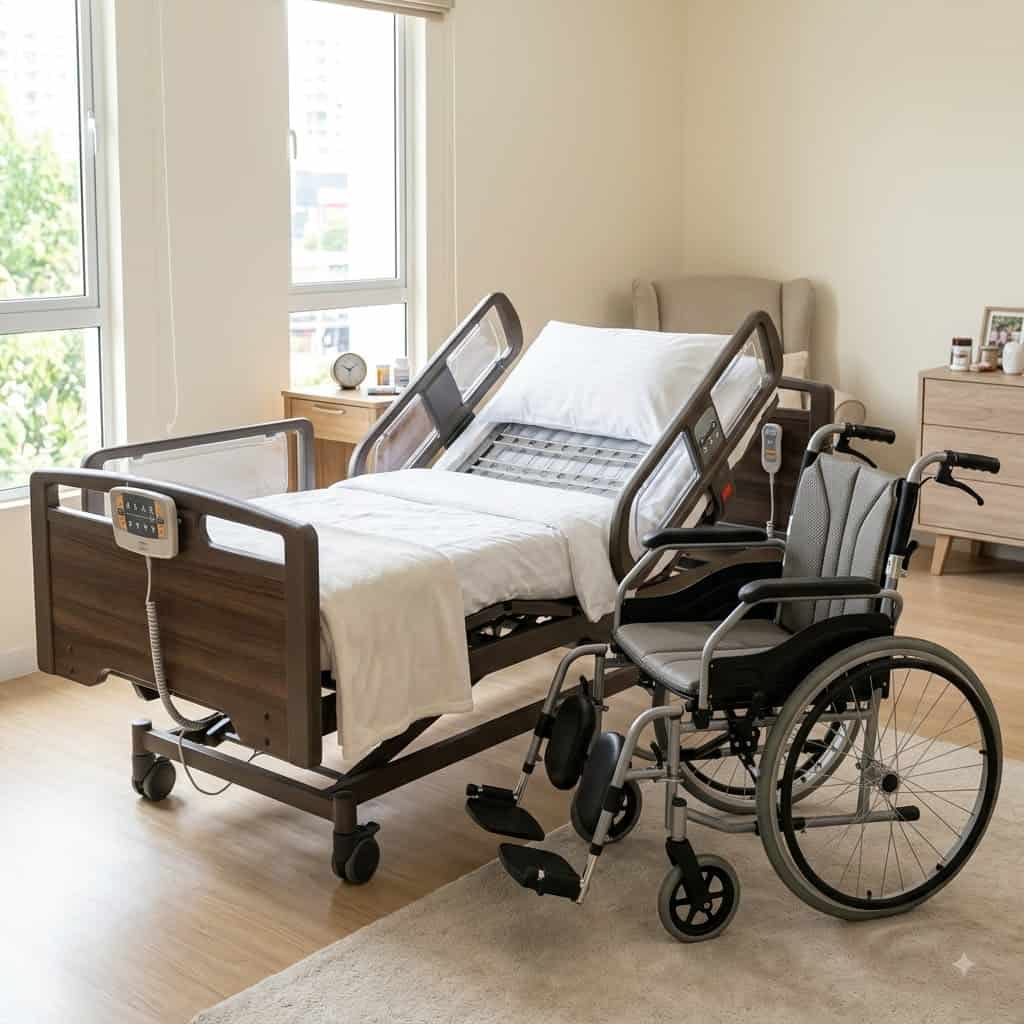
- Use a pressure-redistributing mattress where risk is high — rental options for hospital beds and mattresses are widely available locally.
- For a diabetic foot ulcer, offload the foot. Continuing to walk on an ulcer, even in a soft shoe, is the commonest reason it never closes.
- Keep skin dry and manage incontinence promptly. Moisture-damaged skin breaks down at a fraction of the pressure.
Wound Not Healing After Weeks of Dressing?
Our clinical team assesses stalled wounds at home across Taiping — debridement, modern dressings and an offloading plan, rather than another month of gauze.
Red Flags That Mean Hospital, Not a Home Visit
Home wound care handles the great majority of chronic wounds. It is not the right setting for a wound that has become an emergency, and recognising the difference protects the limb.
- Spreading redness, heat and swelling beyond the wound edge, particularly with fever or a racing pulse — this is cellulitis or worse.
- A foul smell with grey or black tissue and gas under the skin — a surgical emergency, not a dressing problem.
- Exposed bone, or a probe that reaches bone through the wound — strongly suggests bone infection needing imaging and intravenous antibiotics.
- Sudden severe pain in a previously numb diabetic foot, or a foot that has turned cold, pale or dusky — an arterial problem needing urgent vascular assessment.
- Rapid deterioration over 24 to 48 hours in someone whose blood sugar has also become uncontrolled.
If any of these are present, arrange transport rather than waiting for the next scheduled visit — our guide to private ambulance and medical transport in Perak covers what is available locally.
What Home Wound Care Costs in Taiping
A registered nurse visit covering assessment, cleansing, debridement where appropriate, dressing and a written record is RM 120 to RM 180. Dressings and consumables are billed at cost, which for advanced silver or hydrocolloid products is a genuine line item worth asking about up front.
Frequency matters more than unit price. Modern dressings are individually dearer than gauze but are changed every three to seven days rather than daily, so a stalled wound switched to an appropriate dressing usually costs less per month, not more — and it closes. Where visits become near-daily, it is worth comparing the monthly total against nursing home in Taiping, which includes the repositioning schedule overnight that home visits cannot cover.
Frequently Asked Questions
Helpful answers to common questions about Diabetic Wounds & Bedsores.
The three usual reasons are dead tissue left in the wound bed, a dressing that dries the wound and tears off new tissue at each change, and continued walking on the ulcer. A wound with no measurable improvement after four weeks of appropriate care needs reassessment rather than more of the same dressing.
Used briefly on a contaminated wound it has a role, but routine long-term application to a healing wound bed is counterproductive — it is toxic to the cells doing the repair. Once a wound is clean and granulating, a moisture-balance dressing does more than an antiseptic.
Roughly every two hours, on a written schedule that continues overnight, with heels floated clear of the mattress using a pillow under the calf. Unrelieved pressure for two hours is enough to begin tissue damage in a frail elderly patient.
Most pressure sores, including deeper ones, are managed at home with debridement, appropriate dressings and a strict offloading plan. Hospital is needed when there is spreading infection, exposed bone, systemic illness such as fever and confusion, or rapid deterioration over a day or two.
Sharp debridement removes dead tissue with sterile instruments at the bedside; dead tissue has no sensation, so discomfort is usually limited to the wound margins and local anaesthetic is used where needed. Autolytic debridement is a slower, painless alternative using the body’s own enzymes under a moisture-retentive dressing.
Not automatically. Stable, dry black eschar on a heel with poor circulation is often best left intact, because opening it in a limb that cannot supply enough blood to heal the result creates an open wound that will not close. That decision requires an assessment of the limb’s blood supply first.
Directly and substantially. Persistently high glucose impairs the immune cells that fight infection and the processes that build new tissue, so a wound plan that ignores glycaemic control will underperform. Medication review and glucose monitoring are part of wound care, not separate from it.
A nurse visit is RM 120 to RM 180 with dressings and consumables billed at cost. Advanced dressings cost more each but are changed every three to seven days instead of daily, so switching a stalled wound to appropriate materials generally reduces the monthly total while actually progressing the healing.
Popular Related Insights
Explore key guides and healthcare insights for elderly care in Taiping.



Ready to Explore Elderly Care Options in Taiping?
Book a free virtual tour, schedule a doctor consultation, or speak directly to our medical team today.
💬 WhatsApp Us NowPart of the ServicePro.my Healthcare Hub Network. All rights reserved.
Disclaimer: Some images used on this page are representational illustrations of clinical procedures and senior accommodations. Actual layout and equipment may vary.
Common Questions About Diabetic Wounds & Bedsores
Helpful answers from our healthcare team on this subject.