
Massage for Office Neck and Shoulder Tension
Eight hours at a desk builds a very specific knot across the upper back and neck, and it does not undo itself over the weekend. Here is what actually releases it, and how often to go.
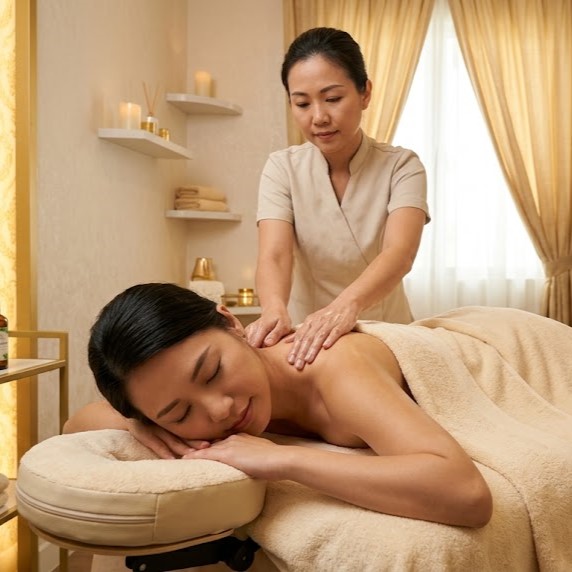
Almost every desk worker in KL carries the same pattern: a tight band across the upper trapezius, a stiff neck that clicks when you turn it, and shoulders that sit up near your ears without you noticing until someone points it out. It builds slowly over months of laptop-height screens and long commutes, which is exactly why stretching alone rarely resolves it — the muscle has learned to hold that position, and a five-minute stretch does not unlearn months of habit.
Authority Reference: General massage therapy guidance verified against the Mayo Clinic. Brow & Co provides beauty and wellness treatments, not medical care.
Why This Particular Knot Keeps Coming Back
Forward head posture — the slight forward lean toward a laptop screen that feels natural after the tenth hour — puts real, sustained load on the muscles running from the base of the skull down across the shoulders. Add a commute spent looking down at a phone and hours of sitting with very little movement, and those muscles spend most of the day working just to hold your head up, never fully switching off.
Stretching helps in the moment but rarely resolves the pattern, because a stretch loosens a muscle for a few minutes without addressing why it tightened in the first place. Targeted massage works differently — it applies sustained pressure directly into the held tension, encourages circulation into tissue that has been under constant low-grade strain, and gives the muscle a reason to actually release rather than just stretch and snap back.
- A tight band across the top of the shoulders that never fully relaxes
- A stiff neck, especially first thing in the morning
- Tension headaches that start at the base of the skull
- Shoulders that sit visibly raised, even when you try to drop them
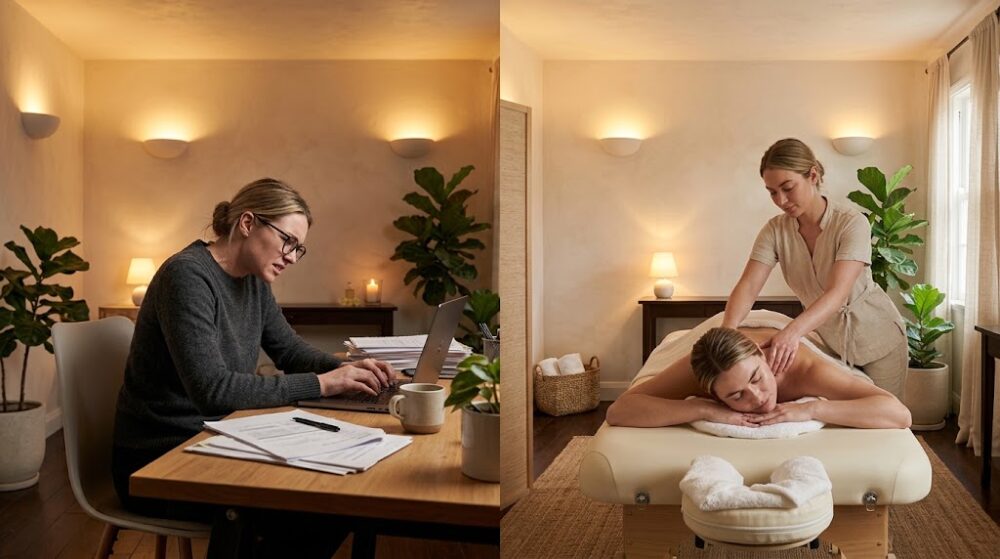
What to Expect in a Session
Sessions start with a quick conversation — where the tension actually is, how firm you want the pressure, anything to avoid. That is not small talk; pressure that feels perfect to one person feels like nothing to another and too much to a third, and the only way to get it right is to ask.
From there the therapist works the neck, shoulders and upper back with a mix of broader strokes to warm the area and more focused pressure directly into the knots. It is normal for the tightest spots to feel tender under pressure — tell us at any point if it crosses from “good tender” into genuine pain and we will ease off.
Aftercare
Drink water, and expect the area to feel slightly looser rather than instantly transformed — the real change often shows up the next morning, once the tissue has had time to settle.
How often is realistic
If you sit at a desk most days, a session every two to four weeks tends to keep tension from compounding back to where it started. That is a general guide, not a package — some people need it more often during a stressful stretch, others less once the pattern eases. Signs it is time to come back: the headaches return, or you catch yourself with your shoulders up around your ears again without noticing when it started.
Professional Therapists, a Comfortable Environment
Every session is done by a trained therapist in a private, comfortable room — not a curtained corner. Our team speaks English, Malay, Mandarin and Cantonese, so explaining exactly where it hurts and how firm you want the pressure should never be a language barrier.
We would rather you tell us the pressure is too light and we adjust, than sit through an hour that is either too gentle to help or too firm to enjoy. That conversation happens before we start, and it can happen again at any point during the session.
Frequently Asked Questions
What people ask before their first massage with us.
Whatever you actually want, and we will ask before starting. There is no “correct” pressure — some people want deep, focused work on the knots, others want something lighter that still releases tension. Tell us and we adjust as we go.
The tightest spots can feel tender under pressure, which is normal, but it should never tip into genuine pain. Speak up at any point and we will ease off — that is useful information for us, not a complaint.
Many people feel looser immediately, but the fuller change often shows up the next morning once the tissue has settled. Judge the result the day after, not just on the way out.
No. A single session genuinely helps, and we do not sell packages. If ongoing sessions make sense for your situation we will say so, but there is no pressure to commit upfront.
Yes — tell us your focus area when you book and the session is built around it, whether that means the full 60 minutes on neck and shoulders or a shorter focused block.
Please tell us before booking, and check with your doctor first if you are unsure. We are not medical professionals and will always ask you to get clearance rather than guess.
Sixty minutes is RM78, ninety is RM108, two hours RM128 — published prices with nothing added at the counter. No deposit and no package to sign.
Popular Related Insights
More honest guides from Brow & Co Kepong.


Let a Trained Pair of Hands Undo What the Desk Built
Book a session and tell us how you like the pressure — we work to it from the first minute. No package to sign, no deposit, no obligation to book again.
🎁 Book Your Massage on WhatsAppLooking for the full range of treatments? Visit our Body Massage in Kepong service page.
Part of the ServicePro.my Wellness Hub Network. All rights reserved.
Disclaimer: Some images used on this page are representational illustrations. Actual treatment rooms, products and results may vary. Beauty and wellness treatments are not medical procedures and individual results differ.
Questions From Kepong Customers
Real questions from people nearby, answered by our team.