
The HR Manager’s Guide to Hassle-Free Foreign Worker Permits in Malaysia
Between FWCMS applications, embassy liaison, FOMEMA medical clearance, and visa issuance, a single foreign worker permit can eat weeks of HR time. Here’s what the process actually involves — and how to skip most of it.
📱 Get Permit Paperwork Handled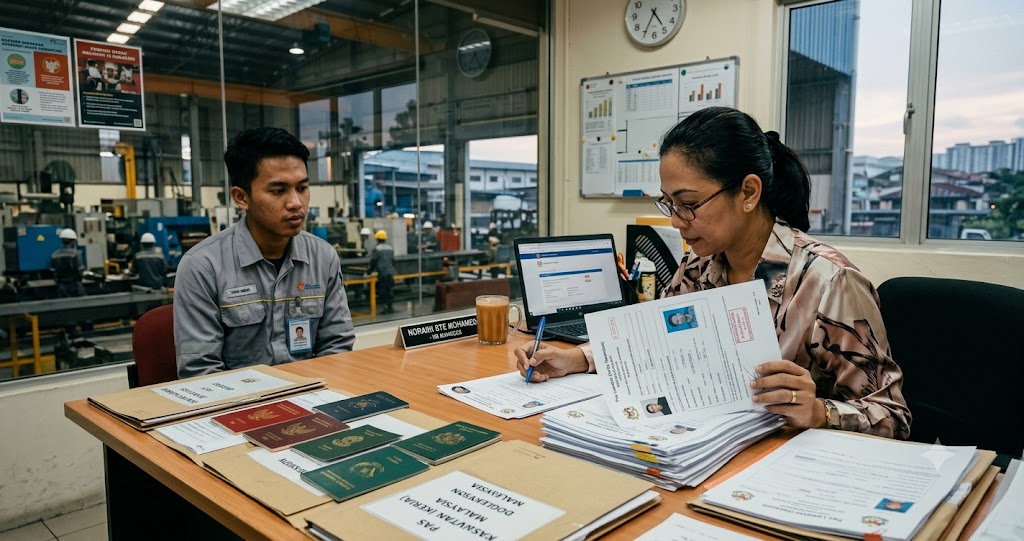
Minimum stages in a standard foreign worker permit application
Typical HR hours lost to embassy liaison and document chasing
Of this paperwork a manpower agency can handle on your behalf
Direct answer: a foreign worker permit in Malaysia requires quota approval via FWCMS, source-country recruitment, FOMEMA medical clearance, visa application, and work permit issuance through Immigration — each stage with its own documentation and processing time. Most HR teams don’t have the bandwidth to manage embassy liaison and logistics on top of their regular workload. A manpower supplier offering 100% done-for-you permit handling takes this entire chain off your desk, from quota application through to the worker showing up at your gate — see how Lonson’s factory manpower supply in Klang Valley structures this service.
What a Foreign Worker Permit Application Actually Involves
Each of these stages carries its own forms, waiting periods, and points where an incomplete document resets the clock.
The Full Permit Chain
Quota Application (FWCMS/eQuota). Employer applies through the Foreign Worker Centralised Management System, specifying sector, headcount, and source country.
Source-Country Recruitment. Coordinating with a licensed agent in the source country to identify and process candidate workers.
FOMEMA Medical Clearance. Mandatory medical fitness assessment before a work permit can be issued.
Visa & Immigration Processing. Visa application and work permit (PLKS) issuance through the Immigration Department.
Deployment & Onboarding. Worker arrival, orientation, and integration into your production schedule.
Where HR Teams Lose the Most Time
The stages that consume the most unplanned HR hours aren’t the paperwork itself — they’re the follow-up.
Embassy Liaison
Chasing visa status updates and resolving document discrepancies with source-country embassies.
Document Resubmission
A single missing stamp or expired document can reset an application’s processing clock by weeks.
FOMEMA Scheduling
Coordinating medical appointments and result turnaround across multiple candidate workers.
Renewal Tracking
Work permits require renewal before expiry — missing this risks a compliance breach, not just a paperwork delay.
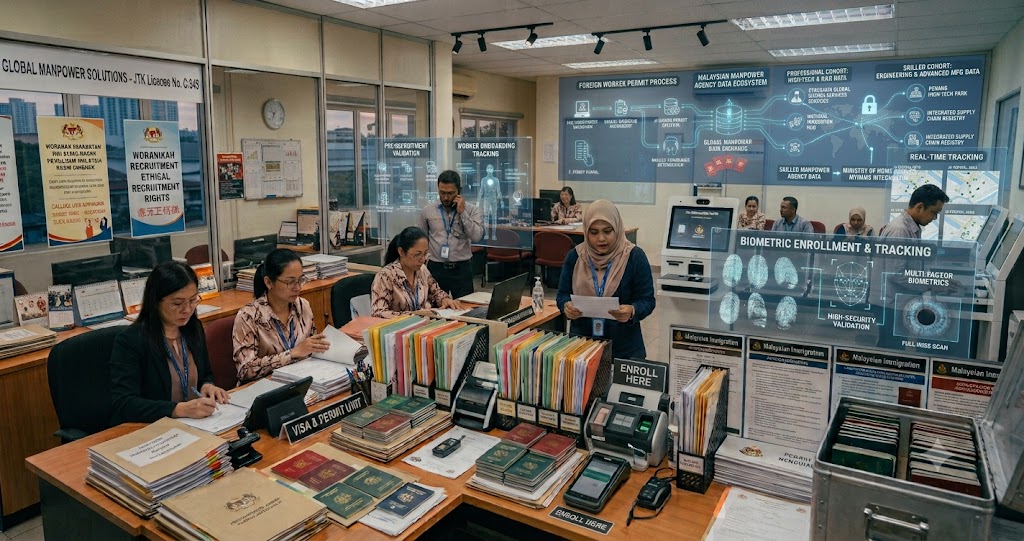 100% done-for-you permit handling removes embassy liaison and document-chasing from HR’s plate entirely
Buried in permit paperwork this month?
💬 Hand Off the PaperworkForeign Worker Permit FAQs
End-to-end, from quota application to worker deployment, the full chain typically runs 3–6 months depending on source country and FWCMS backlog — though a specific stage (like FOMEMA) may only take days once reached.
Yes, but it requires dedicated staff time across every stage — quota application, source-country coordination, embassy liaison, and renewal tracking. Most SMEs find this more expensive in staff hours than outsourcing it.
A full-service manpower supplier manages quota application, recruitment coordination, FOMEMA scheduling, visa/permit processing, and renewal tracking — HR’s role is reduced to confirming headcount and receiving the deployed worker.
More B2B Manpower Insights
Stop Chasing Permit Paperwork
A full-service manpower supplier can take quota applications, embassy liaison, and permit renewals off your HR team’s plate entirely.
📱 Simplify Our Permit Process100% permit handling · Verified manpower partner · WhatsApp-first booking