Why DIY Mattress Cleaning Hacks Often Make Odours Worse in Humid Weather
Malaysia’s ambient relative humidity sits between 70% and 85% RH for most of the year — a climate condition that fundamentally changes the outcome of common DIY mattress cleaning methods. What eliminates odours in a temperate country can actively amplify them in Kuala Lumpur, Penang, or Johor Bahru.
Book Professional Mattress Cleaning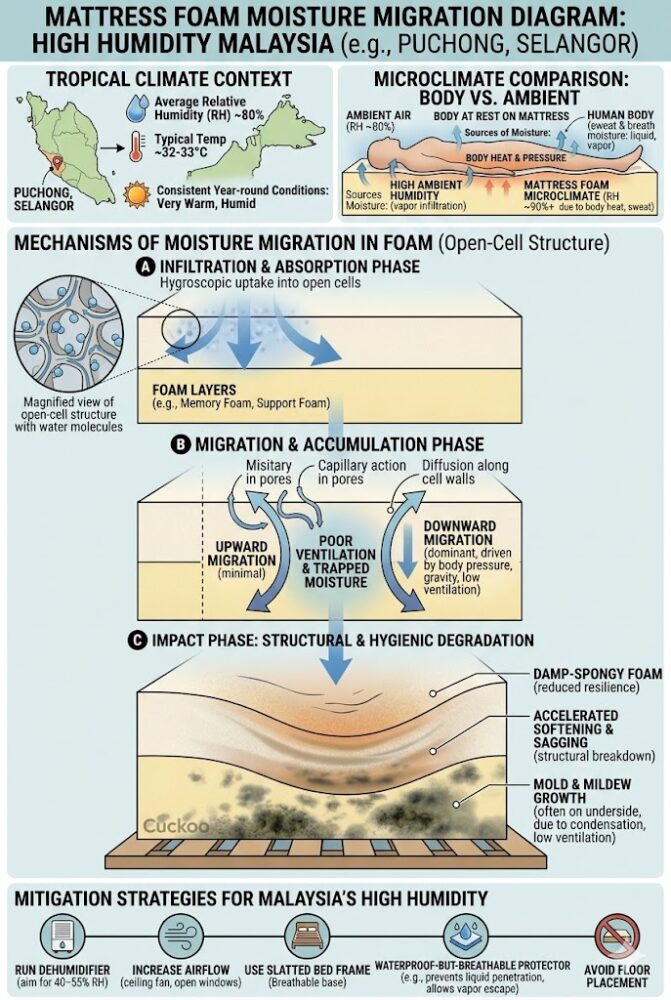
Why Does My Mattress Smell Worse After I Clean It?
Residual moisture trapped inside mattress foam layers creates an anaerobic environment where odour-producing bacteria and mould colonies accelerate their metabolic activity — and in Malaysia’s humidity, that trapped moisture rarely fully evaporates.
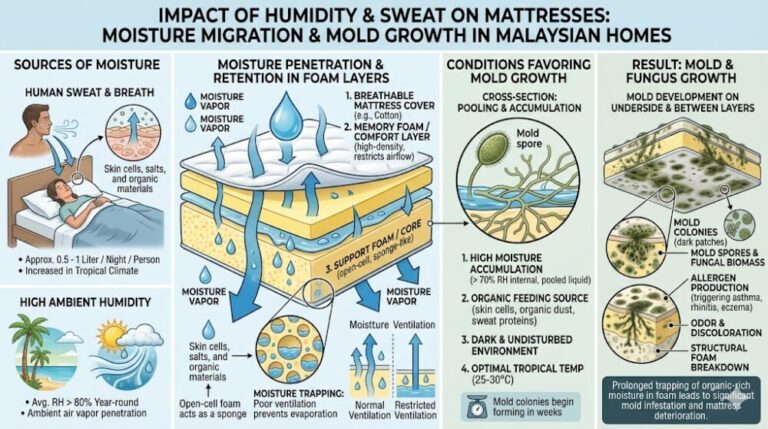
When you apply any liquid-based cleaning agent to a mattress — including water, white vinegar solution, or commercial fabric spray — you are introducing moisture into a layered structure of memory foam, latex, or bonnell springs wrapped in fabric. In a low-humidity environment (below 50% RH), that moisture migrates outward and evaporates within hours. At Malaysia’s ambient 70–85% RH, the evaporation gradient is severely reduced. Moisture migrates inward, not outward, penetrating deeper into the foam core where it cannot escape.
Inside that foam core, anaerobic bacteria — organisms that thrive without oxygen — begin producing volatile sulphur compounds (VSCs), putrescine, and cadaverine: the same biochemical compounds responsible for the smell of decay. The odour you detect after a DIY clean is not “cleaning smell fading.” It is microbial metabolic output from a newly colonised, moisture-rich environment you inadvertently created.
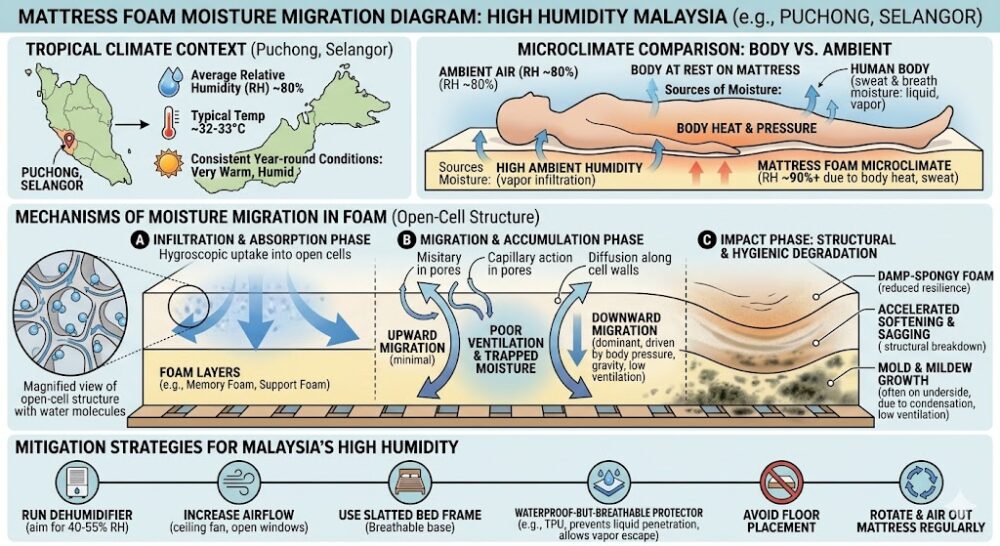 Cross-section diagram of a multi-layer mattress showing moisture migration direction in high-humidity vs. low-humidity environments.
What Does Baking Soda Actually Do to a Mattress — and Why Does It Fail Here?
Baking soda (sodium bicarbonate) is a desiccant and pH buffer that neutralises acidic odour compounds on surface contact — but it has zero penetration depth and becomes hygroscopic in Malaysian humidity, absorbing ambient moisture and depositing it onto the mattress surface.
This is the most frequently recommended DIY mattress odour hack, and it is also the most misunderstood in a tropical context.
Sodium bicarbonate reacts with acidic organic compounds (urea, sweat metabolites) at the surface, converting them to odour-neutral salts. In dry climates, residual powder is vacuumed away, taking neutralised compounds with it.
At relative humidity above 65% RH, sodium bicarbonate begins absorbing ambient moisture — drawing atmospheric water vapour onto the mattress surface and compounding the existing moisture problem rather than resolving it.
Three specific failure mechanisms:
- Hygroscopic uptake: At relative humidity above 65% RH, sodium bicarbonate draws atmospheric water vapour onto the mattress surface, compounding the existing moisture problem.
- Zero penetration: The biological sources of odour — Der p 1 allergen deposits, dead Dermatophagoides pteronyssinus mite faecal matter, and sub-surface sweat residue — sit 5–20mm below the ticking fabric. Baking soda contacts none of them.
- Residue left behind: Improperly vacuumed baking soda residue on a humid mattress surface creates a saline-alkaline film — a nutrient substrate for Aspergillus and Cladosporium mould species, which colonise it within 24–48 hours in conditions above 80% RH.
In short: baking soda is a dry-climate surface treatment applied to a tropical, sub-surface odour problem. The outcome is predictably poor.
How Does White Vinegar Make Mattress Odours Worse in the Long Run?
White vinegar’s acetic acid content does kill some surface bacteria and neutralise alkaline odour compounds — but the aqueous carrier (water) it is dissolved in penetrates mattress foam, raising internal moisture content and triggering mould growth within days in Malaysian humidity.
White vinegar (typically 4–8% acetic acid in water) is popular for its antimicrobial properties. In laboratory conditions, acetic acid at these concentrations does inhibit Staphylococcus epidermidis and some Candida species. The problem is that you cannot separate the acetic acid from the water it is dissolved in.
The sequence of failure:
- You spray a diluted vinegar solution onto a urine stain, sweat patch, or general odour zone.
- The acetic acid kills surface bacteria and partially neutralises amine odour compounds (responsible for “sweat smell”).
- The water carrier — constituting 92–96% of the solution by volume — penetrates the foam and begins the moisture-retention cycle described above.
- Within 48–72 hours at Malaysian humidity, the now-moist interior foam shows early Stachybotrys or Penicillium colonisation.
- Mycotoxin off-gassing begins, producing an earthy, musty compound odour that layers on top of whatever original smell you were treating.
The vinegar smell you detect immediately post-treatment (which many people misinterpret as “working”) dissipates within a few hours. What remains is a foam core with elevated moisture content and new fungal activity. The net odour outcome is objectively worse than before treatment.
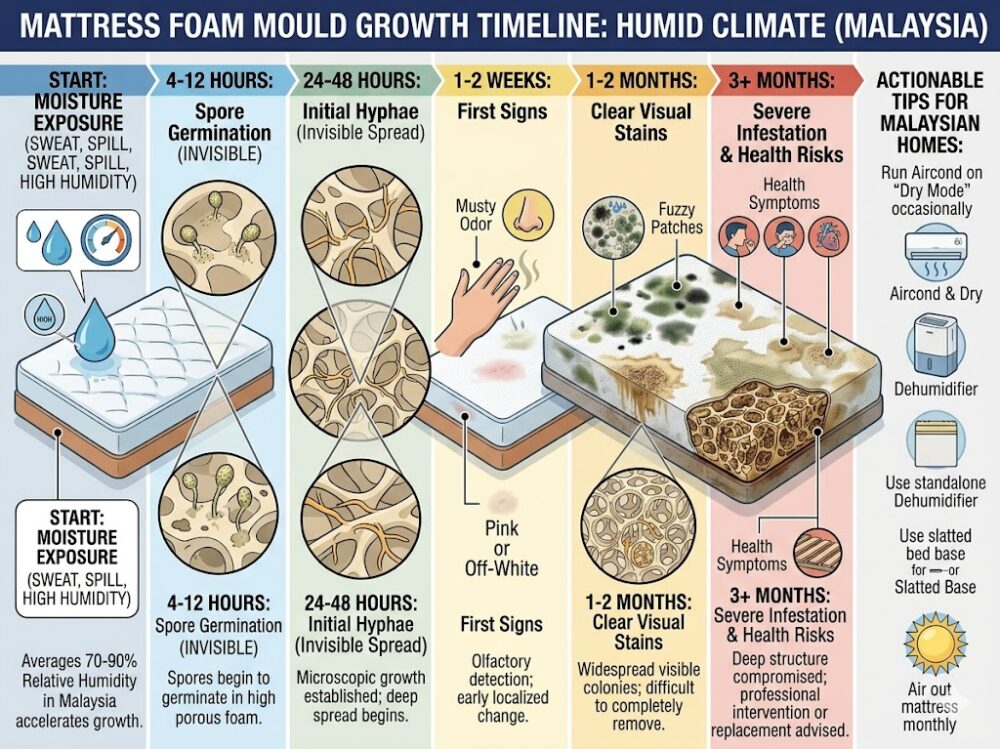 Time-lapse infographic showing mould colony progression at 80% RH on foam material after aqueous cleaning agent application — 24hr / 48hr / 72hr markers.
Why Fabric Freshener Sprays Are a Symptom Mask, Not a Treatment
Commercially available fabric deodorisers — including Febreze-type products — use cyclodextrin molecules to encapsulate odour compounds and fragrance aldehydes to mask residual smell. They do not kill bacteria, do not remove allergen deposits, and their aqueous base adds moisture to the mattress surface.
Products like these are engineered for fabric surfaces that can be laundered (sofas, curtains, clothing). Applied to a mattress, they deliver:
- Cyclodextrin encapsulation of surface-level volatile organic compounds (VOCs) — providing temporary odour reduction lasting 4–8 hours.
- Fragrance top-notes that dominate the sensory perception of the mattress for 1–2 hours, after which the underlying biological odour reasserts.
- No disruption to the odour source: the bacterial biofilm, dust mite frass, or mould mycelium generating the odour continues undisturbed below the surface ticking.
- Additional moisture loading from the aqueous base of the spray — replicating the same moisture-retention problem caused by vinegar and water-based DIY methods.
For a Malaysian apartment in Cheras, Petaling Jaya, or Mont Kiara — where air conditioning is typically set to 18–24°C, creating a warm-to-cool surface gradient that accelerates moisture condensation on mattress surfaces — the moisture problem introduced by fabric sprays is compounded by the air conditioning effect itself.
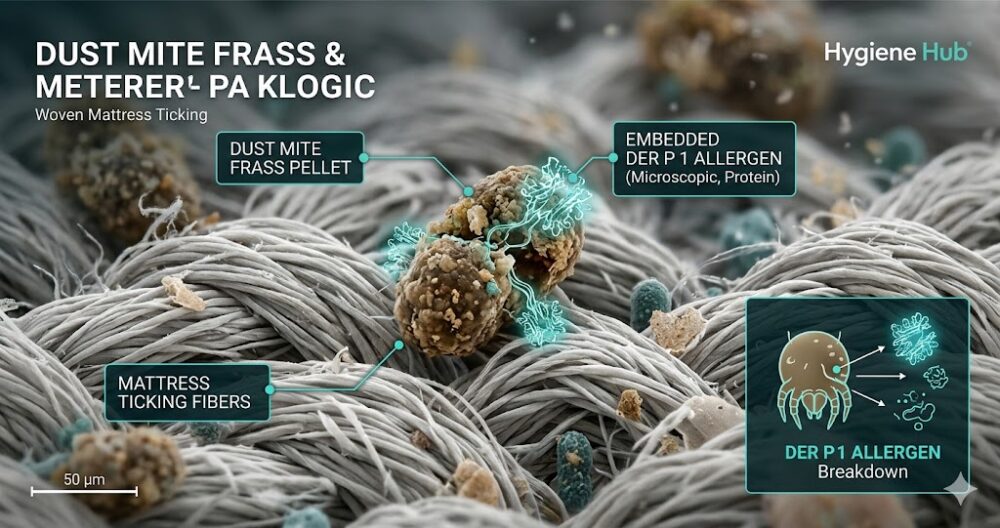 Microscopy image of dust mite (Dermatophagoides pteronyssinus) frass deposit on mattress fabric fibres, with scale reference.
What About the “Sun and Air” Method — Putting Your Mattress Outside?
Placing a mattress in direct outdoor sunlight does reduce surface moisture and UV-B radiation kills some surface pathogens — but in Malaysia’s outdoor humidity and haze conditions, the net outcome is often moisture-neutral or worse, particularly during the southwest and northeast monsoon months.
The “sun your mattress” method works on a specific set of physical premises: low ambient humidity allows moisture to evaporate from foam layers; UV-B radiation (280–315nm wavelength) disrupts the DNA replication of surface micro-organisms; and airflow mechanically dislodges dust mite faecal particles from surface fibres.
Why this fails in Malaysian conditions:
| Condition | Temperate Climate | Malaysian Climate |
|---|---|---|
| Ambient RH outdoors | 30–50% | 70–90% |
| Net moisture movement | Out of mattress | Into mattress (absorption) |
| UV-B exposure (haze days) | Full spectrum | Significantly attenuated by PM2.5/PM10 |
| Dust mite dislodgement | Effective with airflow | Limited — mites embed deeper when disturbed |
| Risk of rain exposure | Low | High (especially Oct–Jan NE monsoon) |
During Malaysia’s northeast monsoon season (October to January), placing a mattress outdoors — particularly in east-coast states like Pahang, Kelantan, and Terengganu — exposes it to a near-certainty of rain saturation. Even in Klang Valley, afternoon convectional rainfall in this period is frequent and difficult to predict. A rain-soaked mattress at 80%+ RH will develop Stachybotrys chartarum (“black mould”) colonies in the foam core within 3–5 days if not professionally dried.
During haze season (typically June–October, when transboundary haze from Sumatran peat fires affects Peninsular Malaysia), outdoor air carries elevated PM2.5 and PM10 particulates. A mattress left outside during a haze episode will accumulate respirable particulates into its surface fibres — the opposite of a cleaning outcome.
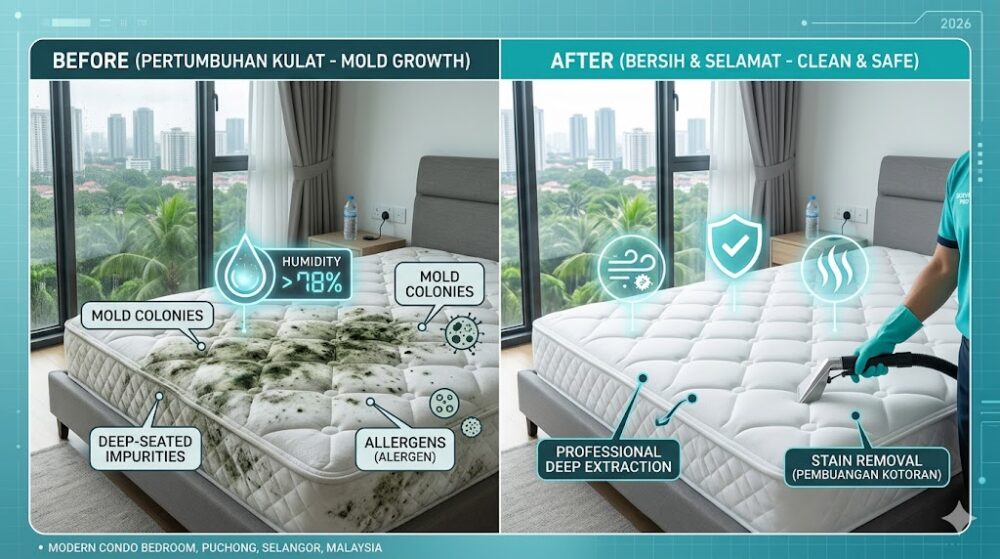 Side-by-side photograph of a clean mattress surface vs. a mattress with visible mould spotting, in a Malaysian bedroom setting.
When Is DIY Mattress Odour Treatment Genuinely Dangerous?
DIY mattress cleaning crosses into a health risk threshold when the underlying cause is biological contamination — urine, blood, vomit, or extensive mould growth — because aqueous home treatments disturb mycotoxin deposits and aerosolise biological material into the breathing zone of the room.
Do NOT Self-Treat These Conditions
The following situations should not be treated with DIY methods:
- Visible mould spots on the mattress surface or ticking (green, black, or white fuzzy growth). Disturbing active mould colonies releases mycotoxins — including aflatoxin B1 and ochratoxin A from Aspergillus species — into the room air. These compounds are classified as Category 1 carcinogens by the International Agency for Research on Cancer (IARC).
- Urine contamination (infant, elderly, or pet origin). Urea and uric acid crystals embedded in foam are reactivated by moisture. DIY aqueous cleaning re-dissolves these crystals and drives them deeper into foam layers, making enzymatic degradation significantly harder in subsequent professional treatments.
- Post-dengue or post-illness mattress decontamination. If the mattress was occupied during a febrile illness, biological contamination may include blood-borne fluids. DIY treatment without sporicidal disinfection protocols does not achieve the decontamination standard required.
- Mattresses in rooms occupied by infants, toddlers, or immunocompromised individuals. These populations have heightened sensitivity to hypersensitivity pneumonitis triggers and mycotoxin exposure.
What Professional Mattress Cleaning Actually Does Differently
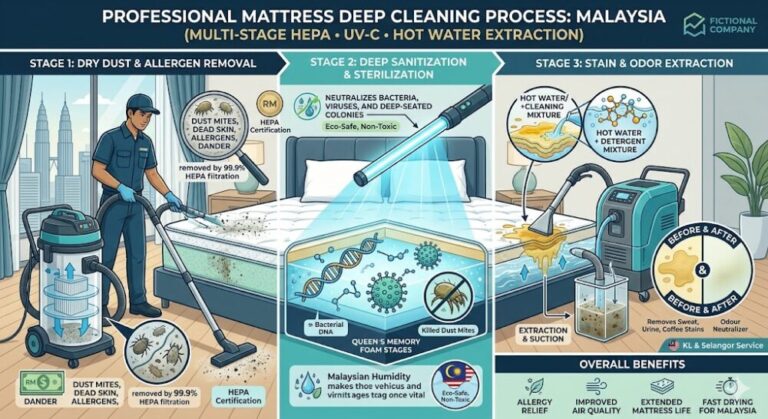
Professional hot water extraction (HWE) mattress cleaning resolves odour at the biological source — not at the surface symptom — by combining controlled-temperature extraction, enzymatic pre-treatment, and immediate mechanical drying to prevent moisture retention.
Here is what the professional process achieves that no DIY method replicates:
Enzymatic Pre-Treatment
Commercial-grade enzymatic solutions contain protease, lipase, and amylase enzyme complexes that break down protein-based odour sources (urea, albumin, faecal matter) at the molecular level — permanently eliminating the substrate that bacteria feed on.
Hot Water Extraction (HWE)
HWE injects heated water (typically 60–85°C) at controlled pressure into mattress layers, then immediately extracts it with negative suction. At 60°C sustained for several minutes, Der p 1 allergen is denatured and dust mites are killed. Immediate extraction prevents moisture retention.
HEPA H13/H14 Filtration
Industrial extraction equipment venting through HEPA H13 or H14 filters captures 99.95–99.995% of particulates ≥0.3 microns — including mould spores (2–10 microns), dust mite allergen particles, and PM2.5 aerosols — preventing recontamination of room air during extraction.
Controlled Drying Protocol
Professional operators use high-velocity air movers and dehumidifiers calibrated to the ambient RH to achieve mattress core drying within 2–4 hours — far below the 24–48 hour window in which mould colonisation begins at tropical humidity levels.
| Method | Odour Source | Moisture Risk | Mould Risk | Allergen Removal |
|---|---|---|---|---|
| Baking Soda | Surface only | High (hygroscopic) | Moderate | None |
| White Vinegar | Partial surface | High | High | None |
| Fabric Spray | None (masking) | Moderate | Moderate | None |
| Outdoor Sunning | None | High (ambient RH) | High | Partial (airflow) |
| Professional HWE | Full (enzymatic + thermal) | Low (immediate extraction) | Very Low (controlled dry) | High (HEPA filtered) |
Frequently Asked Questions About DIY Mattress Cleaning and Odour in Malaysia
A fan accelerates surface evaporation but does not resolve moisture trapped inside foam layers — in Malaysian humidity above 75% RH, a fan alone is insufficient to prevent internal mould growth within 48 hours. For surface-wet foam, a fan combined with air conditioning set below 24°C and a portable dehumidifier running simultaneously gives the best DIY drying outcome, but this combination still does not match the drying rate of professional extraction equipment.
A mattress that has been wet-cleaned indoors in a Malaysian apartment will typically require 24–72 hours to reach surface dryness, but the internal foam core may retain elevated moisture for 3–7 days at ambient humidity — well past the mould growth initiation window of 24–48 hours. Moisture meters used by professional cleaning operators routinely detect residual internal moisture even when the surface feels dry to the touch.
The odour itself is not the primary health concern — the microbial activity producing it is. If the post-cleaning smell is musty or earthy rather than simply “stale,” this indicates active mould or bacterial metabolic activity. Prolonged exposure to mycotoxins from Aspergillus or Stachybotrys species in bedroom air has been linked to respiratory sensitisation, allergic rhinitis, and in severe cases, hypersensitivity pneumonitis — particularly in children and immunocompromised individuals.
Baking soda does not effectively remove urine odour from a mattress in Malaysian humidity because uric acid crystals embedded in foam are not accessible to surface-applied desiccants, and baking soda’s hygroscopic absorption of ambient moisture at 70%+ RH counteracts its desiccating effect. Enzymatic pre-treatment specifically formulated for uric acid degradation — applied by a professional — is the only method that addresses urine odour at the molecular source.
The Malaysian climate accelerates dust mite reproduction and mould colonisation significantly compared to temperate countries. Homes in high-humidity zones (particularly coastal areas and ground-floor units) should schedule professional mattress cleaning every 6 to 12 months. For mattresses occupied by infants, allergy sufferers, or elderly individuals, a 6-month cycle is the recommended minimum interval.
Yes — professional hot water extraction combined with enzymatic pre-treatment addresses both the staining (oxidised sweat proteins and urine deposits) and the odour (bacterial metabolic compounds and allergen deposits) simultaneously. Yellow staining that has been set for more than 6 months may require a secondary treatment pass, but complete elimination is achievable in most cases. DIY stain removers typically oxidise the visible surface of the stain without penetrating the deeper layers, leaving a faded stain with an intact odour source beneath it.
A waterproof, vapour-permeable mattress protector fitted immediately after professional cleaning is one of the highest-value maintenance investments for Malaysian households. It blocks moisture from sweat and accidental spillage from entering the foam core, prevents dust mite faecal matter from embedding directly in the ticking, and extends the interval between necessary professional cleaning cycles from 6–12 months to potentially 12–18 months. Look for protectors rated to at least 50 micron barrier thickness with a breathable knit top surface to avoid heat retention in Malaysia’s climate.
Yes — mould-contaminated mattresses are a recognised domestic trigger for asthma exacerbations, particularly in children. Aspergillus fumigatus and Cladosporium spores aerosolised during sleep (when body movement disturbs the mattress surface) reach the lower respiratory tract and can precipitate bronchoconstriction in sensitised individuals. If a household member has medically diagnosed asthma or allergic rhinitis and the mattress has visible mould or persistent musty odour, professional remediation — not DIY treatment — is the clinically appropriate response.
Book Your Professional Mattress Cleaning in the Klang Valley
Stop guessing — get it done right. Our vetted mattress cleaning partners use commercial hot water extraction, HEPA H13/H14 filtration, and enzymatic pre-treatment. Tap your area to connect via WhatsApp instantly.
Hygiene Questions. 0
Questions from homeowners within and beyond Klang Valley, answered by our hygiene specialists.
─── MORE HYGIENE INSIGHTS
Keep Reading
Continue building your knowledge on maintaining a hygienically clean home in Malaysia’s tropical climate.