Dust Mites vs. Bed Bugs
in Your Malaysian Bedroom
Identifying the microscopic threats hiding in your mattress — and the exact protocols to destroy them.
Medical Disclaimer: This article is written for informational and educational purposes. For confirmed pest infestations or allergy-related medical conditions, consult a licensed pest control operator (PCO) registered with the Department of Agriculture Malaysia, or a certified allergist.
What Is the Difference Between Dust Mites and Bed Bugs?
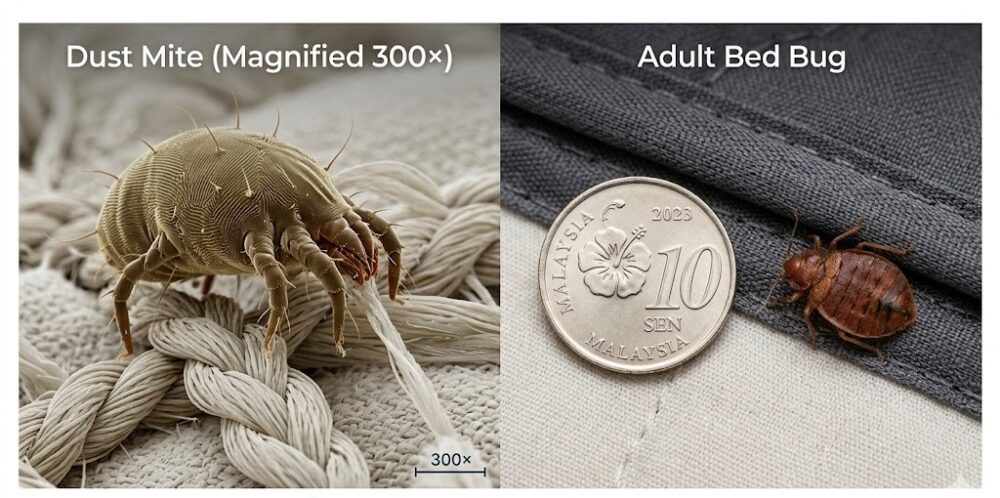
The primary difference is that dust mites are microscopic, eight-legged arachnids (0.2–0.3mm) that feed on shed human skin cells and trigger allergic reactions, whereas bed bugs are visible, flat-bodied insects (5–7mm) that act as parasitic blood-feeders and leave physical bite marks. Misidentifying the pest in your bedroom leads to ineffective treatments, wasted money, and prolonged health risks for your household.
Understanding their biological and behavioral differences is the foundation of any effective eradication strategy:
| Feature | Dust Mite | Bed Bug |
|---|---|---|
| Size | 0.2–0.3 mm (invisible) | 5–7 mm (apple seed size) |
| Visibility | Cannot be seen with naked eye | Visible; brown, flat, oval |
| Diet | Dead skin cells (dander) | Human and animal blood |
| Bites? | No — triggers allergies via fecal proteins | Yes — leaves itchy welts |
| Preferred Habitat | Deep upholstery fibers, pillows, carpets | Bed frames, skirting boards, plug sockets |
| Primary Threat | Allergic rhinitis, asthma, eczema | Skin reactions, psychological distress, rapid re-infestation |
| Reproduction Speed (MY Climate) | Population doubles in 3 weeks at >60% humidity | Eggs hatch in 6–9 days at 27°C–30°C |
How Does Malaysia’s Tropical Climate Accelerate Bedroom Pest Growth?
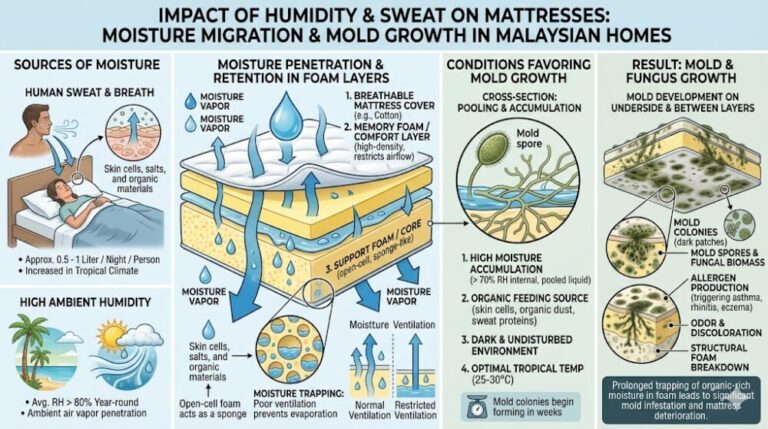
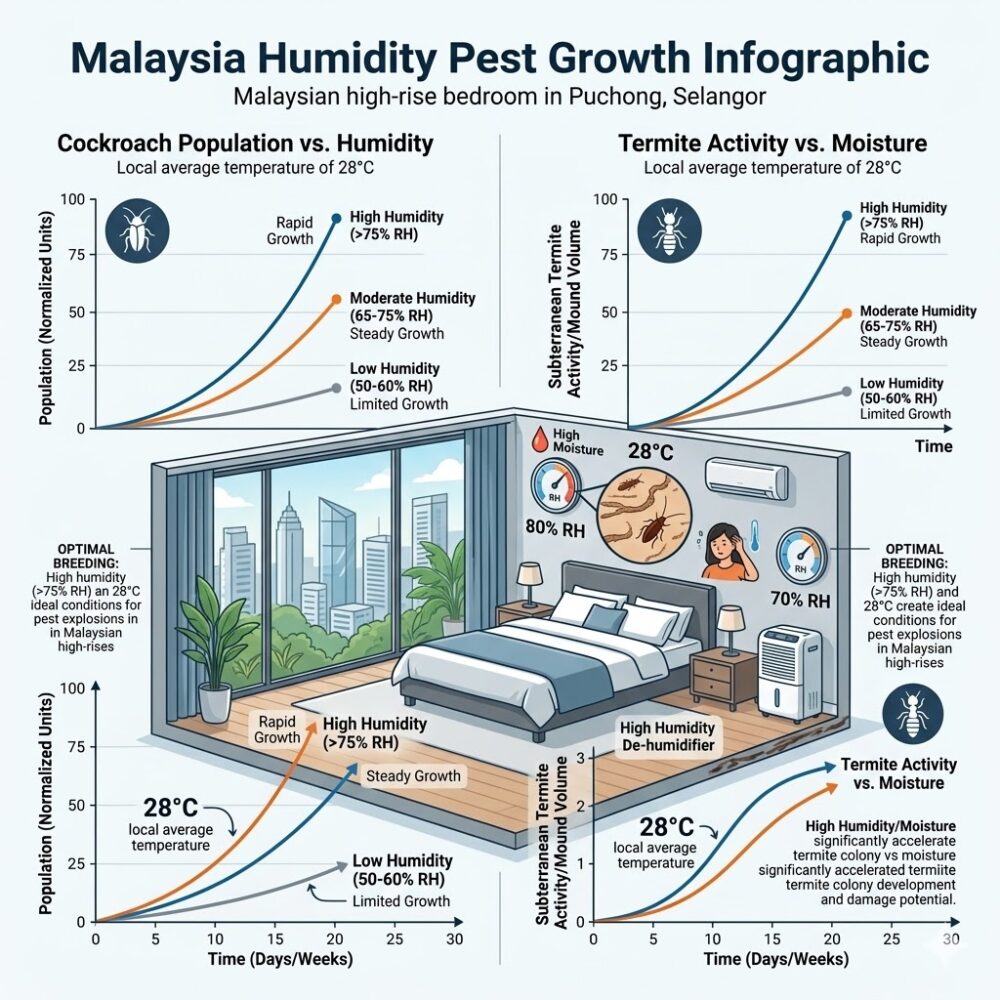
Malaysia’s year-round equatorial climate — characterised by 70% to 90% average relative humidity and ambient temperatures of 26°C to 32°C — creates the optimal biological breeding environment for both dust mites and bed bugs simultaneously. No other Southeast Asian climate combines sustained heat and humidity as persistently as the Klang Valley’s urban microclimate.
The Dust Mite Problem in Malaysian Homes
Dust mites cannot drink water — they are hygroscopic, meaning they absorb moisture vapour directly from the atmosphere. Their survival threshold is humidity above 50% RH. In Malaysian bedrooms, indoor humidity rarely drops below 60% to 75% even with air conditioning.
The primary allergen is Der p 1 — a protein found in mite fecal pellets — which remains allergenic even after the mite is dead, making simple vacuuming to remove dust mites and allergies insufficient.
The Bed Bug Acceleration Problem
Warm tropical temperatures dramatically shorten the bed bug reproductive lifecycle:
- In temperate climates (18°C), bed bug eggs take 17–18 days to hatch. In Malaysian rooms (27°C–30°C), they hatch in just 6 to 9 days.
- Nymphs reach reproductive maturity in as little as 5 weeks.
- A single female laying 3–5 eggs per day can produce a colony of over 300 adults and 500 eggs within 3 months.
- High-density housing in Cheras, Ampang, and older KL shophouse conversions enables inter-unit migration through shared wall cavities and electrical conduits.
Take Action Today
Is Your Bedroom a Breeding Ground?
Malaysia’s climate means allergen accumulation happens twice as fast as in temperate countries. Get professional-grade remediation from certified hygiene specialists.
No sales calls · Book online in under 3 minutes · Transparent pricing
How Can You Tell If You Have Dust Mites or Bed Bugs?
You can identify a bed bug infestation through physical bite marks, blood stains, and fecal spots on your bedsheets and mattress seams; dust mites are diagnosed exclusively through the allergic symptoms they trigger, as they leave no visible physical evidence.
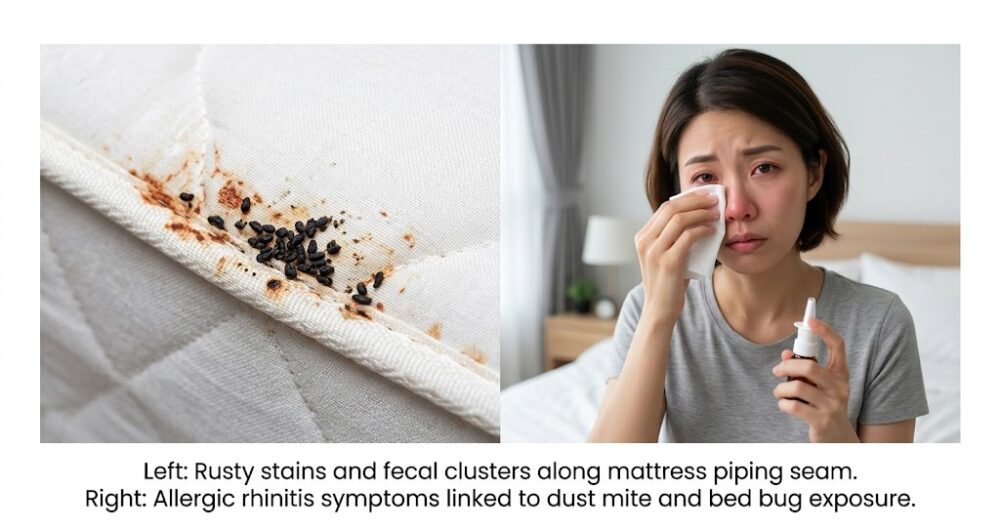
Diagnostic Signs: Bed Bugs
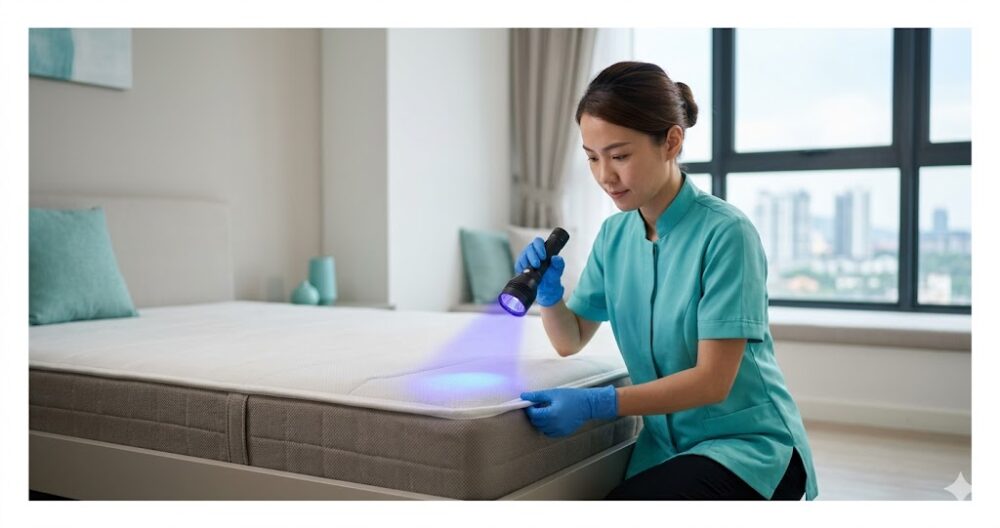
Conduct a systematic inspection using a torchlight and a flat card to probe seams:
- Bite Pattern: Red, intensely itchy welts in a linear or zigzag cluster on exposed skin — the sequential feeding pattern is often called “breakfast, lunch, and dinner” bites.
- Blood Stains (Haematochromes): Rusty or reddish-brown smear marks on light-coloured bed sheets.
- Fecal Spotting: Dark brown ink-like spots along mattress piping, zipper tracks, and wooden slatted frames.
- Cast Skins (Exuviae): Translucent, hollow shell-like casings in mattress seams.
- Live Bugs: Check behind headboards, in plug socket cavities, under skirting boards, and inside cracked plaster.
- Musty Odour: A distinct sweet, damp-towel odour from aggregation pheromones in enclosed rooms.
Malaysian Context: Budget hotels, service apartments, and hostel dormitories in KL Bukit Bintang, Chow Kit, and Brickfields districts have documented bed bug complaints. If you have travelled recently, inspect your luggage immediately upon return.
Diagnostic Signs: Dust Mites
Dust mites leave no visible trace. Their presence is confirmed exclusively through immunological responses:
- Morning Allergic Rhinitis: Persistent sneezing, blocked or runny nose immediately upon waking — a hallmark indicator.
- Nocturnal Asthma Aggravation: Increased wheeze or chest tightness between 2 AM and 6 AM, when mite allergen levels in bedding peak.
- Perennial Eczema Flare-Ups: Unexplained atopic dermatitis on the inner elbows, behind knees, and on the neck — with no bite marks.
- Eye Irritation: Chronic, unexplained conjunctivitis or puffy eyelids upon waking.
- The Gold Standard Test: A skin prick test (SPT) or specific IgE blood test administered by a licensed allergist at Hospital Kuala Lumpur, Hospital Selayang, or a private clinic.
What Are the Exact Protocols to Destroy Bed Bugs and Dust Mites?
Eradicating these pests requires a dual-track approach: high-heat thermal extraction and humidity management for dust mites, and multi-visit residual chemical or thermal treatment for bed bug colonies. Surface vacuuming and off-the-shelf aerosol sprays are clinically documented to be ineffective at penetrating deep upholstery foam or accessing structural hiding spots.
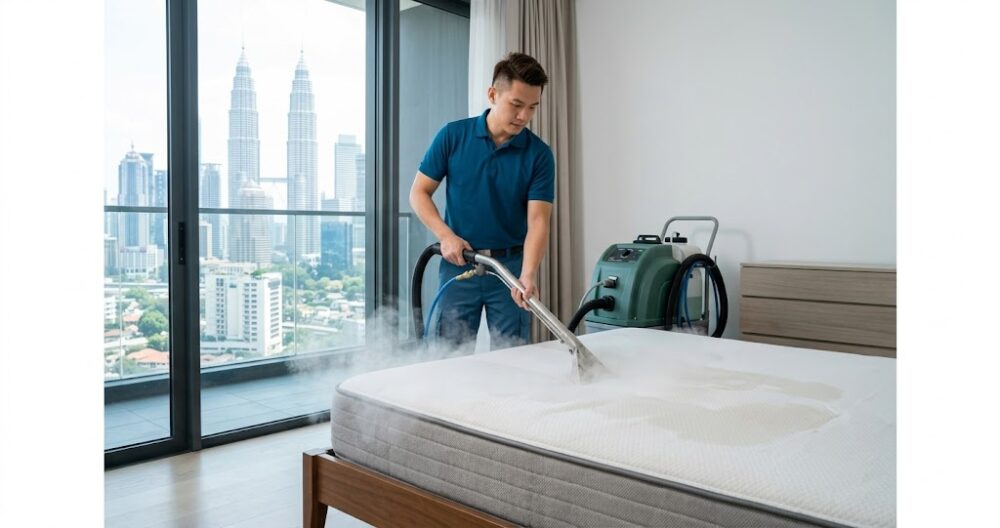
Protocol 1: Eradicating Dust Mites — The Four-Layer Defence
Standard household vacuums are insufficient. HEPA-filtered extraction combined with heat and humidity control is required.
Thermal Shock (DIY)
Machine wash all bedding in hot water at a minimum of 60°C — the thermal kill point for Dermatophagoides species that also denatures the Der p 1 allergen protein. Dry on highest heat setting for at least 30 minutes.
Humidity Engineering (Ongoing)
Run your aircon in “Dry” mode (除湿) for 2–3 hours daily. Invest in a dedicated dehumidifier targeting below 50% RH — critical for ground-floor terrace houses in Subang Jaya, Klang, and Rawang which suffer from rising damp.
Allergen Encasement (Ongoing)
Install allergen-impermeable mattress and pillow encasements with a pore size of less than 6 microns. Available at Guardian, Caring Pharmacy, and online — typically RM80–RM250 per mattress encasement.
Professional Deep Extraction (Every 6–12 Months)
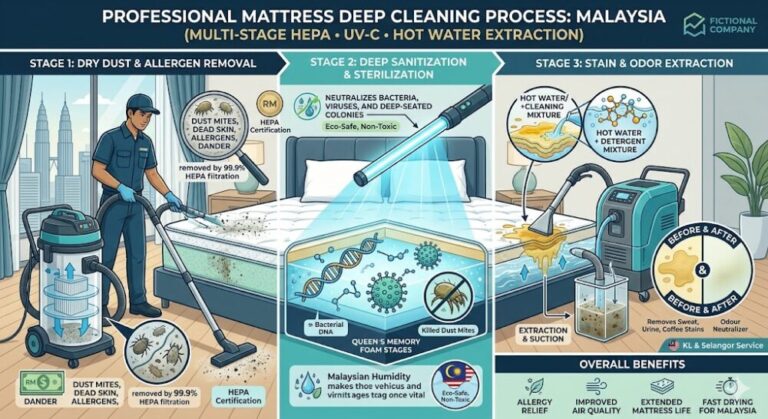
Schedule a professional mattress deep cleaning service using industrial-grade hot water extraction (90°C–100°C) combined with UV-C sanitization and HEPA-filtered wet vacuuming. This process reaches 5 to 7 centimetres into the mattress core.
Protocol 2: Destroying Bed Bugs — The Critical Cycle-Breaking Approach
A single missed egg restarts the infestation within 10 days. Each step is mandatory.
Containment (Immediate — Do Not Skip)
Do not move infested mattresses or furniture to other rooms. Seal all clothing and soft items in black plastic bags and leave in direct Malaysian sunlight for 4–6 hours — temperatures inside can exceed 55°C, killing all life stages.
High-Heat Steam Application (DIY / Interim)
Industrial steamers at ≥120°C, applied at no faster than 2.5 cm per second across every mattress seam, bed frame joint, skirting board, and plug socket cavity. Verify steam output temperature — many consumer steamers in Malaysian hardware stores are insufficient.
Full Laundry Protocol
All soft items — bedding, curtains, stuffed toys — washed at 60°C or above and dried on maximum heat. No exceptions.
Licensed Pest Control (Mandatory for Established Infestations)
Certified PCOs registered with the Pesticide Board of Malaysia (LPP) are required. A minimum of two treatment visits (spaced 10–14 days apart) is the industry standard to break the egg-hatching cycle. Always ask for the company’s LPP registration number before signing any service agreement.
Cost Benchmark (Malaysia): Professional bed bug treatment for a single bedroom in Klang Valley typically costs RM350 to RM800 per session, with two sessions required. Full-apartment treatments may cost RM1,000 to RM2,500.
When Should You Call a Professional vs. Handle It Yourself?
Call a professional immediately if any of the following conditions apply — DIY methods alone will not be sufficient:
Visible live bed bugs found outside the mattress (on walls, furniture, or other rooms) — multi-site colony.
Household member has a confirmed asthma or anaphylaxis diagnosis linked to dust mite sensitization.
Mattress is over 8 years old — allergen accumulation exceeds any DIY extraction capability.
You are renting a property in KL or Selangor and find evidence of infestation — document everything and notify your landlord in writing.
Children under 5, elderly residents, or immunocompromised individuals are living in the affected bedroom.
Symptoms persist despite 2+ weeks of consistent DIY effort — re-infestation indicates a structural colony.
Frequently Asked Questions
Professional mattress deep cleaning in the Klang Valley typically ranges from RM120 to RM280 per mattress, depending on size, soiling level, and extraction technology used. Single-bed mattresses start around RM120–RM150, while king-size mattresses are generally RM200–RM280. Services that include UV-C sanitization and allergen-neutralizing treatment may be priced at a premium but deliver clinically superior results for allergy sufferers.
Running your air conditioner reduces ambient humidity, which stalls dust mite reproduction, but it will not kill the existing population already embedded within your mattress foam. Climate control must be consistently paired with hot-water extraction cleaning every 6–12 months and allergen-proof encasements. Using “Dry Mode” is more effective than standard cooling for RH management.
You do not need to discard your mattress if the infestation is identified and treated promptly by a licensed PCO. A combination of professional heat steam treatment, targeted residual insecticide application, and mattress encasement will eradicate the colony. Discarding the mattress without treatment is counterproductive — it spreads bugs to common corridors and neighbouring units in condominiums.
From a public health standpoint, dust mites pose a greater long-term threat due to the prevalence of allergic rhinitis and asthma — the Malaysian Ministry of Health (MOH) estimates that 1 in 5 Malaysians suffers from allergic rhinitis, with house dust mites as the leading trigger. Bed bugs cause acute psychological distress and skin infections but are not known to transmit blood-borne diseases. Both require professional intervention.
Malaysians should schedule professional mattress cleaning every 6 months — significantly more than the global recommendation of once per year. Malaysia’s persistently high humidity sustains year-round mite reproduction, meaning allergen accumulation in local mattresses occurs approximately twice as fast as in temperate climates like the UK or Japan.
Most commercially available aerosol sprays from Malaysian pharmacies and hypermarkets contain pyrethrin or permethrin-based formulas that kill only on direct contact. They cannot penetrate mattress seams or wall crevices. Additionally, Malaysian urban bed bug populations have developed documented pyrethroid resistance — surface sprays often simply drive bugs deeper into hiding. Professional PCO-grade treatments use a rotating active ingredient strategy to counter resistance.
Yes — dust mite sensitization is the leading cause of allergic asthma in Malaysian children, according to research from Universiti Malaya (UM) and Hospital Kuala Lumpur. Children spend more hours in bed, breathe at a lower height closer to floor-level mite zones, and have developing immune systems more reactive to allergen exposure. If your child’s asthma is poorly controlled, request a specific IgE test (RAST) from their paediatrician.
Verify that the company holds a valid Pest Control Operator (PCO) licence issued by the Pesticide Board of Malaysia (LPP) under the Ministry of Agriculture. Request their LPP registration number and cross-reference it on the official LPP portal. Avoid operators who refuse to specify the active ingredient used, cannot provide a written service report, or offer single-visit guarantees for bed bug eradication — two visits minimum is the scientifically required standard.
Service Pro · Certified Professionals
Book a Certified Hygiene Professional
If your bedroom shows any of the diagnostic signs described in this article, the next step is professional-grade remediation — not another aerosol can. Service Pro connects you exclusively with vetted hygiene specialists and licensed PCOs across the Klang Valley, Penang, and Johor Bahru.
No sales calls · Book online in under 3 minutes · Transparent pricing before you confirm
Hygiene Questions. 0
Questions from homeowners within and beyond Klang Valley, answered by our hygiene specialists.
─── MORE HYGIENE INSIGHTS
Keep Reading
Continue building your knowledge on maintaining a hygienically clean home in Malaysia’s tropical climate.