Fabric vs. Leather Sofa Cleaning: What Is the Best Method?
Your sofa is one of the most biologically active surfaces in your home. The average household sofa accumulates tens of millions of dead skin cells, dust mites, and bacteria per square metre within months of regular use — yet cleaning protocols differ radically depending on whether the upholstery is fabric or leather. Choosing the wrong method does not merely fail to clean; it actively damages the material at a structural level.
What Is the Best Way to Clean a Fabric Sofa?
Hot water extraction (HWE) combined with enzymatic pre-treatment is the most effective and clinically validated method for deep cleaning a fabric sofa. Because woven upholstery is inherently porous, surface wiping displaces only a fraction of the total contaminant load — the majority of allergens, oils, and bacteria remain packed within the subsurface textile fibres, completely untouched by conventional household methods.
The Correct Step-by-Step Protocol for Fabric Upholstery
-
1
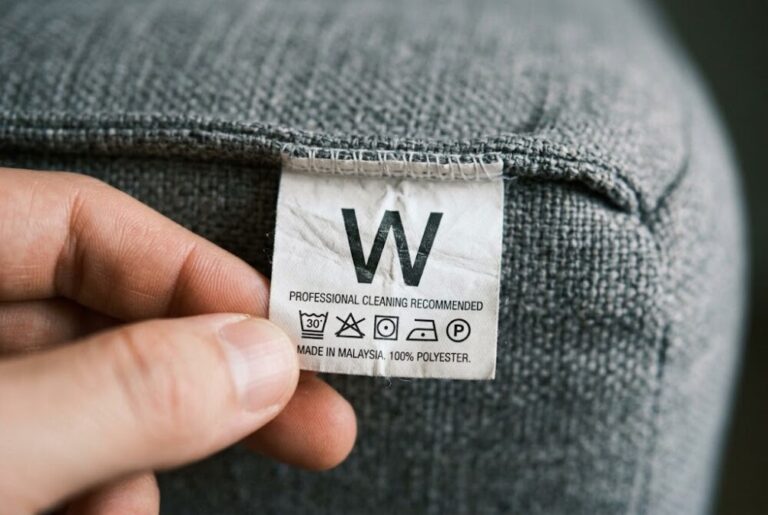
Identify the Fabric Care Code
Locate the manufacturer’s tag beneath the cushions. The code governs which cleaning agents are safe:
- W — Water-based cleaners only
- S — Solvent (dry-clean) products only
- W/S — Either water-based or solvent cleaners are safe
- X — Vacuum only; no liquid cleaners of any kind
-
2
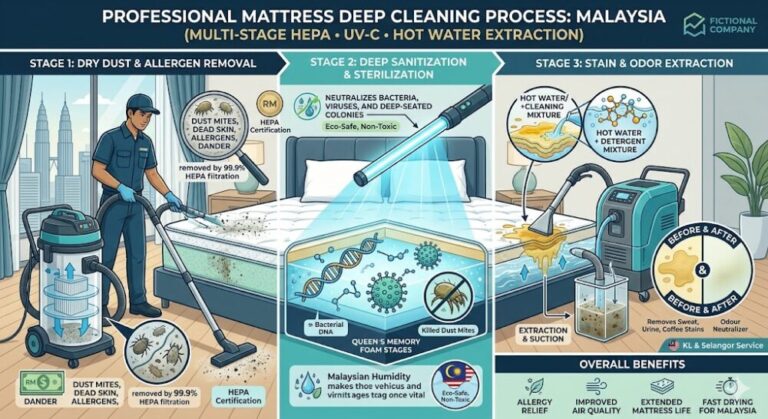
HEPA Vacuuming (Dry Soil Extraction)
Use a HEPA vacuum with an upholstery attachment to systematically extract loose dust, skin cells, pet dander, and surface debris. This step is non-negotiable; introducing moisture onto heavily soiled fabric without prior dry extraction simply converts loose particulates into embedded stains.
-
3
Enzymatic Pre-Treatment
Apply an enzyme-based upholstery pre-spray to all high-contact zones — seat cushions, armrests, and headrests. Enzymatic formulations biochemically dissolve protein-based soils (sweat, food, pet saliva, bodily oils) at a molecular level, which alkaline detergents alone cannot achieve.
-
4
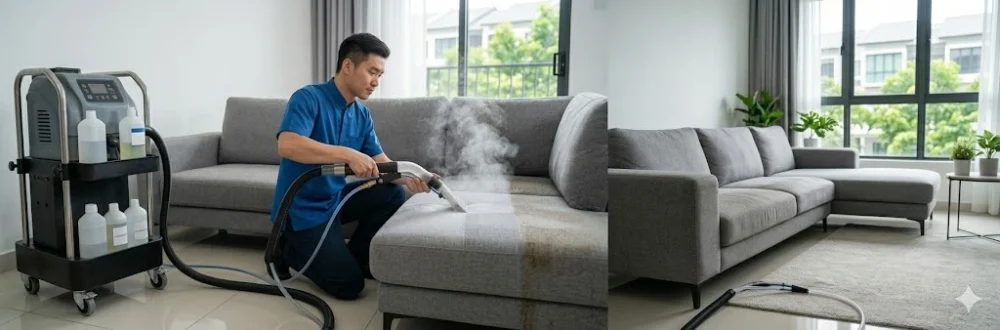
Hot Water Extraction
Inject a diluted, low-foaming upholstery detergent under controlled heat into the fabric structure, immediately extracting it alongside the dissolved contaminants via high-powered suction. This is the only method that physically flushes trapped allergens, residual bacteria, and deep-set soils out of the cushion core rather than simply redistributing them.
-
5
Controlled Accelerated Drying
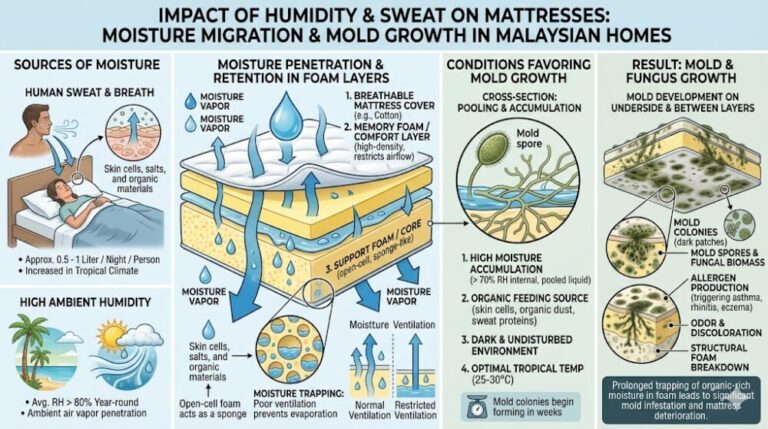
Direct industrial air movers at the treated surfaces to achieve a complete dry within 4 to 6 hours. Leaving fabric upholstery damp for longer than 8 hours creates the precise temperature and moisture conditions required for mould spore germination within the foam padding.
How Should You Clean a Leather Sofa Correctly?
Leather sofa cleaning requires a pH-balanced chemical cleanser followed immediately by a lipid-based conditioning treatment — in that strict sequence. Skipping the conditioning phase after cleansing is the single most common cause of premature leather cracking, as the cleansing process temporarily strips the hide’s natural moisture barrier.
Leather is semi-permeable organic material. It does not trap contaminants deep within a fibre weave the way fabric does, but it is highly vulnerable to chemical degradation, mechanical micro-abrasion, and chronic dehydration.
The Correct Step-by-Step Protocol for Leather Upholstery
-
1
Identify the Leather Type
- Full-Grain / Top-Grain Leather — Most durable; tolerates standard leather cleaners well
- Bonded Leather — Highly sensitive; avoid excessive moisture or mechanical scrubbing
- Suede / Nubuck — Requires specialist dry-brushing only; no liquid-based cleaners
-
2
Dry Microfibre Wipe-Down
Remove surface dust using a dry, clean lint-free microfibre cloth. Abrasive dust particles sitting on the leather surface will micro-scratch the protective polyurethane topcoat if agitated with cleaning solution before removal.
-
3
pH-Balanced Leather Cleansing
Apply a dedicated leather cleanser to a separate microfibre cloth — never directly onto the sofa. Work in small circular sections. Actively avoid dish soap, ammonia-based cleaners, bleach, baby wipes, and petroleum-based solvents, all of which cause irreversible chemical damage.
-
4
Targeted Agitation for Heavily Soiled Areas
For compacted dirt in natural grain creases or seat tuck lines, use a soft-bristled detailing brush (horsehair recommended) with minimal pressure to lift soils without abrading the surface finish.
-
5
Immediate Deep Conditioning
Apply a premium leather cream or lotion conditioner in thin, even layers. Allow full absorption for a minimum of 15 minutes before light buffing. This step restores essential lipids, maintains the hide’s tensile elasticity, and deposits a fresh hydrophobic barrier against future liquid penetration.

Fabric vs. Leather: Which Sofa Is Harder to Maintain?
Leather is substantially easier to maintain for routine day-to-day hygiene, but fabric is more forgiving of improper cleaning attempts. The correct comparison is not which material is “better” — it is understanding which material profile aligns with your household’s specific risk factors.
Direct Maintenance Comparison
| Factor | Fabric Sofa | Leather Sofa |
|---|---|---|
| Spill Response Window | Seconds | Minutes |
| Daily Hygiene Maintenance | Weekly HEPA vacuuming | Dry wipe every 1–2 weeks |
| Allergen Retention | High — traps within weave | Low — rests on surface |
| Pro Deep Clean Frequency | Every 6–12 months | Every 12–18 months |
| Conditioning Requirement | None | Every 3–6 months |
| Susceptibility to Mould | High if left damp | Low — surface dries rapidly |
| Pet & Child Households | High-risk for staining | Preferred — wipes clean |
| Incorrect Cleaning Risk | Moderate — residue & wicking | High — irreversible cracking |
Critical Insight: The Hidden Cost of Fabric Allergen Load
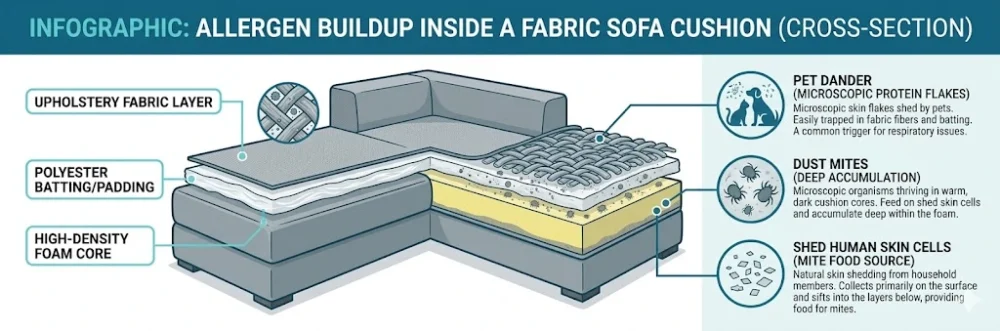
For households with occupants who suffer from asthma, rhinitis, or dust mite allergies (as outlined by Ministry of Health Malaysia), fabric upholstery presents a persistent clinical risk that leather does not. A standard 3-seater fabric sofa can harbour in excess of 100,000 dust mites within 18 months of use without visible signs of soiling. These organisms cannot be extracted by domestic vacuuming alone; only hot water extraction with water temperatures above 55°C reliably eliminates the mite population and denatures their allergenic excretion proteins. To properly manage this biological load, refer to our recommended deep cleaning frequency guidelines for Malaysian climates.
What Household Cleaning Products Should You Never Use on a Sofa?
Bleach, ammonia, undiluted dish soap, and alcohol-based disinfectants should never be applied to any upholstery — fabric or leather — under any circumstances. Each of these substances causes a specific category of irreversible material damage that cannot be corrected after the fact.
Fabric — Never Use
- Bleach or chlorine cleaners — Permanently strips fabric dye and degrades tensile strength
- Undiluted dish soap — Leaves hygroscopic residue that accelerates re-soiling
- High-concentration hydrogen peroxide — Causes localised bleaching and fibre oxidation
- Carpet cleaning foams — High alkalinity, incompatible with delicate upholstery weaves
Leather — Never Use
- Wet wipes or baby wipes — Strip leather’s protective oils
- Nail polish remover (acetone) — Dissolves the polyurethane topcoat instantly
- Olive oil or coconut oil — Creates rancid oxidation and foul odour over time
- Saddle soap — High alkalinity causes pH imbalance and eventual cracking
When Is It Time to Call a Professional Sofa Cleaning Service?
You should engage a professional upholstery cleaning service when any of the following conditions are present — attempting to resolve these with household methods will typically worsen the damage. Domestic cleaning equipment lacks the suction power, heat calibration, and chemical-grade formulations required for genuine deep-fibre decontamination.
- ⚠️Persistent biological odour that returns within days — indicates active bacterial or mould colonies within the cushion foam, not the surface fabric
- ⚠️Water rings or tide marks from previous DIY cleaning attempts — require professional re-wetting and controlled extraction to resolve
- ⚠️Deep-set organic stains from blood, urine, vomit, or wine that have polymerised within the fibre
- ⚠️Visible mould spotting on fabric — indicates subsurface mould colonisation requiring antimicrobial treatment
- ⚠️Leather that is peeling, flaking, or cracking — requires professional conditioning or panel restoration before irreversible structural loss
- ⚠️Post-flood or water damage saturation — DIY drying cannot prevent rapid bacterial proliferation within wet foam cores
Malaysia-Specific Recommendation
In Malaysia, where high ambient humidity accelerates mould growth significantly faster than in temperate climates, the professional deep clean frequency for fabric sofas is recommended at every 6 months rather than the standard 12-month international guideline. High-traffic households with children or pets should consider quarterly professional maintenance.
Frequently Asked Questions About Fabric and Leather Sofa Cleaning
Book Your Sofa Cleaning — Service Pro Verified Partners
Whether your sofa is a high-traffic fabric sectional accumulating allergens or a premium leather unit requiring professional reconditioning, the correct cleaning protocol requires industrial equipment and certified material expertise.
Service Pro connects you with Malaysia’s vetted network of professional upholstery technicians.
Hygiene Questions. 0
Questions from homeowners within and beyond Klang Valley, answered by our hygiene specialists.
─── MORE HYGIENE INSIGHTS
Keep Reading
Continue building your knowledge on maintaining a hygienically clean home in Malaysia’s tropical climate.