Dust Mites and Allergies: Why Vacuuming Your Mattress Isn’t Enough
Vacuuming removes surface debris but cannot penetrate the inner layers where Dermatophagoides pteronyssinus colonies and their faecal allergen Der p 1 are concentrated — meaning most Malaysians are sleeping on a biologically active allergen reservoir every night, regardless of how often they vacuum.
Book a Professional Mattress Deep Clean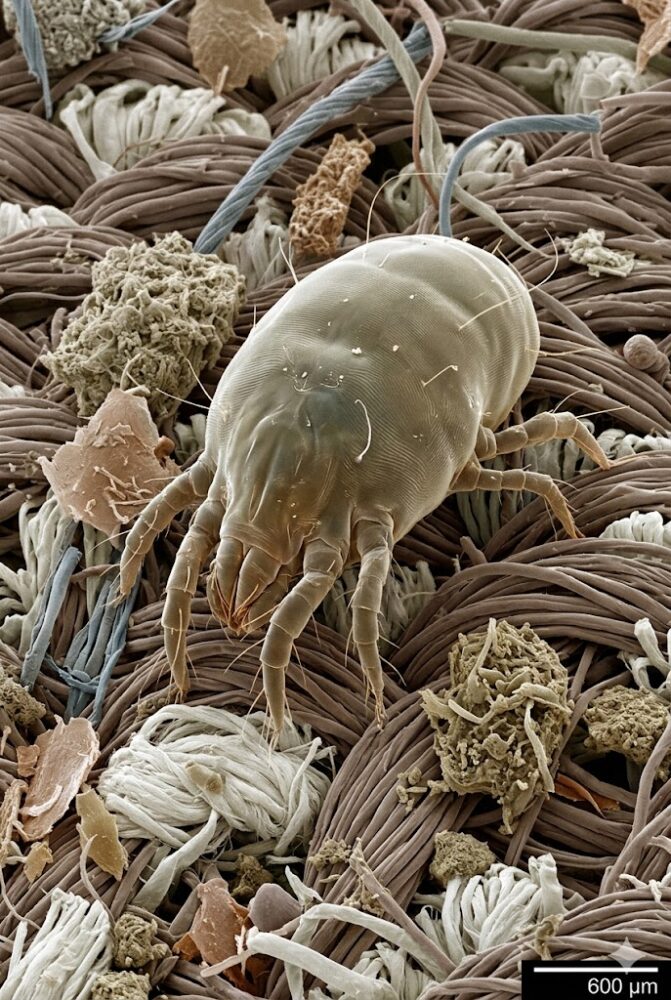
Malaysia’s equatorial climate — sustained ambient humidity of 70–85% RH, indoor temperatures averaging 26–30°C, and year-round absence of a cold dry season — creates conditions that are clinically ideal for dust mite proliferation. Unlike temperate countries where mite populations crash in winter, Malaysian mattresses sustain active colonies continuously, with allergen loads that can reach concentrations well above the 2 µg/g Der p 1 threshold associated with allergic sensitisation.
This article explains the biology of dust mite allergen embedding, why conventional vacuuming fails as an intervention, and what clinical-grade mattress hygiene actually requires in the Malaysian context.
What Are Dust Mites and Why Are Malaysian Homes High-Risk?
Malaysian homes sustain some of the highest dust mite densities in the world because the local climate eliminates the single most effective natural mite-control mechanism: low ambient humidity.
The biology at a glance:
- Species: Dermatophagoides pteronyssinus (house dust mite) is the dominant species in Malaysian households, accounting for the majority of sensitising allergen load. Dermatophagoides farinae co-exists but is less prevalent in high-humidity environments.
- Optimal conditions: Mites thrive at 25–30°C and relative humidity above 65%. Penang, KL, JB, and the entire Klang Valley maintain these conditions year-round.
- Reproduction rate: A single female mite lays 40–80 eggs over her 70-day lifespan. Populations compound rapidly; a moderately colonised mattress can harbour 100,000–1,000,000 individual mites.
- Allergen source: The clinically significant allergen is not the mite itself but its faecal particles (Der p 1, Der p 2). Each mite produces approximately 20 faecal pellets per day. These pellets are 10–40 µm in diameter — small enough to become airborne during sleep movement and inhaled deep into the bronchial tree.
Why condominiums and terrace houses in the Klang Valley are particularly affected:
High-rise condominiums in Mont Kiara, Cheras, Ampang, and Petaling Jaya typically operate with sealed façades and centrally recycled air conditioning. When AC is running, interior humidity may drop temporarily — but the mattress core, insulated by bedding layers, remains hygroscopically warm. Terrace houses in Shah Alam, Subang Jaya, and Puchong that rely on ceiling fans rather than AC maintain near-ambient outdoor humidity at all times, providing unrestricted mite habitat.
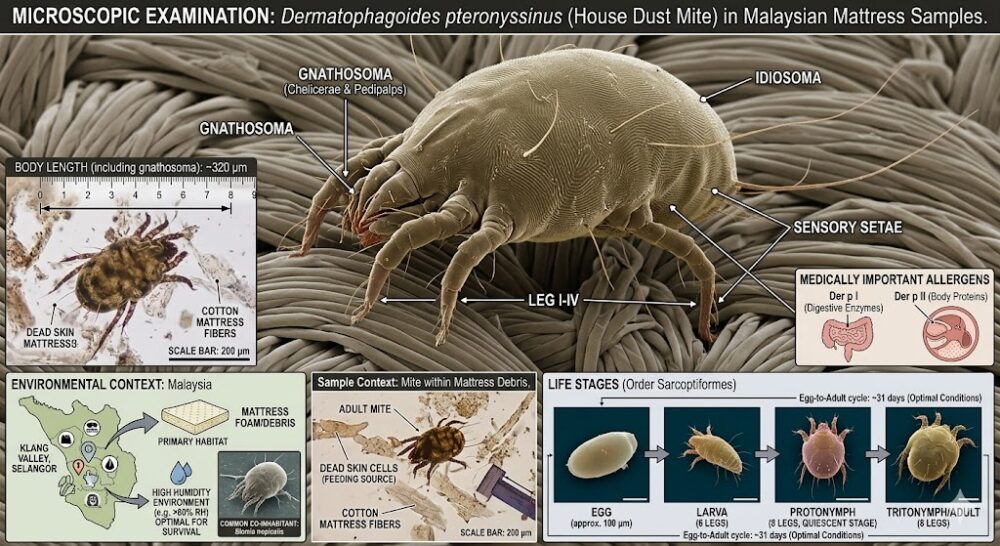 Scanning electron microscope image of Dermatophagoides pteronyssinus — the dominant dust mite species in Malaysian homes. Faecal particles, not the mite itself, are the primary allergen source.
Why Vacuuming Your Mattress Does Not Remove Dust Mite Allergens
Vacuuming is effective at collecting loose surface debris, shed skin flakes, and mobile mite bodies at the mattress surface, but it is structurally incapable of addressing the core allergen problem.
The Depth Problem
A standard mattress has a layered construction: a surface fabric layer, a comfort layer (foam, latex, or fibre), and a support core. Mite faecal particles and body fragments bind electrostatically to textile fibres. Domestic vacuum suction — even at 2,000 Pa, which is above average for most upright models — does not generate sufficient airflow velocity through the textile weave to dislodge electrostatically adhered particles from depths beyond 2–3 mm. (This limitation is exactly why understanding steam cleaning vs dry extraction methods is so important for Malaysian homes).
Studies in comparable tropical humid climates have found that vacuuming reduces surface-layer Der p 1 by approximately 30–50%, with negligible reduction in allergen concentrations within the comfort layer, which is where the bulk of faecal accumulation occurs after years of use.
The Disturbance Problem
Vacuuming agitates the mattress surface. This agitation temporarily aerosolises settled allergen particles, increasing the short-term airborne Der p 1 concentration in the room. Without a HEPA H13 or H14 filtration stage on the vacuum exhaust, these particles are re-deposited across the room’s surfaces and bedding. Domestic vacuums with standard or foam filters are net allergen redistributors, not allergen eliminators.
The Mite Viability Problem
Vacuuming does not kill mites. Live mites retreat deeper into the mattress during vibration and re-colonise the surface layer within 24–48 hours of disturbance. Without a thermal or chemical kill step, the biological source of allergen production continues uninterrupted.
What vacuuming can and cannot do:
| Intervention | Vacuuming | Professional HWE Cleaning |
|---|---|---|
| Surface debris removal | ✓ Effective | ✓ Effective |
| Deep allergen extraction (comfort layer) | ✗ Negligible | ✓ Effective |
| Mite kill (thermal) | ✗ None | ✓ Yes (≥56°C steam/HWE) |
| HEPA-filtered exhaust | ✗ Rarely | ✓ Standard |
| Faecal particle denaturing | ✗ None | ✓ Enzymatic pre-treatment |
| Post-treatment drying protection | ✗ None | ✓ Rapid extraction + airflow |
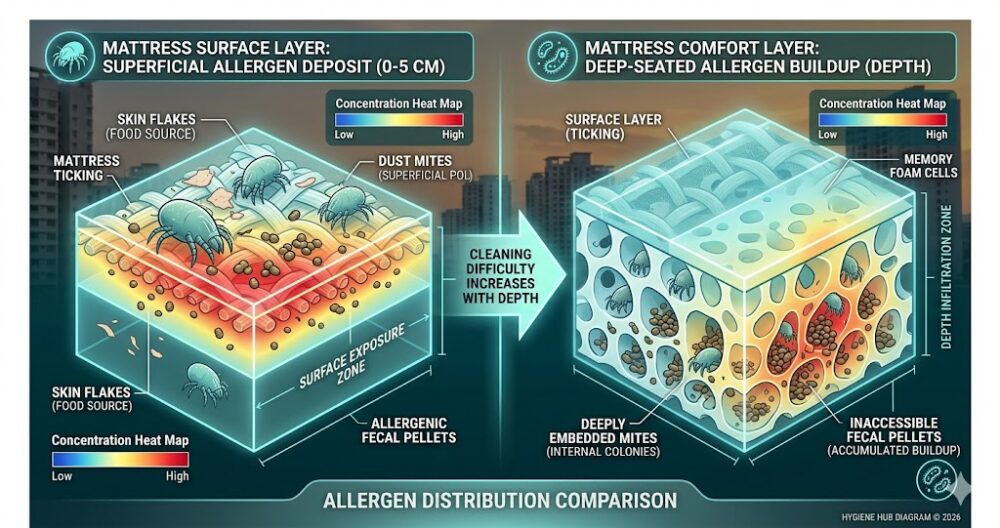 Cross-section of a mattress showing how Der p 1 allergen accumulates deep within the comfort layer — far beyond the reach of domestic vacuum suction.
What Der p 1 Allergen Actually Does to Your Body
Understanding the clinical mechanism explains why low-level chronic exposure — sleeping on an allergen-loaded mattress 7–8 hours per night — produces cumulative sensitisation even at exposures that feel symptom-free initially.
Der p 1 is a cysteine protease. This enzyme activity allows it to cleave tight junction proteins in the bronchial epithelium, facilitating direct allergen penetration across the mucosal barrier. It also cleaves CD23 and CD25 receptors on immune cells, actively driving IgE sensitisation. This is not a passive allergen — it is biochemically aggressive.
Clinical sensitisation thresholds established in research (and aligned with Ministry of Health Malaysia (MOH) MyHealth guidelines):
Der p 1 per gram of dust — threshold for IgE sensitisation risk
Der p 1 per gram of dust — threshold for acute asthma exacerbation risk in sensitised individuals
Malaysian allergy clinics in KL, Penang, and JB consistently document Der p 1 concentrations exceeding the 10 µg/g threshold in mattress samples taken from homes with no prior professional cleaning history — often regardless of how frequently the occupants vacuum.
Symptoms associated with chronic Der p 1 exposure in Malaysian patients:
Children under 5 and elderly individuals are disproportionately affected. Paediatric allergy presentations related to dust mite sensitisation are among the most common referrals to KK (Klinik Kesihatan) and private allergy specialists across Selangor and KL.
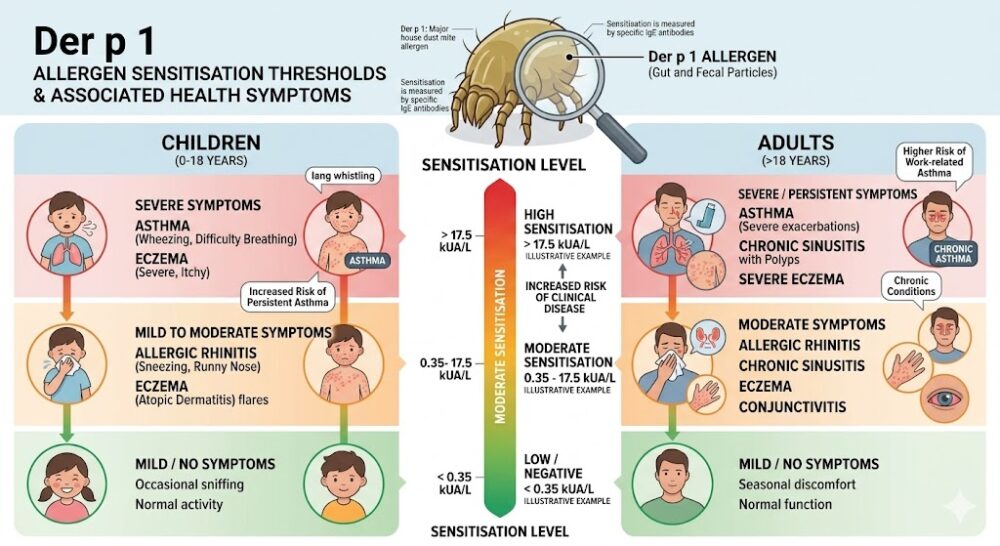 Der p 1 sensitisation thresholds and associated clinical outcomes — Malaysian allergy clinics regularly document concentrations above the acute asthma exacerbation threshold in uncleaned mattresses.
What Professional Mattress Cleaning Actually Does
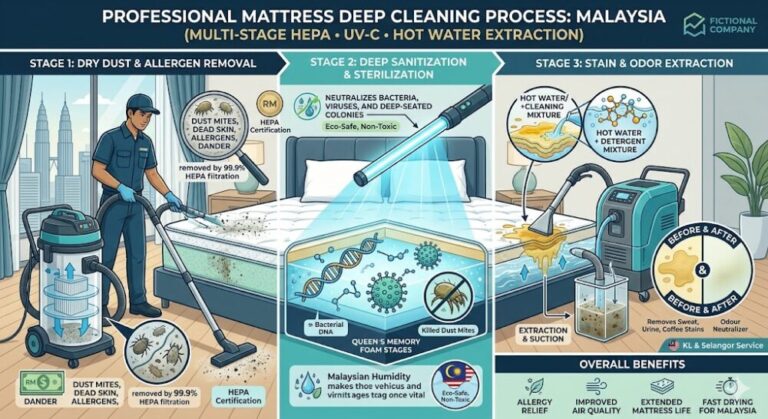
Professional mattress deep cleaning, when performed by a qualified hygiene service provider, combines four distinct interventions that collectively address all three failure modes of vacuuming.
HEPA-Filtered Mechanical Agitation & Extraction
Industrial-grade equipment uses high-frequency vibration (UV beater heads or mechanical pulsation) to dislodge embedded particles, followed by immediate HEPA H13/H14-filtered extraction before dislodged particles can become airborne. The dislodge and capture steps are simultaneous, and the exhaust air is clinically filtered.
Enzymatic Pre-Treatment
A protease-based formulation is applied to the mattress surface before hot water extraction. This targets the proteinaceous allergen directly: Der p 1 is denatured by enzyme-based detergent systems designed for allergen remediation. Pre-treatment dwell time of 10–15 minutes significantly reduces residual allergen load in the comfort layer before extraction begins.
Hot Water Extraction (HWE) at ≥56°C
The thermal kill step is critical. D. pteronyssinus mites and their eggs are killed at sustained exposure to temperatures above 56°C. Professional HWE injects heated water at controlled temperature and pressure into the mattress textile layer, simultaneously extracting the effluent — achieving allergen flushing from depth and thermal mite mortality.
Dry Sanitisation & Anti-Acaricidal Treatment
Following HWE, an anti-acaricidal spray (permethrin-based or plant-derived benzyl benzoate) is applied as a residual protective layer to slow re-colonisation. UV-C sanitisation wands may also be applied across the surface post-drying to address residual surface microbial load.
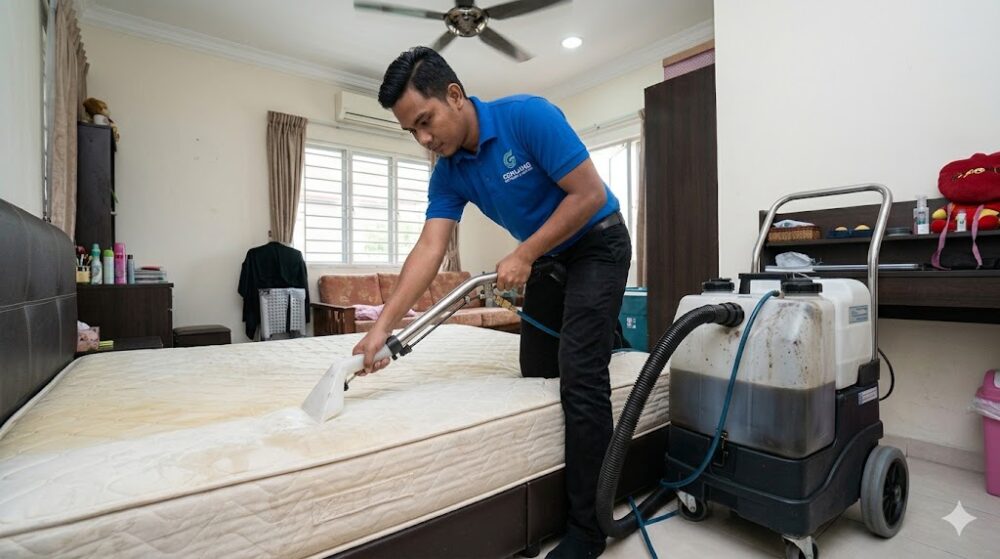 A ServicePro.my verified technician performing hot water extraction on a mattress in a KL condominium — HEPA filtration, enzymatic pre-treatment, and post-service moisture verification are standard.
How Often Should Malaysians Clean Their Mattresses Professionally?
The recommended professional mattress cleaning frequency in Malaysia is higher than international guidelines suggest, because Malaysia’s climate provides no natural seasonal mite reduction.
Frequency Guidelines by Household Profile
| Household Type | Recommended Frequency |
|---|---|
| Single adult, no pets, no allergies | Every 12 months |
| Family with children under 12 | Every 6 months |
| Household member with diagnosed asthma or allergic rhinitis | Every 3–6 months |
| Pet co-sleepers (cats or dogs on bed) | Every 3–4 months |
| High-humidity homes (ceiling fan only, no AC) | Every 4–6 months |
| Post-tenancy change (rental property) | Immediately upon occupancy |
Between professional cleanings:
- Wash all bedding (sheets, pillowcases, bolster and pillow covers) at 60°C minimum weekly. The Malaysian standard washing machine default temperature of 40°C is insufficient to kill mites.
- Use allergen-impermeable mattress encasements (rated to block particles ≤10 µm) as a primary passive barrier. Ensure the encasement zips fully.
- Maintain bedroom AC at 24°C or below during sleeping hours to suppress ambient RH below 65%.
- Replace pillows every 12–18 months; mattresses every 7–10 years regardless of visible condition.
Drying Timeline After Professional HWE Cleaning in Malaysian Conditions
| Environment | Expected Drying Time |
|---|---|
| AC room, 20–22°C | 4–6 hours |
| AC room with standing fan assist | 2–4 hours |
| Non-AC room, ceiling fan, daytime | 5–8 hours |
| Non-AC room, high ambient humidity (>80% RH) | 8–12 hours (dehumidifier recommended) |
Occupants should not replace bedding or sleep on the mattress until a surface moisture check confirms dryness — typically verified by the technician or with a household hygrometer placed against the mattress surface.
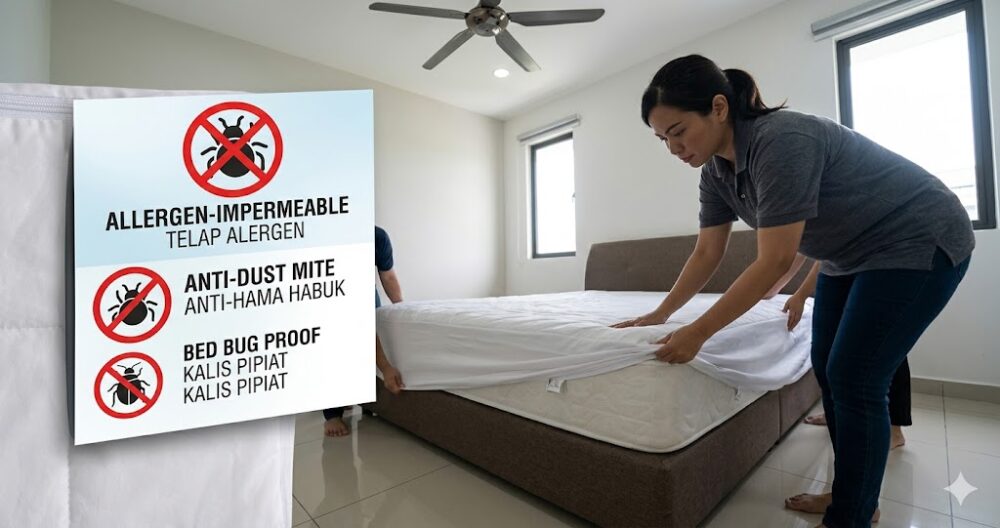 Allergen-impermeable mattress encasements rated to block particles ≤10 µm are the most effective passive barrier between professional cleaning appointments.
Signs Your Mattress Has a Dust Mite Problem
The following indicators, especially in combination, suggest clinically significant mite colonisation requiring professional intervention rather than routine maintenance.
Symptomatic Indicators
- Nasal congestion, sneezing, or watery eyes consistently worst in the morning and improve after leaving the bedroom
- Children waking with wheezing or nocturnal cough without a diagnosed viral cause
- Skin rashes or eczema flares concentrated on body parts in contact with the mattress (torso, face, inner elbows, behind knees)
- Chronic fatigue despite adequate sleep hours — a recognised but under-attributed consequence of persistent low-grade allergenic inflammation
Environmental Indicators
- Mattress age exceeding 3 years without any professional cleaning history
- Visible fabric discolouration or surface texture change (mite faecal matter accumulates as darkened patches on light-coloured mattress fabric)
- Persistent bedroom odour that does not resolve with ventilation — partially attributable to VOCs produced by mite waste and secondary bacterial colonisation
- Recent water intrusion, roof leak, or flooding affecting the room (accelerates mite and mould co-colonisation)
Diagnostic Confirmation
- If you or a household member are experiencing persistent symptoms, an allergy skin prick test or serum specific IgE blood test (RAST) ordered by a physician can confirm D. pteronyssinus sensitisation
- Available at government hospitals (Hospital Kuala Lumpur, Hospital Selayang) and private allergy clinics across the Klang Valley
- A confirmed diagnosis is the clinical basis for elevating mattress cleaning to a therapeutic frequency rather than a maintenance schedule
Frequently Asked Questions About Dust Mites and Mattress Cleaning in Malaysia
Dust mites survive in air-conditioned Malaysian bedrooms because the mattress core retains warmth and residual humidity even when the room air is cooled. AC reduces the room’s ambient RH but does not dry the inner layers of a mattress. Mite populations may grow more slowly in consistently AC-maintained rooms, but colonisation continues unless the mattress is professionally cleaned.
The defining diagnostic indicator for dust mite allergy is symptom timing: if your rhinitis, sneezing, or congestion is consistently worst in the morning immediately after waking and improves within 30–60 minutes of leaving the bedroom, dust mite allergen exposure during sleep is the most likely cause. Confirmation requires a skin prick test or serum IgE test — available through KK referral or private allergy specialists in KL and Selangor.
Professional mattress cleaning in Malaysia typically costs between RM80–RM250 per mattress depending on size, cleaning method, and service provider. For households with allergic rhinitis, asthma, or children with atopic conditions, the clinical reduction in allergen load directly translates to reduced medication use and improved sleep quality. The cost-benefit is strongly positive when measured against ongoing antihistamine, nasal steroid, and GP visit costs associated with chronic, untreated dust mite exposure.
Steam cleaning uses dry steam (superheated water vapour at >100°C) applied to the mattress surface — effective for surface mite kill but with limited penetration depth and no allergen-flushing mechanism. Hot water extraction (HWE) injects heated water under pressure into the textile layer and simultaneously extracts it, physically removing allergen particles from depth. For clinical allergen remediation, HWE with enzymatic pre-treatment is the superior intervention. Some providers combine both: steam as a surface sanitisation step followed by HWE for deep extraction.
UV-C wands are a supplementary tool, not a substitute for professional cleaning. UV-C radiation kills surface mites and bacteria but does not penetrate fabric layers, does not remove faecal particles already embedded in textile fibres, and does not address the allergen load in the mattress core. Used consistently between professional cleanings, UV-C wands provide marginal surface hygiene benefit. Used instead of professional cleaning, they give a false sense of allergen control.
The Residential Tenancy Act 2021 does not explicitly mandate mattress hygiene standards, but general tenancy law principles require landlords to deliver premises in a habitable condition. If a furnished rental property includes a mattress, tenants can reasonably request documentation of its cleaning history or professional cleaning as a pre-occupancy condition, particularly in cases involving allergen-sensitive occupants. This is worth raising explicitly in the tenancy agreement before signing.
You should wait until the mattress is fully dry before replacing bedding and sleeping on it. In a standard Malaysian AC room with fan assistance, this is typically 3–5 hours after hot water extraction. The technician should provide a final moisture check before leaving. Sleeping on a damp mattress immediately after cleaning creates ideal conditions for secondary mould colonisation — particularly Cladosporium and Aspergillus species — which would introduce a new allergen problem.
Permethrin-based anti-acaricidal formulations used by professional hygiene operators are applied at concentrations regulated for indoor use and are applied by trained technicians, not consumer-grade spray bottles. Drying periods of 4–6 hours before contact significantly reduce residual exposure. Plant-based alternatives (benzyl benzoate, essential oil-based formulations) are available and are frequently specified for households with infants under 12 months. Discuss this with your ServicePro.my partner technician before the appointment if you have specific sensitivity concerns.
Book Your Mattress Deep Cleaning in the Klang Valley
Whether you’re managing allergies, asthma, or simply overdue for a professional clean, our vetted hygiene partners across the Klang Valley use HEPA-filtered extraction, enzymatic pre-treatment, and post-service moisture verification as standard.
Tap your location to open WhatsApp — no forms, no waiting.
The information in this article is intended for general educational purposes. Always verify the manufacturer’s warranty and care instructions for your specific mattress before arranging deep cleaning services. ServicePro.my connects Malaysians with vetted, verified hygiene and home service professionals across the Klang Valley and beyond.
Hygiene Questions. 0
Questions from homeowners within and beyond Klang Valley, answered by our hygiene specialists.
─── MORE HYGIENE INSIGHTS
Keep Reading
Continue building your knowledge on maintaining a hygienically clean home in Malaysia’s tropical climate.