The Hidden Health Risks of Mould in Malaysian Condominiums
Mould in Malaysian condominiums is a clinical health hazard — not a cosmetic problem — because enclosed high-rise units trap spore-laden air that occupants breathe continuously for hours each night.
Book professional mould removal in the Klang ValleyLiving in a high-rise condominium in Malaysia offers convenience and security, but the sealed, air-conditioned environments common in these buildings often mask a silent health threat: indoor mould. Driven by Malaysia’s year-round humidity (often exceeding 80% RH), mould spores accumulate rapidly in poorly ventilated spaces, clinging to walls, ceilings, and even penetrating soft furnishings. According to Malaysian Ministry of Health (MOH) guidelines on indoor air quality, prolonged exposure to these hidden spores is a leading trigger for respiratory distress, chronic coughing, and unexplained skin rashes.
The danger isn’t limited to visible black spots in your bathroom. Airborne spores easily settle on fabrics where we spend a third of our lives, which is why understanding the impact of Malaysia’s humid weather on mattress mould is critical for comprehensive allergen management. This guide explores the clinical risks of condominium mould and why surface cleaning is never enough to eradicate a deep-seated infestation.
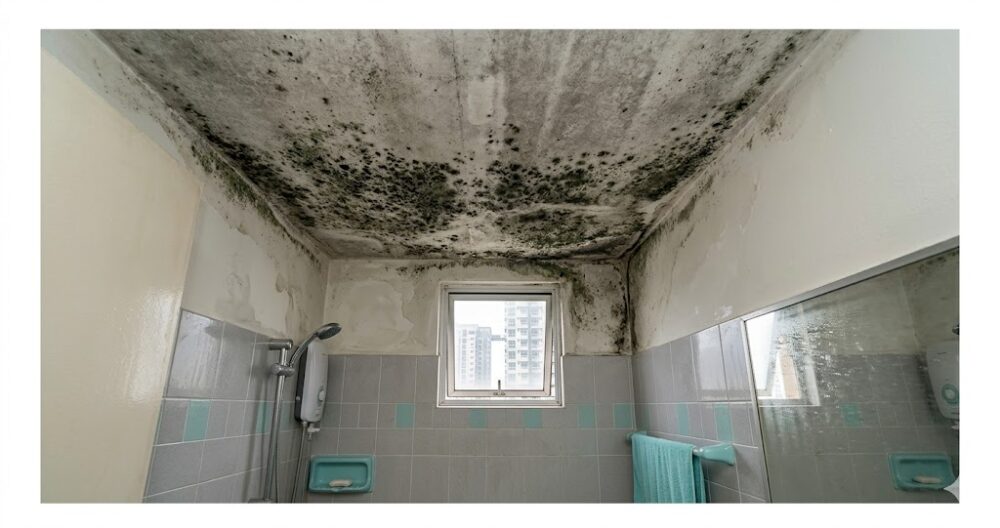
If you have noticed a persistent musty smell, unexplained chronic coughing, or dark spotting on your walls or ceiling, your unit may already have an active mould infestation requiring professional remediation.
Why Are Malaysian Condominiums Especially Vulnerable to Mould Growth?
Modern condominiums in the Klang Valley, Mont Kiara, Damansara, and Bangsar are designed as climate-controlled structures with minimal passive cross-ventilation. When AC is switched off, humidity rapidly equilibrates with outdoor tropical air.
High-Risk Demographics in Malaysian Condominiums
| Demographic | Specific Risk Factor |
|---|---|
| Infants and children under 5 | Developing respiratory systems; higher breathing rate relative to body mass increases spore dose. |
| Elderly residents (60+) | Reduced immune competence; higher likelihood of pre-existing respiratory conditions. |
| Individuals with asthma or COPD | Airway hyperresponsiveness; lower spore threshold for triggering exacerbation. |
| Immunocompromised individuals | Post-chemotherapy, HIV, or long-term corticosteroid use patients face invasive fungal infection risk. |
| Pregnant women | Mycotoxin exposure has been associated with adverse foetal outcomes in studies. |
How Do You Identify Hidden Mould in a Malaysian Condo Unit?
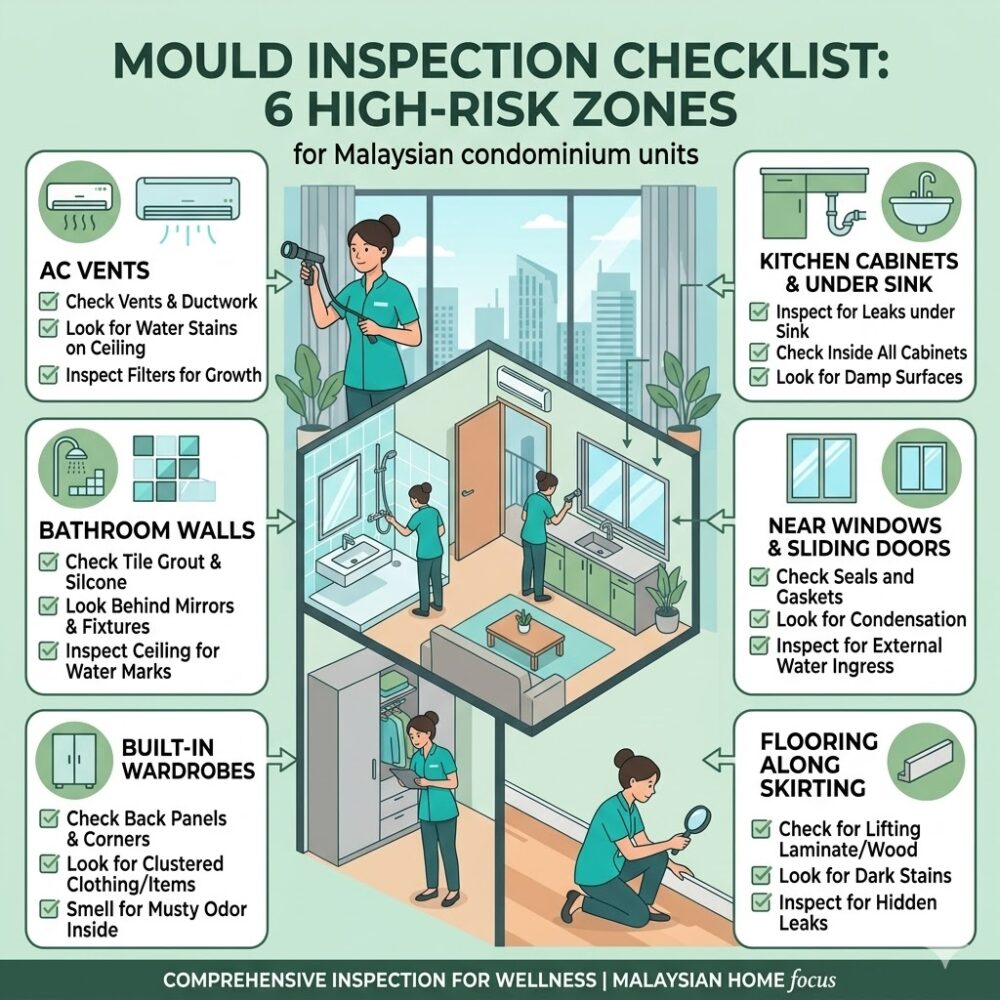
You can identify hidden mould by systematically checking six high-risk zones using sensory and visual indicators, even when no mould is immediately visible on wall surfaces. The most dangerous mould in a sealed condo unit is frequently the mould you cannot see.
AC Units & Vents
Black, grey, or green speckling around blower vents indicates mould actively colonising the evaporator coil — circulating spores into every room.
Bathroom Walls & Ceilings
Inspect ceiling above showers and silicone sealant lines. Early colonisation appears as pink or grey discolouration before progressing to black patches.
Behind Wardrobes & Cabinets
Dead-air cavities against exterior walls accumulate moisture. A musty odor confined to a wardrobe interior is a reliable early indicator.
Window Frames & Reveals
Inspect rubber gaskets and wall areas adjacent to frames — particularly north and east-facing windows with less solar drying.
Concrete Ceilings
Yellow-brown water stains, hairline cracks with dark edges, or paint blistering on ceilings indicate concealed moisture intrusion from the unit above.
Under Sinks & Vanity Units
Even a slow compression fitting drip over months will saturate a vanity cabinet base, producing a hidden mould colony in a personal hygiene area.
Sensory Indicators That Override Visual Inspection
The “Wet Earth” Odour
A persistent musty, damp smell that intensifies when the air-conditioning is switched on — a clinical indicator of active mould within the HVAC system.
Symptom Pattern Correlation
Consistent symptom relief when away from the unit and symptom return within hours of re-entry represents a strong clinical indicator of indoor air contamination.
What Is the Correct Method to Permanently Remove Mould?
Permanently removing mould requires professional remediation using fungicidal fogging, HEPA-filtered negative air pressure systems, and clinical-grade anti-microbial surface treatment — not bleach, which only removes surface pigmentation while the hyphal root system remains viable within porous materials.
Why DIY Methods Fail in Malaysian Condominiums
| DIY Method | What It Does | Why It Fails |
|---|---|---|
| Bleach spray | Bleaches visible pigmentation | Does not penetrate porous material; water content worsens dampness Fails |
| Vinegar application | Mildly inhibitory on some species | Insufficient for established structural colonies; no effect on HVAC mould Fails |
| Commercial mould spray | Surface anti-microbial action | No residual protection; does not address moisture source Fails |
| Painting over mould | Conceals visual evidence | Spores remain viable; mould resumes growth through new paint within weeks Fails |
| DIY dehumidifier only | Reduces ambient humidity | Does not kill established colony; insufficient for structural moisture intrusion Fails |
The Professional Remediation Protocol
Containment
Physical isolation of the affected zone using polyethylene sheeting and negative air pressure to prevent cross-contamination to adjacent rooms during remediation.
HEPA Air Scrubbing
Industrial HEPA-filtered negative air machines to capture airborne spores released during surface removal and treatment.
Mechanical Removal
Physical removal of irreversibly contaminated porous materials (drywall, insulation, grout) that cannot be decontaminated in-situ.
Fungicidal Application
Professional-grade EPA-registered or MOH-approved anti-microbial agents with documented sporicidal efficacy applied to all affected and adjacent surfaces.
Moisture Source Diagnosis
Identification and documentation of the underlying moisture intrusion source — essential for preventing recurrence.
Post-Remediation Verification
Air quality testing or surface swab sampling to confirm spore levels have returned to acceptable thresholds before re-occupation.
Before engaging a remediation service, document all visible mould evidence photographically, notify your landlord in writing (WhatsApp messages with timestamps are legally admissible in Malaysian tenancy disputes), and obtain a written quote from a licensed contractor.
How Can You Prevent Mould from Recurring?
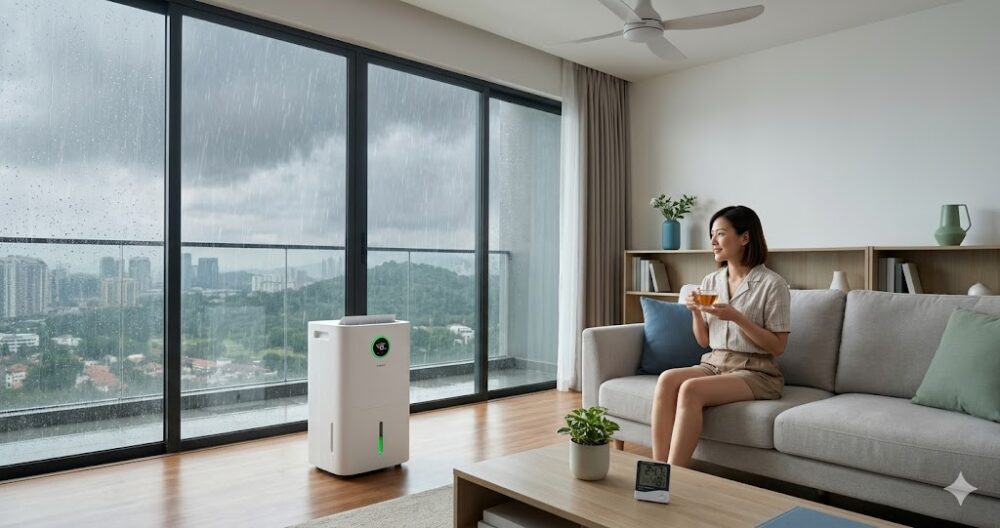
Preventing mould recurrence requires maintaining indoor relative humidity below 60% through active dehumidification, quarterly HVAC servicing, and systematic improvement of wet area ventilation — environmental controls that compensate for the inherent design limitations of sealed high-rise buildings.
Position a dehumidifier with minimum capacity of 20–30 litres per day in the highest-risk zone. Target a maintained indoor RH of 50–60%.
Install an exhaust fan with minimum airflow of 50 CFM in every bathroom lacking external ventilation. Run for a minimum of 20 minutes after showering.
Remove standing water from shower walls and floor immediately after each use. This single habit reduces bathroom surface moisture by approximately 70%.
Service air-conditioning units quarterly — not annually. Clean the evaporator coil, drain pan, and discharge vents.
Maintain a minimum 10cm gap between all furniture and exterior or bathroom-adjacent walls to allow air circulation and prevent dead-air pockets.
Bathroom silicone sealants have a functional lifespan of 3–5 years in Malaysian tropical conditions. Replace proactively rather than waiting for visible mould.
Seasonal Adjustments During Malaysian Monsoon Periods
- Increase dehumidifier operating hours during peak monsoon months
- Avoid air-drying laundry indoors; use a dryer or covered outdoor rack
- Check under-sink and vanity cabinet areas weekly for slow leaks
- Inspect window gaskets and seals for water ingress after heavy rain
If you have identified any of the signs described in this article — persistent musty odours, visible dark spotting, water staining on ceilings, or symptom patterns consistent with mould exposure — do not delay remediation. ServicePro.my connects you exclusively with verified, MOH-compliant hygiene contractors operating across the Klang Valley, Johor Bahru, Penang, and major urban centres throughout Peninsular Malaysia.
Mould in Malaysian Condominiums — Your Questions Answered
Protect Your Family from Hidden Mould Spores
ServicePro.my connects you with certified mould remediation specialists in the Klang Valley. Ensure your condominium’s air quality is safe with professional inspection, treatment, and prevention.
Schedule a certified mould inspection in Selangor & KLThe information provided in this guide is for educational purposes regarding indoor air quality and hygiene maintenance. It does not constitute medical advice. If you experience severe respiratory symptoms, please consult a healthcare professional. ServicePro.my connects Malaysians with vetted, verified hygiene and mould remediation specialists across the Klang Valley and beyond.
Hygiene Questions. 0
Questions from homeowners within and beyond Klang Valley, answered by our hygiene specialists.
─── MORE HYGIENE INSIGHTS
Keep Reading
Continue building your knowledge on maintaining a hygienically clean home in Malaysia’s tropical climate.